Black History Month in Haringey!

October is Black History Month – a great time to reflect on and celebrate our diverse history both locally and nationally.

I have been MP for Hornsey and Wood Green since 2005, and I am so proud to represent an area with such a rich cultural heritage. My constituents come from a very wide range of backgrounds – over 100 languages are spoken in Turnpike Lane! – and I wouldn’t have it any other way.

The British Isles have always been a major destination for migration, dating back beyond the Romans. Until the end of World War II, BME (Black and Minority Ethnic) people accounted for about 0.1% of those living in the UK, which rose to 7% by 2000.

North London generally, and Haringey in particular, has always been a popular place to live for those in the BME community.  In 2001, 34% of Haringey’s population came from a minority ethnic background, which increased to 39% by 2011.

A number of well known BME people have lived in the Borough, including Oliver Tambo, Ho Chi Minh and Bernie Grant MP. Given the high proportion of young people in the Borough, I have no doubt there are many Haringey children from BME backgrounds who will make similar significant contributions in the future.

Members of BME communities also play a key part in politics across the UK.

The first ever Asian MP was Dadabhai Naoroji, Liberal Party member for Finsbury central in 1892. However, there was quite a distance between Mr Naoroji and his successors before we had our first female BME MP, Diane Abbot, elected in 1987.

Since then, there have been a number of notable firsts – Paul Boateng, the first BME Minister, Piara Khabra, the first Sikh MP, and Mohammad Sawar, the first Muslim MP.

The House of Commons is gradually moving towards an institution more representative of the people that it serves, which is something I welcome wholeheartedly. In the 2010 elections the number of BME MPs increased from 14 to 27. This is a step forward, but does not yet reach the 10% mark, which is roughly the population of the BME community in the UK.

There is still much to be done to improve engagement and representation across the board, to ensure that everyone’s voice, no matter their ethnicity, religion, gender, age, or sexual orientation, is heard. This is something I was taking on first hand in my previous role as Equalities Minister, and I continue to work on this in the Department for International Development, and in my Hornsey and Wood Green constituency.

There are a number of seminars, workshops and plays taking place in Haringey for Black History Month. These can be found at http://www.blackhistorymonth.org.uk/haringey-black-history-month/4579376813.

Get stuck in, and happy Black History Month!
Pinkham Way – one step closer to victory!

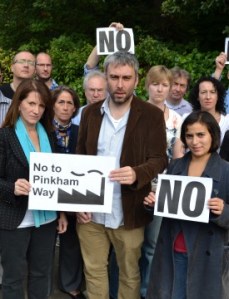
Lynne Featherstone and Haringey Liberal Democrats protesting at the proposed site of a waste processing plant on Pinkham WayI have just sent the below comment to the local papers regarding the North London Waste Authority’s (NLWA) decision to end their procurement process for long term waste management services.

In short – they have decided to keep using the waste facility in Edmonton and keep waste management under control of the local authority (rather than contract them out to a private bidder).

There are now no current plans to use the Pinkham Way site for waste management. I’d like to echo the words of the Pinkham Way Alliance: ‘This is very good news!’

Here’s what I’ve told the local papers:

“The decision to end the procurement for long-term waste management in North London marks a great victory for the Pinkham Way Alliance, the local Liberal Democrats and local residents, who have campaigned hard against the NLWA’s plans.

“From day one, the whole process has been a farce and the strategy deeply flawed. The plan to use Pinkham Way for a waste plant, for instance, was simply inappropriate. They should have been looking at ways to reduce wastage – not thinking of building huge incinerators in unsuitable places.

“It’s all very well the NLWA saying they’re saving us money now by keeping waste management services ‘in house’ – but what about the public money wasted to date on their flawed plans?

“I am of course glad that the NLWA has finally seen sense – but it shouldn’t have taken this long to realise their existing Edmonton site would be suitable.

“We must remain vigilant, though. Although there are now no immediate plans to use the Pinkham Way site, it is still an asset of the NLWA, and different plans to use the site may surface in the future.

“The local Lib Dems and I will be sure to keep residents updated as and when we receive information.”

Making a difference

Here is a copy of the recent article I wrote for Modern Gov magazine, about my work as  parliamentary under-secretary of state at the Department for International Development…

Investing in international development is not only the right thing to do, but the smart thing to do.

This is what this coalition government firmly believes and that is why we have stood by our shared commitment to invest 0.7% of gross national income on development support.

I feel enormously privileged to be a minister at the Department for International Development (DfID), which is having such a positive and transformative impact on the lives of the world’s poorest people.

As the minister responsible for our work in Africa, I have seen for myself the life-changing impact the UK is making, especially in improving access to healthcare, education and in making countries self-sufficient through economic growth.

In the last year alone, the UK’s investment in development has enabled 30 million people to work their way out of poverty by providing access to financial services; prevented 13 million children and pregnant women from going hungry; reached 8.7 million people with emergency food assistance; and supported 6 million children – half of them girls – to go to primary school.

But as the UK meets its 0.7% commitment, it is clear that people need to see that we are spending money wisely, effectively and in the right places. That is why transparency and accountability are woven into everything we do, helping to achieve better value for money for UK taxpayers and improve the effectiveness of our work.

At DfID, our focus is very much on supporting countries who want to progress and move forward. We want to help create economies and societies that can grow; this is not just in their interest but ours also.

Prosperous and stable societies reduce the need for UK intervention and also open up potential markets for UK businesses to trade with.

Under the UK’s leadership, this summer’s G8 committed to doing just that by helping developing countries increase their ability to trade and maximise the income from their land, extractives and taxes – helping them to help themselves out of poverty.

A fundamental responsibility for DfID is always going to be to save the lives of those in imminent danger. We remain a leader in responding in global emergencies, such as providing vital humanitarian support to refugees of the conflicts in Syria and Somalia, responding to the food shortages in East Africa and the devastating effects of Hurricane Sandy in Haiti.

But it is not just conflict and disaster that halts a country’s development. Our G8 Nutrition for Growth event saw donors pledge an unprecedented £2.7bn towards eliminating malnutrition – the biggest global killer of children under-five, which can also undermine the earning potential of adults by 10%.

Tackling poverty is impossible if half the population is left behind. We know that when a woman generates her own income she re-invests 90% of it in her family and community.

Sustainable development means giving women and girls equal access to education and jobs, ending violent and oppressive acts, allowing women the choice of who to marry and when to have children.

Improving the lives of girls and women is a top priority for DfID and as the government’s champion for tackling violence against women and girls overseas, it is particularly close to my heart.

Female genital mutilation (FGM) is just one of the areas of abuse where we are taking a lead. FGM is one the worst kinds of gender violence, causing a lifetime of damage, sometimes even death.

Britain is backing the African-led drive to eliminate FGM by committing the biggest ever fund to tackling FGM, investment which will also benefit diaspora communities in the UK.

The prime minister also used his co-chairmanship of High Level Panel on Post 2015 Development to argue for a stand-alone goal to empower girls and women and achieve gender equality, because what is good for girls and women is good for society as a whole.

The UK has never stood on the sidelines when it comes to its international responsibilities and with around 1.4 billion people around the world still living in poverty we cannot afford to start now.

The UK should be proud of what this country has done to help others less fortunate than us to live better lives, but there is still a long way to go.

The government will continue to work hard with international organisations and the governments of poorer countries to help end poverty and strive for the world we want.

"It’s easy to miss the invisible…"

Those words – from the UN’s Special Rapporteur on Disabilities, Shuaib Chalklen – have stuck with me today on my second and final day at the UN General Assembly.

He said them during a meeting at which I was trying to establish what more the UK could do to improve the lives of people with disabilities in the poorest parts of the world.

We are driving disability up the agenda, initially focusing on improving data and evidence with a new commitment on making schools that are directly funded by the Department for International Development inclusive.

But I am keen to learn what others are doing, share lessons and work together on this important issue. That’s why  I also had a very interesting meeting with USAID’s disability coordinator Charlotte McClain- Nhlapo and heard more about what the US Government  are doing to ensure their development work includes people with disabilities.

But those words – “it’s easy to miss the invisible” – apply to so many groups of vulnerable people around the world, including the LGBT community.

Earlier yesterday I attended a meeting of public and private donors supporting LGBT issues hosted by the Swedish International Development Cooperation Agency, USAID and the Ford Foundation.

It was my opportunity to demonstrate my – and the UK’s – commitment to  LGBT  rights and hear what others are doing. But most importantly, I was able to meet others who feel as passionately about the issues of equality as I do and work with them to tackle exclusion and violence against LGBT people around the world.

The UK will help tackle the great neglect of disability

Here’s a further blog from the UN General Assembly in New York, also available on the Huffington Post

The biggest disability rights meeting in five years takes place in New York this week as part of the United Nations General Assembly. People with disabilities have long been the forgotten people when it comes to overseas development. This is a landmark opportunity to give them a voice and put their needs centre stage.

More than one billion people worldwide live with disability and suffer huge discrimination as a result. They face unequal access to education, employment, healthcare, social support and the justice system. Consequently, they are disproportionately some of the poorest and most marginalised people in the world – part of an unseen great neglect.

The internationally agreed Millennium Development Goals (MDGs) have done a great deal to address global poverty, but the gap where improving the lives of people with disabilities should have been has hindered progress. Thirteen years after the MDGs were agreed, disability remains the poor relation amongst development goals.

This isn’t good enough. People with a disability face specific day-to-day challenges that the rest of us don’t. They need tailored measures, such as providing school texts in braille. A one-size-fits-all approach doesn’t work for them. It is telling that of the 57million children currently out of school in the world today, over a third have a disability.

That’s why I’m announcing this week that the Department for International Development will help address this by ensuring that from this day forward, all of the school construction we directly support is designed to allow disability access. This means building schools with easily accessible entry points, wide entry doors, wide aisles, and ramps with railings and handles. It will also ensure water points have easy access levers and that toilets are designed for easy access. In other words, children with disabilities will be able to access all of those schools.

But this is just the start. With the deadline for the MDGs fast approaching the world has now turned to the post 2015 development framework. This is a once-in-a-generation chance to finally put disability on the agenda.

The UN’s High Level Panel, set up to present the UN Secretary-General with a vision of what the development framework should look like after the MDGs expire, have set out that the post 2015 development agenda should ‘leave no one behind’, regardless of ethnicity, gender, geography, disability, race or other status. The world’s leaders are now negotiating and considering the Panel’s vision and the UK is determined to do everything possible to ensure the final post-2015 framework sticks with this single overarching goal.

This week’s meeting is a positive sign that the UN is serious about strengthening the rights of disabled people around the world. Drawing international attention to this issue and driving progress will be my key priorities for UNGA. As a global community, we have a duty to safeguard the most vulnerable and if we are to defeat poverty we must tackle the causes as well as the symptoms. In many countries and communities, the barriers people with disabilities face means they have no chance of lifting themselves out of poverty and reaching their full potential.

The Department for International Development is already incorporating disability into our programmes across Africa and Asia, and we have recently committed £2million towards an additional three years support to the Disability Rights Fund – the only grant-making organisation to solely and directly support disabled people’s organisations in developing countries.

But we know that at the moment it is hard to even assess the scale of the challenge when it comes to disability because of the lack of sound global data. Quite simply we don’t know where disabled people are and what their needs are. So the UK will work with our partners – those with the expertise and access – to get the data we need. We will particularly focus on improving the data on children with disabilities and their special educational needs, and on the data for access to water and sanitation facilities.

But the UK can’t do this alone. We will also be urging the governments in the countries we support to deliver on their commitments under the United Nations Convention on the Rights of People with Disabilities.

I believe we have reached a watershed moment on disability – one which we cannot afford to get wrong. Development progress is only as good as the weakest member and progress made across the world is diluted if the most vulnerable are left behind. If developing countries are to move forward into prosperity and greater self-reliance, they must take everyone on the journey. It is up to us, as leaders in the international community, to help them on their way.

Representing the UK at the UN General Assembly

The world came together today for the biggest disability rights meeting to take place in five years  – and I was proud to represent the UK.

With one billion people globally facing unequal access to education, employment, healthcare, social support and justice as a result of disability, this was my chance to demand an end to this great neglect.

But actions speak louder than words and, on behalf of the British Government, I announced a range of measures which will improve the lives of disabled people in the poorest parts of the world.

At the UN General Assembly in New York, I pledged that children with disabilities in the developing world will be able to access and use all schools built with direct UK funding from this day forward.

It is telling that of the 57 million children currently out of school in the world today, over a third have a disability.

So school construction the UK directly supports in the developing world will now be built using ‘universal design’, with easily accessible entry points and toilets, wide entry doors, wide aisles, ramps with railings and handles, and water points with easy-access levers.

We will also work with partners to improve the global data on disability, in particular focusing on children with disabilities and their special educational needs, and on information about access to water and sanitation facilities.

And I urged governments in the countries we support to deliver on their commitments under the United Nations Convention on the Rights of People with Disabilities.

As a global community, we have a duty to safeguard the most vulnerable. If developing countries are to move forward into prosperity and greater self-reliance, they must take everyone on the journey.

With the on-going discussion of what development should focus on when the Millennium Development Goals expire in 2015, we have a once-in-a-generation chance to finally put disability on the agenda.

My announcement came on the same day Britain reaffirmed our commitment to tackling three killer diseases with new support to the Global Fund to Fight AIDS, TB and Malaria.

Over the last year, I have seen the success of the Global Fund for myself during visits to Africa and assessed the life-saving role it plays.

So I was very proud that the UK committed £1bn to the Global Fund over the next three years so long as others join us in ensuring it meets its target of $15bn and our contribution is 10% of the total replenishment.

That will save a life every three years with antiretroviral therapy for 750,000 people living with HIV, 32 million more insecticide-treated nets to prevent the transmission of malaria and TB treatment for over a million more people.

In just one day, the UK underlined its commitment to those in greatest need. We have risen to the challenge – now we need the rest of the world to follow us.

Cashless buses – what do you think?

I recently received an email from TfL, asking for my views on their proposals to remove cash fare payments on our bus services.

TfL say: “We believe that this proposed change will help to reduce boarding times and delays. Customers will be able to continue to use Oyster and contactless payment cards to pay for their fares, which are £1 lower than cash payments. If you have an Oyster and contactless payment card, please choose the card that you intend to pay with and touch it separately on the yellow card reader.”

This is all well a good for regular users and Londoners – but what about tourists, visitors and people who don’t often use transport? I worry that this may increase delays, if someone tries to get on without an oyster card or ‘contactless payment card.’

I want to know your views. Please contact me here and let me know what you think.

You can see more TfL info on the proposal here, and be aware that the consultation ends on Friday 11 October – if you wanted to respond to that too.


Creating Apprenticeships in Haringey!

Here’s my latest Muswell Flyer article (originally written in August) on Apprenticeships in Haringey. Since the event – companies have been in touch to let me know that they have now taken on young people they met at the event!

I was so happy when I got my first job with a small design and advertising company in the West End – and my first pay packet. I remember feeling so grown up as I caught the tube to work along with the rest of the world. That sense of somewhere to be and something to do has always been incredibly important to me – as it is to everyone.

And that sums up why we work. It pays the bills, gives us purpose and fulfilment, and provides security for our long term futures.

That’s why it’s particularly important for young people leaving schools or universities to have options available to them. We have so many talented and ambitious young adults here in Haringey, and should be doing all we can to give them the best chance to succeed – which will benefit our economy too.

But – it’s not long since youth unemployment was rising fast under Labour, leaving so many young people without the opportunity to get on in life.

That’s why creating more jobs – particularly for young people – during these tough economic times is top of the Lib Dem’s list of priorities.

Our focus on this is working. Here in Hornsey and Wood Green, youth unemployment has fallen by a third – and 530 new apprenticeships have been created since 2010 too.

But we want to go even further. That’s why I decided to put words into action, and hosted an apprenticeship event at Haringey Civic Centre, in tandem with Wood Green Jobcentre plus. The aim was to match up employers looking for apprentices with young people looking for apprenticeships.

Apprenticeships are a great way to kick start a career. They take between one and four years to complete and combine practical training in a job with study. That means you get paid to study and learn a trade, whilst also being able to make contacts in an industry.

It was a really fantastic afternoon. The event was attended by 18 organisations – including Barclays, Tottenham Hotspurs and the National Apprenticeship Company – and packed with over 130 of Haringey’s young people, who were keen to find out more about the hundreds of apprenticeship opportunities on offer.

Gordon Birtwistle MP – the Government Apprenticeship Ambassador – was also present to discuss the value of apprenticeships and to meet the young people and companies.

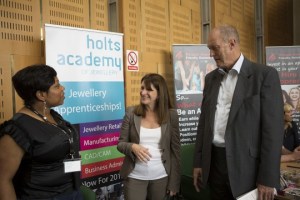
Lynne Featherstone MP  with Gordon Birtwistle MP, talking to an organisation representative at the Haringey Apprenticeship event

I will be keeping in touch with the people and organisations who attended so we can track how many apprenticeships have been created as a result. I’ll also certainly be hosting more of these events in the future.

In the meantime, if you or someone you know wants any further information about apprenticeships, just email me on lynne@lynnefeatherstone.org and ask!

A busy Lib Dem conference!

Here’s an article I wrote following Lib Dem conference in Glasgow last week. You can also read it in the Ham and High here.

It’s party conference season, and this year the Liberal Democrats met north of the border in Glasgow. Along with my colleagues from Haringey, I participated in the many debates and events that make conference what it is.

Unlike the other parties, the Lib Dems use our conference to give members a say in our policies. Local parties can bring forward ideas and motions, which are debated and voted on. It can be a very lively affair, with strong views on both sides!

But once passed, these ideas can go on to form our party policy. When I became a Home Office minister, I took a conference motion on equal marriage, and – with a huge amount of help from other MPs, activists and supporters – turned it into UK law.

Lynne Featherstone MP speaking at Liberal Democrat Conference, Glasgow 2013This year I contributed to a motion on preventing domestic and sexual violence against women. It’s an area I have been working hard on since entering government – in the Home Office and now in the Department of International Development.

During the debate, I spoke about the government’s work on tackling female genital mutilation (FGM) at home and abroad. It’s so important that any party policy on tackling gender based violence recognises the devastating effects of FGM – and commits to preventing it and supporting the victims.

I also took part in fringe events with Amnesty and Oxfam. These events are based on specific issues, where ministers and organisations can discuss the way forward with party members.

At Amnesty, the focus was on how to change perceptions and attitudes to promote women’s rights in the future. We discussed ways to empower women economically, and also how to educate men and boys in women’s rights.

At Oxfam the focus was on food, and how to ensure that there is enough food for everyone in a changing climate which could cause more natural disasters.

Ministerial work was not the only thing on my agenda. Such a wide range of topics are discussed at conference, and I also took part in a fringe event looking into the housing crisis in London.

Along with the Lib Dem minister for communities and chair of the National Housing Federation, I discussed ways we could address the current problem of having too little social housing. In Haringey we have a chronic problem – nearly 20,000 individuals and families on the waiting list for properties which do not exist.

Lynne Featherstone MP speaks at Housing Fringe at Lib Dem Conference, Glasgow 2013

Building more is obviously necessary – but in the short term we also discussed bringing empty homes back into use and encouraging home swapping within local boroughs, to try and ease the problems of overcrowding.

Unfortunately, our local Labour-run Haringey Council is failing miserably to address the problem – having not built any new homes in 25 years, overseeing nearly 2,000 empty properties and not holding any home swap events. But I will certainly be taking some of the ideas from the fringe event and pushing them to act.

All in all it was a fantastic five days, full of what the Lib Dems do best – debate, democracy and action – and I am already looking forward to next year’s conference!


Local independents on national TV!

Last night, at 7.55 pm, Channel 4 aired a short video of me visiting some of Hornsey and Wood Green’s finest independent shops, and talking about the local Lib Dem campaign for 30 minutes free parking.

The shops are Big Green Bookshop of Wood Green, Crocodile Antiques of Muswell Hill, and Dunn’s of Crouch End.

You can watch the video here: