Hope and HIV in Malawi

Blog from Malawi – also available on Huffington Post

It took 10 minutes for me to witness despair in the optimistically-titled ‘Corridors of Hope’.

It must seem like a cruel name to those being tested for HIV in the small, sparse rooms along this hallway in Dedza District Hospital in Malawi.

There was little hope in the eyes of the father I sat with shortly after he learnt he was living with HIV. Cradling his son in his arms, together they faced the agonising wait for the boy’s test results.

In just 600 seconds, the four-year-old would hear whether he was the latest of 930,000 people in this small African country who are HIV positive.

But there is hope.

2013-07-11-IMG_7662_sq.jpg

Lilian Hara is a Community Health Nurse at the HIV Testing and Counselling Centre in Dezda. Picture: Emily Gray/DFID

While 68,000 people die of AIDS-related illnesses here every year, HIV/AIDS no longer needs to be a death sentence. I am in Malawi to see how the Department for International Development‘s support is making an impact on the ground and reviewing how British development aid can be made even more effective.

Our funding means the father I met will become one of thousands of people who receive counselling and advice on living with HIV and the much-needed anti-retroviral treatmentswhich will help him lead a normal life.

The hospital also sees 5,000 pregnant women every year and for those who test positive, helps prevent transmission of the virus from mother to child. The work of this hospital and others like it has helped bring HIV prevalence rates down from 11.3% to 7.5% in the last 10 years.

2013-07-11-IMG_7918.jpg

The local centre is helping to stop HIV being transmitted to children in the Dezda area. Picture: Emily Gray/DFID

Preventing the spread of HIV is vital if we are ever going to reach our ultimate goal of the ‘three zeros’ – zero new HIV infections, zero stigma and discrimination and zero AIDS-related deaths.

Because the high rate of infection is closely linked to gender disparity and violence against women and girls, I also visited a pioneering policing unit to support victims of gender based violence.

More than 40% of Malawian women have experienced physical or sexual violence – while 60% of girls and 35% of boys have also experienced some form of abuse. For the first time, those in Dedza have a safe haven where they can report the crimes, receive counselling, mediation and advice.

Prosecutions are being pursued more vigorously now – though this may be little comfort to those victims left with HIV. That’s why the Department for International Develompent (DFID) is also working with the poorest communities so they can set up support groups to tackle the spread of HIV/AIDS and help those who are positive live healthy lives free from discrimination.

One HIV positive lady I met told me she set up a support group because her best friends looked at her husband and her “like dead people” and children refused to play with her kids when they learned of her status.

She said the work of the support group has reduced the stigma attached to HIV and the despair of those living with it as people realise “there is still a life to live”.

That’s her message to the devastated father sitting in the Corridors of Hope.

With continued commitment from the Government of Malawi, support from NGOs and donors such as DFID, and real effort from the communities themselves – we can turn hope into certainty.

The one certainty I can pass on now is that after the 10 minute wait, the father’s four-year-old boy tested negative. I just hope he stays that way.

We want your views! Click here to find out how the UK helps to prevent HIV in the developing world and have your say in our open consultation.
Tackling HIV/AIDS in Southern Africa

The British Government has made some impressive commitments to improve the lives of the world’s poorest people. I am incredibly proud of the huge number of children we’re vaccinating, girls we’re educating and families we’re providing with clean water.

But one of our most challenging ambitions involves the smallest number  – 0. The UK remains committed to the vision of getting zero new HIV infections, zero discrimination and zero AIDS-related deaths. This matters as much to people in Britain as it does to the poorest parts of the world. Infections do not respect borders.

I am currently in Southern Africa – the global epicentre of the HIV epidemic – to see how the Department for International Development’s support is making an impact on the ground and review how British development aid can be made even more effective.

Although we are not going to reach our eventual targets of “the three zeros” overnight – we will reduce by at least 500,000 new HIV infections among women in sub-Saharan Africa by 2015. In the last year alone, we’ve developed four new HIV prevention programmes in sub-Saharan Africa (Zimbabwe, Malawi, Zambia and across the region). We are doing this by investing in a diverse range of projects, supporting civil society organisations, research and development, multilateral organisations (in particular our contribution to the Global Fund) and working with the private sector.

But more needs to be done. There are an estimated 11.3m living with HIV/AIDS in Southern Africa, an increase of nearly a third from ten years ago. Despite the increasing numbers on treatment, the number of people becoming newly infected  each year still exceeds the number of new people treatment.

I am keen to know what more DFID can be doing and how we can do things differently to reach our eventual goal of ‘zero new infections’. As part of a review into our strategy, I met with the Deputy Director of the UNAIDS Regional Support Team, politicians from across Southern Africa and a range of NGOs as well as researchers. The high rates of  HIV infection is closely linked to gender disparity and violence against women and girls, and I also met with South African counterparts and civil society stakeholders on how to jointly work on this important challenge.

What I heard was a message of hope and with so many people committed to the fight against HIV/AIDS. My message to them, and for all those living with HIV/AIDS – including those in the UK as well as in Southern Africa – is that DFID will work harder and more flexibly to make what we do count even more. It is my hope that our work will count towards zero – zero new infections, zero discrimination and zero AIDS-related deaths.

Visit to Marsabit County – Kenya

I’m in currently in Kenya on an international ministerial visit. Here’s a blog following today’s visit to Marsabit County:

Very little grows in the arid lands of northern Kenya and farmers, their families and livestock face a daily struggle for survival.

In the searing heat of Marsabit County, drought and poverty collide often with horrific consequences –  acute malnutrition rates regularly sit above the 15 per cent emergency threshold.

DFID is working constantly to prevent a repeat of the severe food crises that have devastated whole regions of Africa. And on a trip to the region, I saw today how British taxpayers are helping communities in this unforgiving environment protect themselves from disaster.

Livestock owners are able to make a good – and sustainable – living if they are able to get their animals to market. And now they are able to insure their goats, sheep and camels against the lengthy dry season that can decimate the valuable herds.

I met a group of 11 – mainly women – who told me how by paying GBP1 a week to the DFID-supported scheme, they can fund themselves during droughts and are less likely to need emergency aid.

I also sat with beneficiaries of our Hunger Safety Net Programme, which supports 69,000 households with small cash payments.

This enables families to save and pay their own way when times are hard – spending the money on food, healthcare and education for their kids without needing further handouts.

But I’m a realist. We’re not going to end hunger overnight as these programmes take time to help the poorest help themselves. That’s why we still provide emergency care to those in grave need.

I met some of the 65,000 mothers and  babies being treated for malnutrition who are also being taught how to prevent it in the future, thanks to support from the UK.

We are also strengthening the health system of the Government of Kenya so they are better placed to prepare for and respond to spikes in demand.

While few plants and crops survive in Northern Kenya’s harsh conditions, the confidence of those in greatest need has grown. Thanks to these relatively small interventions they now have a cushion to protect them when drought and poverty next collide.


Cutting Edge Press – 'good stories well told and with social relevance'

Went to Cutting Edge Press summer party this week.

This is a publisher with a social conscience – publishing such books as ‘My Beautiful England’ which deals with women coming to England and suffering domestic violence. Not only a good read but a book that will empower women to access support services which can help them.

‘Gorilla Land’ – dealing with the conflict in Congo, child soldiers and the legacy of colonialism and the current impact of the UN peacekeepers and NGOs.

And many more.

Given how closely this relates to my work in International Development – what a pleasure it was to meet the authors, agents and production teams who are part of the Cutting Edge Press’ stable. Martin Hay (CEO and Finance Director) is the driving force behind Cutting Edge Press – and  it is his vision and intellect that has made this such a special publishing house.

Meeting Bill Gates

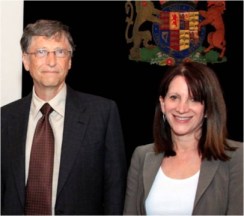
Lynne Feathestone with Bill GatesBill Gates opened the DFID building on Friday.

The Bill and Melinda Gates Foundation is a real force for good. The work that is being done to vaccinate children in the developing world thanks to the Foundation is phenomenal.

And the new (well – adapted and refurbished) No 22 Whitehall is a much better and more modern environment in which to work. Not only that – the move is nearer to parliament and is a great deal cheaper than the building we moved from.


African Development Bank meetings

Since starting as UK International Development Minister with responsibility for Africa, I have been struck by the strong growth rates and enormous economic potential of many African countries. But a key block to further growth is the difficulty of trading within Africa due to tariffs, red tape and a lack of infrastructure to connect countries and peoples. Multi-country infrastructure projects – like roads, ports and regional power plants – are complex and expensive. They require political cross-border agreements and policy reforms.

This is one of the areas where the African Development Bank’s (AfDB) mandate and expertise can help to turn Africa’s economic potential into reality. The AfDB – Africa’s premier economic development institution – focuses on driving inclusive growth through the private sector and improving governance, as well as breaking down trade barriers. It provided $4.4 billion financial flows to Africa in 2011.

I am currently at the AfDB Group’s annual meetings. The theme this year is ‘Africa’s structural transformation’. The UK, along with other donors, will decide later this year on our contribution to the next cycle of the AfDB’s concessional lending fund (2014-2017).

In advance of our decision, I have been pressing the AfDB President, Governors and senior staff for the Bank to focus on: supporting economic growth for all, not just the elites; leveraging much-needed finance from the private sector; ensuring investments are resilient to climate change; supporting the economic empowerment of women and girls; and responding more effectively in fragile and unstable states. I have urged the Bank to deliver and demonstrate results and value for money. And I have emphasised strong UK support for their plans to help transform Africa’s infrastructure and economic integration.

The UK’s priorities for the G8 this year complement strongly this agenda by focusing on global economic growth – advancing trade, ensuring tax compliance and promoting greater transparency. This agenda has particular relevance for Africa. The AfDB is in a unique position to lead Africa’s economic transformation – increasing jobs, improving governance and raising living standards for all.

A reason to be positive about the environment, poverty and war

Something Picture of the sunthat brings good news on all three would be a pretty good Christmas present for us all, wouldn’t it?

Well – in my speech on international development to party conference in September, I briefly touched on the question of using solar power from Africa’s deserts:

Let’s us be both ambitious and optimistic, particularly for sub-Saharan Africa. An area of great poverty and so often little progress. It is an area of huge potential for solar power. We have seen what wealth the oil era has brought many formerly poor areas of the world. Let’s aim for the era of green energy to spread those benefits more widely – and support the development of green energy.

At the moment, the sun beats down on these areas, and nearly all of the sun’s rays go to waste electricity-generation wise. Yet they hold a huge potential as a source of electricity to those countries and neighbours. It could be a case of win-win-win.

First, really large scale solar electricity production is not just renewable – no fears about the sun running out any time soon! – but brings benefits in the battle against global warming and the climate chaos that follows.

Second, just as the oil boom brought prosperity to millions in newly oil producing countries, a similar boom in green electricity production could bring prosperity to large parts of Africa, a continent so often blighted by poverty.

Third, bringing greater prosperity to parts of Africa and the Middle East will help undercut some of the forces driving armed conflict there. Reducing armed conflict, cutting the number of deaths and injuries, having fewer people flee their homes, cutting the number of refuges seeking refuge in grimy refugee camps or unwelcoming other countries: it’s all very much to be welcomed.

The possibility of securing this triple win is in the news at the moment thanks to the Desertec proposal recently presented to the European Parliament. It would see solar power stations being built in or near the southern shore of the Mediterranean. Power cables could then transport the electricity under the sea into electricity hungry Europe.

Current estimates are that this power would cost double electricity from other sources. At that price differential – there’s a problem, but given how technology can march on and drive down prices over time, I’m quite cheered by it ‘only’ being double at the moment.

You can find more details on the particular Desertec proposal on their website. Lots of food for thought – and optimism! – there.

Park crime figures show why we need to keep Parks Police

I’ve written before about Labour’s plans to axe the Parks Police here in Haringey. Well – the latest figures for crime in our parks show exactly why they should be kept!

Also in sobering local news this week was the estimate that up to 50 people will die of fuel poverty this winter in Hornsey and Wood Green – another good reminder, if one were needed, of the need to publicise the Warm Front Scheme to people who could benefit from it. In the scheme’s own words:

If you need help paying for heating and insulation improvements in your privately owned or rented home, you, your partner or civil partner may be able to get money from the government’s Warm Front grants scheme if, for example, you’re receiving income or disability-related benefits.

On a happier note, this week I visited Royal Mail staff in Hornsey to thank them for their efforts with the Christmas post, whilst in international news – the news about new funding for the World Bank reinforces the point that changes in policy are needed too.

Why I can't wait for us to end aid to developing countries

Traditionally every Shadow Secretary of International Development has issued the same rallying cry: give them more money. There is general agreement that the government should increase the amount of aid they give to the developing world.

Let me say that I would like to be the first to buck that trend. I cannot wait for the day when we give absolutely nothing to developing countries in aid; after all, that will be the day when we finally achieve the development goals we have set ourselves over the last fifty years.

The British government has, for decades now, been pumping resources into international development, with little tangible effect. So what has gone wrong?

For the answer, read my latest article – for Public Service Review – over on my website!