Local MP backs stunning Crouch End calendar in aid of victims of summer’s riots

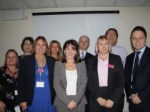
CE Calendar Nov 11To back the stunning N8 calendar and meet the Crouch End traders behind it, Lynne Featherstone MP went to the Haberdashery on Middle Lane on Friday. The project is currently raising funds in support of initiatives to help rebuild communities following the summer’s riots

The Hornsey and Wood Green MP met the Haberdashery’s Massimo Bergamin, Budgen’s Andrew Thornton, FOOD from the SKY’s Azul-Valerie Thome, and Haringey Community Circles administrator Jazz Rasool, who have jointly backed the project.

All proceeds from the sale of the calendar will go to Haringey Community Circles, a charitable initiative set up by the traders and YMCA’s Jim Shepley following the events in Tottenham and Wood Green in August.

Lynne Featherstone MP comments:

“The stunning N8 calendar really captures the essence of Crouch End. Not only does it portray local traders, but more so, it really captures the generosity of this community, in raising funds to help fellow Haringey residents who have suffered following the summer’s riots.

“Massimo, Andrew, Azul, Jim and Jazz should be proud of what they have achieved in creating a beautiful calendar that I am sure will be a great stocking filler this Christmas, and in the process raise funds for Haringey Community Circles.

“I’ve got mine, and would encourage all Crouch Enders to get one for their homes, and in the process back a great cause.”

Alexandra Palace – two clubbers die

You will have seen on the news the death of two young men – both who had been at dance music events at Alexandra Palace on Friday and Saturday. One other young man is in hospital in a stable condition.

The management at the Palace have put out this statement

The key point being that if you were at the Palace and took any substances and do not feel well – then please go to A& E to get checked out.

The police are investigating the incident.

Lynne Featherstone MP welcomes new campaign to help energy customers ‘Plug the Debt’

Lynne Featherstone MP welcomes a joint Consumer Focus/Citizens Advice campaign which aims to help advise people who are falling behind with their energy bills.

With temperatures starting to plummet, many people face the challenge of how to afford to keep their home warm this winter. 63% of people in London are unsure whether they can afford to pay their energy bills this winter, according to the watchdog Consumer Focus.

The most recent figures show that new cases of household energy debts nationwide have increased by 20%.2 Consumer Focus and Citizen’s Advice are concerned that many more people will be pushed into debt to their energy supplier this winter, with average price increases of 14% due to hit homes. The organisations have launched the new awareness campaign – ‘Plug the Debt’ – to help people know what to do and what their rights are when they fall behind on their energy bills.

Lynne Featherstone MP comments:

“With many of my constituents worrying about affording their energy bills, it’s very timely that Consumer Focus and Citizens Advice are reaching out to residents to provide information on how to cope.

“It’s clearly of concern that the number of people with debts on energy bills is set to rise and these residents need to get the right help. It’s essential that people know that they can turn to their energy provider for assistance with managing their debt.”

Mike O’Connor, Chief Executive of Consumer Focus, said:

“A toxic cocktail of higher energy prices, rising bills for other essentials and falling incomes could push more people into debt with their energy company this winter. We want people to know that help is out there. We’d urge people to get in touch with their energy firm as soon as they think they might have problems, before debts start to spiral. You can also get in touch with Citizens Advice or the Home Heat Helpline to find out how you can cut your bills.”

Gillian Guy, Citizens Advice Chief Executive, said:

“Each year we help thousands of people who are in debt because they can’t afford their fuel bills.  Hikes in prices are making a tough time much harder for many.  We urge people to check that they aren’t missing out on any benefits or tax credits that could ease the pressure on their finances – and if they are in debt, to get help immediately.

“Worryingly, around half of people in the UK don’t know their energy supplier has to help them if they fall into debt on their energy bills.  Lynne Featherstone MP wants to let her constituents know that help is out there and to urge people to contact their energy company or local Citizens Advice Bureau if they are having problems paying their bills.”

Consumer Focus and Citizens Advice are making people aware of the following 5 top tips if they fall behind with their bills:

1.    Always contact your energy supplier as soon as you realise you might have trouble with paying. Debts will build up and be harder to pay off, the longer you leave them. Your supplier has a responsibility to help you if you have problems paying your bill.

2.    Tell your energy firm what you can afford to pay – they have to take this into account in agreeing repayments of the money you owe.

3.    Ask your energy company, your local Citizens Advice Bureau or call the Home Heat Helpline 0800 33 66 99 to find out about other free energy help available.  For example, you could qualify for a discount off your bill or free insulation to help your home stop leaking heat and cut your bills.

4.    Even if you are in debt you may still be able to switch to a cheaper deal with your current supplier, especially if you pay by cash, cheque or pre-payment meter. If you pay by pre-payment meter and have less than £200 of debt you can also switch to a cheaper deal with another supplier.

5.    Financial help is available which could make it easier to afford your bills – check you are receiving all of the benefits and tax credits you are entitled to by getting in touch with your local Citizens Advice Bureau or visiting www.adviceguide.org.uk.

Anyone who wants to find out more about getting help or advice through the ‘Plug the Debt’ campaign should visit www.consumerfocus.org.uk/plugthedebt or contact their local Citizens Advice Bureau.

MP visits Job Centre to hear of hard work in tough times

To meet job seekers and the staff who work hard to help them get back into employment, Lynne Featherstone MP, on Friday, visited Jobcentre Plus in Wood Green.

The Western Road centre helps many of Haringey’s unemployed and manages to support almost half of the job seekers in finding new work within three months.  Although the number of new jobs available has fallen by a third from a year ago, the centre has advertised close to 2,000 new posts since the spring of 2011. Most of the posts advertised are in sales, the care sector and marketing.

The Hornsey and Wood Green MP heard from a group of job seekers about their experiences. She was also introduced to some of the centre’s many initiatives to help job seekers get back into work, including enterprise clubs to support new start-ups, apprenticeship schemes and help with the cost of travel and smart clothes to remove barriers to residents attending interviews.

Lynne Featherstone MP comments:

“These are tough times and Haringey has a large number of job seekers who need the help and support of the Job Centre to get back into work.  I have been really impressed by the team here at Wood Green; they work really hard to guide, motivate and enthuse local residents.

“The team helps with skills and CV development, so that jobseekers can really sell themselves in this tough job market.

“They also work closely with local employers to run work experience and apprenticeship schemes that often translate into more permanent jobs, and run an enterprise club to support residents in starting their own companies.

“So yes, it’s tough out there, and it’s good to see that help and support is at hand at the Job Centre. It’s been really encouraging to hear of the hard work of the team here at Wood Green.”

Domestic Violence – What about the children?

Myself and many others have spent years campaigning to highlight the issue of domestic violence, and so I was delighted to speak at a conference today hosted by the City of London’s City Bridge Trust, NSPCC and Refuge looking at what can be done to meet the needs of children affected by domestic violence.

There are some great services out there that support thousands of vulnerable women and children, but it is concerning that new research by the NSPCC and Refuge shows children’s views are often ignored and considered second to those of women suffering from violent abuse.

The report highlights some isolated examples of promising work in this area that we can build on, but the researchers found children can be sidelined, and some of the most vulnerable children and young people are the least likely to get help.

We must do more to tackle this issue, and ensure children as well as the women are able to access adequate support, and that children have a role in shaping the services that directly affect them. You can read my full speech from the conference here:

Introduction
Good morning. I would like to start by thanking Refuge and the NSPCC for inviting me here today and giving me an invaluable opportunity to hear from these incredible young people.

It’s easy as a Minister to get stuck in Parliament or in the Home Office, and to simply read reports and meet officials, but it is so important for me to hear first hand from the people whose lives are affected by the issues I am working hard to address.

I would like to commend the panel for having the bravery to talk about your experiences.

I was so moved to hear about your lives and the difficulties that you have overcome. It is truly humbling to stand in front of you to hear about the challenges you’ve faced, but to see that you’ve not let these stop you from moving forward.

Your voices bring this research to life and underscore its importance.

And Michelle.

I am always thrilled to meet successful business women as I’m very aware of the unique challenges they face (especially when dealing with Lord Sugar).

But your success is even more commendable in light of your own experiences as a child. It is a tribute to your character that you have not let this hold you back, and your tremendous success shows that no matter what terrible events you endure as a child, they need not define your future.
However, we cannot let these inspiring stories distract us from the reality facing so many children living with domestic violence and the important messages in your research.

Why is this report important?
As minister responsible for the Government’s action plan to end violence against women and girls, tackling domestic violence is one of my most important responsibilities and one that is always at the forefront of my mind.

The level of violence faced by women and girls continues to shock me – in the last year alone, there were over 1 million female victims of domestic abuse in England and Wales.

That’s nearly 2 women each minute – another 20 victims by the time I finish speaking. This is simply deplorable. It is a scandal and an outrage that over the course of their lifetimes a quarter of women will experience this horrific crime.
But what we forget is that these women often have children and when violence enters the family home, it enters the lives of everyone there. No one is left untouched.

Living with those 1 million victims are many more children, powerless to end the violence that surrounds them and desperate for it to stop.

Whether violence happens in the next room, directly in front of children or involves children themselves, it casts a devastating cloud over their daily lives and stops their childhood instantly.

From speaking to victims myself, I know how hard they try to shield their children from violence, to the extent that they will endanger their own lives further to protect their children.

But we are understanding more and more that when children grow up in a home tainted by violence, their development, their wellbeing and their relationships with both parents – perpetrator and victim – are all adversely affected and the damage is deep and long lasting.

We recognise in law that seeing or overhearing violence to another person in the home is potentially detrimental to children’s welfare, and, as your report identified, this is increasing the notification of domestic violence cases to children’s services. But we need to think more about quite how far reaching the impact is and how differentiated our response to children needs to be.

We know how victims in violent relationships struggle to know what they should do, but too often we don’t acknowledge the confusion felt by children trying to reconcile the image they have of a loving parent, with the violent perpetrator who destroys family life.
We often focus our efforts on moving victims and their families out of violent homes, but do we think enough about the support children need to adjust to new homes and new schools, and the new life these bring.

Listening to the stories of the young people on the panel today, I am struck by some of the particular issues you raised: services rarely open outside school hours – so you can’t access them without missing school; more promotion of sites like The Hideout – the Women’s Aid website for young peopl and the need to treat every child individually with a solution that address their needs personally.

Government strategy and action
So what are we doing? First, let me be clear – the protection of children is a priority for this government and protecting them from domestic violence is a personal priority for me.

To that end we have allocated £28 million of stable Home Office funding for specialist violence against women and girls services until 2015.

The majority of this funding is directed to local areas and is going to support independent domestic violence advisers, and multi-agency risk assessment conference co-ordinators.

Multi-Agency Risk Assessment Conference Coordinators
The key feature of Multi-Agency Risk Assessment Conferences, of which there are over 250, is that they bring together all the relevant agencies to secure the safety of high-risk domestic violence victims.

They facilitate that vital link with child-focused services, helping to ensure the needs of children are considered alongside the needs of their parents.

I was really pleased to read in your report that those areas that used these arrangements offer a better prospect of providing the comprehensive, differentiated response that children living with domestic violence need.

This year we have granted funding for 54 Multi-Agency Risk Assessment Conference coordinator posts and I hope that this will enable a more child-focused approach to domestic violence.

Independent Domestic Violence Advisers
Victims are represented at these conferences by their Independent Domestic Violence Adviser, an IDVA.

These are trained specialist who provides that crucial tailored support, focused on a family’s unique circumstances, including the effect on any children.

In some areas there are even specialist advisers for children. Blackpool, for example, has a specialist Children’s IDVA Service who provides weekly drop in sessions for young people at local high schools.

We know that these specialists play a crucial role in putting children at the heart of the discussion and having put funding toward 144 posts this year, I hope personalised support is making a difference to the lives of more families, and more children than ever before.

Police
The police also play an important part and have a statutory responsibility to safeguard and promote the welfare of children.

To strengthen this, we also amended the Police Reform and Social Responsibility Bill so that Police and Crime Commissioners would, rightly, have child safety as a priority.

Domestic Violence Protection Orders
We are also piloting new powers for the police in three areas – Greater Manchester, West Mercia and Wiltshire.

Domestic Violence Protection Orders address one of the key themes that you identified when talking to children – that in some cases children want to get away, and stay away, from the abuser.

These orders prevent the perpetrator from returning to a residence and from having contact with the victim for up to 28 days, for example.
They give a victim and her children immediate protection and also enable an unstable family environment to stabilise, minimising the disruption that is so damaging and helping children return to the normal life they crave.

If they prove successful, we will look to roll them out more widely.

Government funding
We know that statutory services can do all this better with the support of children’s charities, like the NSPCC.

That is why earlier this year we announced that we would award grants worth £60 million to go directly to fund the voluntary and community sector (VCS) organisations that work with children, young people, parents and families.

Over £170,000 of the grant, this year, has been awarded specifically to address the issue of domestic violence.
In addition, the Government has awarded the NSPCC a new grant totalling £11.2 million between 2011-2015 for investment in ChildLine and the NSPCC Helpline.
These services really do provide a lifeline for children trying to survive situations that, as a parent, I can barely bring myself to imagine.

MUNRO REVIEW
But we know we must do more and that our systems do not always function as we would wish them to.

Professor Eileen Munro’s review of child protection services in England showed us that the system is not working as well as it should. And this includes working with adult’s services to tackle domestic violence.

The Government has accepted Professor Munro’s fundamental argument that the child protection system has lost its focus on the things that matter most: the views and experiences of children themselves.

As I have heard today, and seen in your report, we need a fundamental shift in the way the system works.

Children should be at the centre of discussions that affect them, not cast aside and dictated to. They of all people understand best what they need and how they feel about what has happened to them.

They need to be able to talk to skilled adults themselves; they need to be the authors of their own stories.

The Government’s approach to child protection reform is therefore driven by three key principles:
• trusting skilled frontline professionals to use their own judgement;
• reducing bureaucracy and prescription;
• and, most important of all, making the system child-centred.

We need to enable professionals to focus on the needs of children and young people, so they are better protected and their welfare better promoted.

We are not seeking to impose a one size fits all approach, nor introduce a host of new procedures. We believe that local leaders with their partners should have the freedom to design and deliver services.

But we do think that however they choose to meet needs of children and young people, they must put those children and young people at the heart of the decision making process.

And to show our commitment to making this happen, and to address one the key recommendations of your research, I would like to invite all of the young people on the panel here today to come at meet with me.

What I have heard already today has been invaluable, but I’m sure it only touches the tip of the iceberg and you have much more that you would like to contribute.

Please come to the Home Office and we can continue these discussions.

Rhodes Avenue Student snaps up first place in MPs Olympic Christmas Competition

Lynne and Phoebe Xmas card winner 2011Phoebe Brady from Rhodes Avenue School is the 2011 winner of Lynne Featherstone MP’s Christmas card competition, which this year is Olympics themed to warm up for next year’s games.

The year 5 pupil snapped up first place with her drawing of the three wise men visiting Mount Olympus, and will now go on an Olympic tour with the Hornsey and Wood Green MP. Phoebe was closely followed by runners up Nagarey Samey (Nightingale Primary), Kacper Nikiel (Campsbourne Primary) and Molly Flora Drew (Rhodes Avenue) who have all received certificates and Olympics themed prizes.

Lynne Featherstone MP comment:

“Choosing a Christmas card winner is one of the highlights of my winter diary, and this year it was really tough with lots of strong contenders from schools across the constituency.

“Phoebe’s piece was something very special, it was very Christmassy, with a strong Olympics theme, and it was really beautifully created. But the runners up Nagarey, Kacper and Molly were all close contenders for first prize.

“Congratulations to Phoebe and the runners-up, and a huge thank you to all pupils and schools who joined in this year. Now I look forward to joining Phoebe for an Olympic Tour.”

Stalking

This is my column from the Ham & High published last Thursday:

There was a girl I knew when I was growing up – let’s call her Joanna for the purposes of this column. We shared our growing pains from school dramas, parental clashes (hers) paternal loss (mine) and of course – boyfriend issues.

One such boyfriend turned out to be a nightmare after Joanna had ended their relationship. One night she called me, came over and in tears told me what she was going through: phone calls that never stopped – persistent following. Whenever she came out of wherever she was – he would be outside. One night I remember she called me because he was in the garden outside her flat just standing looking up at her window. She was frightened and felt hounded and abused – as if her life wasn’t her own.

Joanna’s suffering only stopped when she moved abroad. But her suffering, albeit truly dreadful, was of a different order than the experiences of the three women I met on Monday in Manchester.

I was there to launch the Coalition Government’s consultation on stalking. There I met Rachel and Kelly – victims of terrifying stalking themselves – and Sarah. Sarah’s sister Katy had ended up being murdered by her partner. There were countless incidences, police called, social services involvement, family involvement – but none of the interventions held sway. And that is the issue – that despite the fact we have the laws in place to deal with stalking – still victims feel they are being let down.

The tales told to me in Manchester were of clear threats being present and opportunities to address the harm being missed, sentences not passed, agencies not acting, police not taking the issue seriously enough, prosecutors not passing stiff enough sentences, breaches of restraining orders being virtually ignored.

In Joanna’s day (over 30 years ago) – that was just tough. The police weren’t interested and if there was no actual assault – then women (and men) just had to put up with it.

Since 1997 we have had the Protection from Harassment Act (1997). This is the law which is there to protect all of us from stalking in all its forms. The Act was drafted so that it might extend to any form of persistent conduct which causes alarm or distress. However, it doesn’t specifically mention the word stalking or cyber stalking.

Stalking and cyber stalking are included within the Act, but some campaigners and organisations in this arena believe that because the actual words are not mentioned specifically – the police do not always realise that the Act can be used to tackle stalking and fail to take the appropriate action to deal with it.

The definition used in the British Crime Survey is ‘two or more incidents (causing distress, fear or alarm) of obscene or threatening unwanted letters or phone calls, waiting or loitering around home or workplace following or watching, or interfering with or damaging personal property by any person, including a partner of family member’.

According to the British Crime Survey last year almost 1 in 25 women aged 16-59 are a victim of stalking every year. Over a lifetime, stalking affects almost one in five women and one in ten men.

Stalking is an issue which profoundly affects many lives often in the most devastating ways and it is a priority in the Government’s program to tackle violence against women and girls and is underpinned by the ‘Call to End Violence Against Women and Girls – Action Plan which you can see at http://www.homeoffice.govuk/vawg

Stalking removes our most basic of rights – that of feeling safe in our own skin and in control of our own life. The effect of stalking on victims’ lives can be incredibly wide-reaching. Stalking is a crime of power, control and intimidation, with victims denied the right to chose who is in their lives and who is not. It is a crime which can reach into every corner of a victim’s life and every minute of their day.

Whether it is training or attitudes for the police and other agencies, the impact of the Crown Prosecution Service guidelines or whether restraining orders are effective or not or whether it is a change in the terminology in the law or both – action is clearly needed.

That is why we need to know what more we can do to ensure that perpetrators of this crime are brought to justice and victims have support. That is why we are consulting to see what more we might be able to do.

The consultation will run for twelve weeks.

Local MP visits empowering arts project that boosts mental health and well being

Lynne and Kara at 306

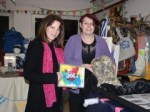
Lynne Featherstone MP visited Studio 306 on Friday, to see how the inspirational art studio at the Chocolate Factory is using arts and crafts to help rehabilitate residents who are recovering from mental health illness.

At the studio, based in Wood Green, a group of skilled arts and crafts practitioners work with people recovering from mental health problems, in order to help them discover new skills and grow in confidence. The studio, which is part funded byHaringey Council and is an extension of their mental health service, was awarded lottery funding in the summer to run the Mental Health Well Being Project.

This weekend, the studio opened its doors so local residents could view and buy the jewellery, screen prints, ceramics and textiles, which had been produced by the artists. The private view was part of the Chocolate Factory’s Open Studios, where artists working in the Factory’s various studios are able to exhibit their best works.

Lynne Featherstone MP comment:

“It’s been really inspirational to see the work of Studio 306’s artists, new and old. At the studio, skilled artists share their knowledge with residents who have suffered mental health issues, and it’s clear that not only have they created some amazing works of art, the journey has also been really empowering and confidence boosting.

“It’s fantastic to see this lottery winning project working so well. Long may this successful partnership continue!”

Free early years education for two-year olds in Haringey

Free early education will be extended to 140,000 disadvantaged two-year- olds, and parents will be able to access the free entitlement more flexibly, under plans published by the Government on Friday.

In Haringey around 1,000 two-year olds are expected to benefit from the proposals.

Liberal Democrat Children’s Minister, Sarah Teather, announced a consultation on Friday on how this commitment will be implemented. The plans include proposals to help parents and children alike by making the free entitlement of 15 hours per week of early education more flexible, so it can be taken between 7am and 7pm across two days instead of the current three days.

Commenting, Lynne Featherstone MP said:

“Helping 1,000 two-year-old children from the poorest backgrounds with early education in Haringey will benefit them for years to come.

“Improving social mobility is a Liberal Democrat priority in Government and early years education is crucial to achieve this.

“We want us to give every child the best possible start – so free education for toddlers from the most disadvantaged homes will now be a right and not a privilege.

“Crucially the extra care will be flexible and easy to access. Parents across the country are bending over backwards to balance work and home. The Coalition wants to help in whatever way we can.”

Children’s spokesperson Councillor Katherine Reece adds:

“High quality early education is key to making a difference early in a child’s life and to help make Britain a fairer and more equal society.

“Targetting early education at those who stand to benefit most is crucial in achieving this goal. Disadvantaged children’s healthy development will be greatly benefitted by this initiative. This should help them from falling behind before they have even started primary school.”