Last day in Zambia…

Yesterday, on the final day of my visit to Zambia, the Minister of Gender and I launched 16 Days of Activism against gender-based violence in Zambia. This is a UN worldwide initiative, running from International Day of Eliminating Violence Against Women on 25 November to Human Rights Day on 10 December.

I shared with the audience some of our experience of tackling violence against women in the UK – still a huge challenge – and our determination to support vulnerable women across the world. This includes a new research and innovation fund to prevent and tackle violence against women and girls, announced yesterday in London (link to DFID page on the new research fund).

Some have described the 2000’s as a lost decade for women’s rights in Zambia. Zambia ranks 131 out of 146 countries in the Gender Inequality Index and 47% of women in Zambia have experienced gender-based violence. But I have been encouraged during my visit to learn of more recent progress – including a law against gender-based violence passed last year.

One influential woman determined to make a difference is the First Lady, Dr Christine Kaseba-Sata. She explained to me Zambia’s progress in implementing its commitments made at the Family Planning Summit (London, July 2012). Dr Kaseba-Sata, a consultant obstetrician and gynaecologist in Zambia for more than 25 years, is also determined to tackle maternal mortality and cervical cancer – the most common cancer in Zambia. What a fantastic example of a woman using her expertise and position to make a difference for the most vulnerable in her country.

I finished my visit by meeting four impressive senior public servants tackling corruption in Zambia (including two women in the roles of Auditor General and Director General of the Anti-Corruption Commission). I urged them to continue their vital work to prosecute those who abuse their office and to help strengthen transparency in government.

It has been a privilege to visit this beautiful country and to meet those who are building a brighter future – from a newly-qualified Community Health Assistant to the First Lady, from the international exporters Zambia Sugar to local farmers, and from rural schoolteachers to the Ministers of Justice and Finance. And I have been delighted to see UK aid and diplomacy in action, supporting the poorest and urging more from those in power.
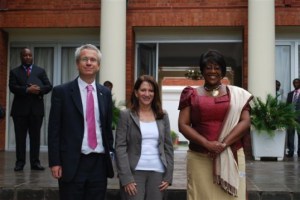
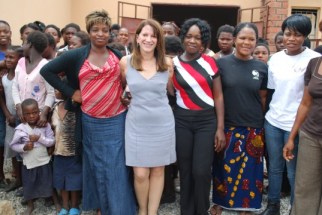
With the High Commissioner James Thornton and the First Lady, at the State House in Lusaka, Zambia
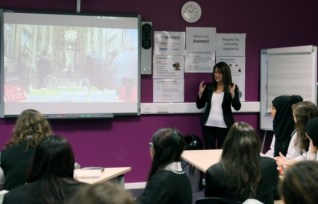
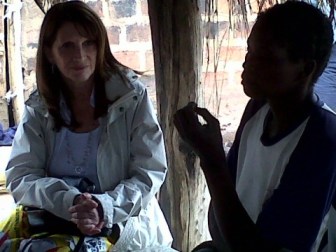
 

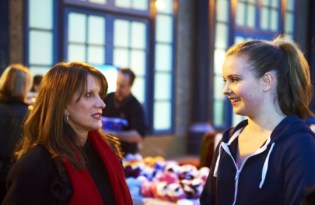
Lynne Featherstone MP visits Hornsey Girls campaign day

Lynne Featherstone MP last week visited Hornsey School for Girls. Year 11 students had organised a “Stop FGM (female genital mutilation) Day,” and invited the Liberal Democrat MP to attend.

The MP for Hornsey and Wood Green met with the head of citizenship, the head teacher and chair of governors. The students then gave a presentation on why stopping FGM is so important, interviewed the MP on the issue and then asked more general questions.

Before leaving, the Liberal Democrat MP dropped into an A-level Government and Politics class to take questions on her role in Parliament.

In 2010 the Prime Minister appointed Lynne Featherstone MP as the international ministerial champion for tackling violence against women and girls overseas, a role which has been retained despite the move from the Home Office to the Department for International Development.

After the visit, Lynne Featherstone MP said:

“It was a privilege to visit the students and take part in their campaign day. It is so encouraging to see intelligent young women tackling this issue – which has been largely ignored in the mainstream. I wish them well in what I’m sure will be very bright futures.

“Female Genital Cutting is an awful practice which has the most devastating and long lasting effects on women and girls – but there is now real momentum in Africa to tackle the issue. It’s now my ambition to see Female Genital Cutting abandoned within a generation.”

Haringey’s schools fall behind neighbours and fail children

Local politicians have expressed concerns about the state of schools in Haringey after it was revealed that schools in the borough are lagging behind neighbouring Camden, Barnet and Islington.

Just 58% of children in Haringey go to a good or outstanding primary school compared to 92% in Camden, 91% in Barnet  and 89% in Islington. The figures are laid out in a report by Ofsted that compared schools across the country and show Haringey is third worst council in London for primary schools.

Figures for secondary schools also show Haringey behind neighbouring areas although the gap is smaller than for primaries.

Ofsted’s annual report also stated that schools in England are improving, with 70% of schools now rated good or outstanding compared to 64% five years ago.

The poor figures come after the Lib Dems have spent years campaigning for fairer funding and won a funding boost for the borough of £7.3m on top of the pupil premium from the Government worth £8.8m.

Cllr Katherine Reece, Liberal Democrat spokesperson on children and education comments:

“I want to know what the council is doing to address the state of our schools. How does the Labour-run council expect parents to continue to pay higher council tax than in other boroughs when they hear this? Parents rightly want the best education for their children and compared to Camden and Islington, Haringey is nowhere near to providing that.

“Urgent action needs to be taken to turn around the borough’s failing schools. Other councils have managed it.  Children in Haringey deserve so much better than this.”

Lynne Featherstone Lib Dem MP for Hornsey and Wood Green adds:

“The Government has given Haringey Council £8.8 million to spend on our schools, and the Haringey Lib Dems and I secured an extra £7.3 million through our fairer funding campaign.

“We have some really great schools and teachers in our borough – and it is about time the Labour-run council steps up and starts supporting and fighting for them too, instead of complaining about a lack of funds!”

Second day in Zambia

I spent today in Zambia’s Southern province to see some of the vital work being delivered in education, health care, private sector development, social support, and reducing gender-based violence. I wanted to meet those most directly impacted by these programmes and to hear their stories.

For example, Metiness Chandi, a disabled mother of three in Monze district, who now receives income support through the Government of Zambia’s social protection programme. Metiness has used this income to build hard-roof housing for her family, to buy chickens, and to send her children to school. Her life has changed from desperation to hopefulness.

60% of Zambians live on less than $1 a day. In rural Zambia, 57% live in extreme poverty and are unable to meet basic food needs. Through the social protection programme, 99,000 recipients (84% of them women) will be reached by 2015 – over 60% funded by UK aid.

At ASAZA clinic in Mazabuka, set up to support survivors of gender-based violence, I met several women who had summoned the courage to seek help and confront their husbands’ violent and abusive behaviour. Barbara Mbewe’s husband used to get drunk and beat her regularly. She went to ASAZA who offered refuge in a safe house and counselling. ASAZA also wrote to her husband to challenge his behaviour and offer him support to change. He accepted, and is now a member of the Men’s Network, advocating change in his community. Other men refuse help and about half of cases go to court. This clinic, together with the bravery of women and men in the community, is bringing justice and changing attitudes.

Lynne Featherstone MP opens charity Ice Gala

Lynne Featherstone MP last week opened a charity ice skating Gala at Alexandra Palace Ice Rink.

The Gala was arranged by Alexandra Palace Amateur Ice Skating Club, in aid of Children in Need and the Alexandra Wylie Tower Foundation – which funds work with under-privileged children in memory of a local skater who tragically died nearly two years ago.

The Liberal Democrat MP for Hornsey and Wood Green gave a speech about the importance of volunteering, and how all young people should aspire to be the best they can be. The opening speech was followed by musical and skating performances, including Gangnam Style on ice!

After the event, APAISC Events Secretary Cheryl Juckes said:

“I would like to thank Lynne very much for so generously donating her time to us. Having an MP there makes any night special but having one who so obviously cares and is interested in everyone she meets makes a world of difference.

“The children found Lynne’s speech very inspiring and the adults who had given their time were delighted to hear their contributions acknowledged.”

Lynne Featherstone MP commented:

“It was an absolute honour to open the Gala, which was so well organised and executed. The performances were inspiring and I was so impressed with the thought and effort behind the event.

“On top of that, it was all in aid of two very good causes. I wish Cheryl, the team and the performers all the best of luck for the future.”

Lynne Featherstone MP delighted with extra money to help poorest two-year-olds in Haringey

The Coalition Government has today announced that Haringey will get over £3.5 million to deliver 15 hours a week free early years education for the poorest two-year olds by 2014.

The Coalition Government is already ensuring that the poorest 20% of two-year olds are able to receive early education from September 2013, which means nearly 900 two-year-olds in Haringey will benefit. This will rise to include the poorest 40% by 2014.

At Liberal Democrat Autumn Conference, Liberal Democrat Leader and Deputy Prime Minister, Nick Clegg also announced an extra £100m this year, intended to go into capital spending, such as converting part of an existing building into extra nursery space.

In Haringey, that means an extra £736,659. The money will help prepare children for school and help the most hard-pressed families with childcare costs.

In total, local authorities will receive more than half a billion pounds to fund two-year-olds’ places next year.

Following the announcement, Lynne Featherstone MP commented:

“It is unfair that today, you can still predict how well they will do in school based on where someone is born. Children from poorer backgrounds often fall behind their wealthier classmates before they even set foot in school. That gap only gets bigger over time.

“Liberal Democrats believe in a fair society where everyone has the opportunity to succeed.  That’s why Nick Clegg and the Liberal Democrats in the Coalition Government have prioritised supporting two-year olds so they can get the best start in life.

“Today’s news on how much money our area will get to make this ambition a reality is a welcome boost for hard-pressed families and will help to create a fairer society.”

Girls Empowerment Programme visit!

My first visit since arriving in Zambia was to a UK-funded adolescent girls empowerment programme in one of the poorest neighbourhoods of the capital, Lusaka. This programme is supporting more than 1,500 of the most vulnerable girls, providing safe spaces and mentoring to help build their confidence and life skills.

The girls I met told me they were learning about their rights as women. One 16 year old girl said she now felt more confident to say no to unwanted approaches from boys. Another said the girls now understood that if a spouse or boyfriend attacked his partner, she had the right to go to the police. This is a much-needed message in a country where 63% of women aged 15-24 report wife-beating to be justified under certain conditions.

Perhaps most inspiring are the girls’ hopes for the future. They are encouraged to dream big. When I asked the girls what they wanted to do in life, hands shot up around the room. The wanted to be doctors, lawyers, journalists, nurses, teachers – one even said President of Zambia, to much applause.

Girls like these will negotiate greater security and opportunity for women in Zambia. But they will also need role models and wider support if they are to achieve their ambitious goals – an issue I have since been discussing with key Zambian Ministers.

This programme will reach 10,000 girls over the next two years, hopefully unleashing a powerful ‘girl effect’ that will challenge social norms and practices of violence and discrimination against women in Zambia.

Lib Dems in final push for weekly collections – following shock announcement

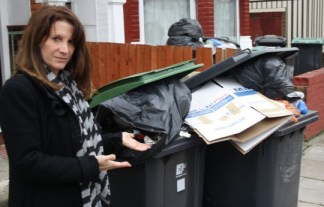
Lynne Featherstone MP and the Haringey Lib Dems have ramped up the pressure on the Labour-run Council following the revelation that Haringey Council has been successful in a bid for Government funding to support weekly bin collections.

When the fortnightly collection scheme was introduced by Labour-run Haringey, the Liberal Democrat MP and Haringey Lib Dems raised serious concerns about whether local people had been properly informed, and whether fortnightly collections would work in all parts of the Borough. Senior Council officials then admitted that residents had not been properly consulted.

Hundreds of Hornsey and Wood Green residents complained to Lynne Featherstone MP about rotting rubbish, increase in vermin, the outlook of their street being ruined and having the wrong size bins. Lynne Featherstone MP and the Haringey Lib Dems have since been lobbying hard for the Labour Administration to change its one size fits all policy, to recognise that different areas have different collection requirements, and to reintroduce weekly collections where appropriate.

Last week, Labour Cllr Gideon Bull admitted that the scheme has not been universally popular, and that the Council need to get smarter with dealing with bin collections.

Leader of the Haringey Lib Dems, Cllr Richard Wilson said:

“Ever since this disastrous scheme started, we have told the Labour administration that the scheme wouldn’t work in certain areas and that they should have consulted residents – but they blindly carried on with their flawed policy and did not listen to reason.

“Now we find out that Haringey Labour had bid for Government money to fund a return to weekly collections months ago. They obviously knew the policy wasn’t working and they would need to go back to weekly collections. They could have saved residents a lot of stress and hassle instead they chose to behave as if nothing was wrong.

“What makes it worse is there is money in the council coffers to pay for this even without the Government’s help; the publicity budget alone is a whopping £2.5 million.

“It’s a disgrace, even by Haringey Labour’s standards.”

Liberal Democrat MP for Hornsey and Wood Green, Lynne Featherstone commented:

“The Coalition has ditched the previous Labour Government’s policy of imposing fortnightly rubbish collections for all. As promised a year ago, we have delivered a quarter of a billion pound fund which will help councils support weekly collections.

“I am just appalled that Haringey Labour has waited this long. Now I fully expect them to collect rubbish weekly in areas like the Miltons – and other areas where fortnightly collections and one bin size doesn’t fit all!

“We’re issuing our final call, and I hope that they finally listen to the Haringey Lib Dems and residents – as they should have done in the first place.”

My first visit to Zambia

I am currently in Zambia, in my DFID role and as UK ministerial champion for tackling violence against women and girls overseas. This coincides with the UN day for eliminating violence against women (yesterday.) Here is the text of  my Huffington Post blog, written on Saturday. You can see the original here

… Sunday 25 November is the UN day for eliminating violence against women, which I’m marking with my first ever visit to Zambia. Physical and sexual abuse of women is a global scourge, that transcends borders. From the UK, where one in four women will be the victim of domestic abuse in their lifetime to Zambia, where 47% of women have suffered gender-based violence. Much has been done to improve the plight of women but, in Zambia as elsewhere, cultural norms are often still a barrier to change.

As the UK government’s ministerial champion for tackling violence against women and girls overseas, I feel a great sense of responsibility. Changing mindsets and preventing violence before it starts is crucial. And there is evidence of progress. In Zambia, the government has created a new Ministry of Gender this year. A new Adolescent Girls Empowerment Programme will provide mentoring and ‘safe spaces’ to 10,000 vulnerable girls. Such developments are hugely welcome and we must grasp this chance to garner more global support.

There is still so much to be done. In recent years, many countries devastated by conflict have seen increasing levels of gender-based violence. Women and girls, men and boys are all victims of sexual violence where rape is used as a weapon of war. In the eastern Democratic Republic of Congo, at least 200,000 cases of sexual violence mostly involving women and girls have been documented since 1996. I’m optimistic that with the Foreign Secretary’s preventing sexual violence initiative we can step up our work to tackle this heinous crime and provide the justice so desperately needed.

Improving rule of law and access to justice is key to giving women the voice they need. We have helped install justice systems like the Sexual Assault and Referral Centre (SARC) in Somaliland, meaning that a woman who was raped by seven men was able, through extreme courage on her part, to bring the perpetrators to justice. It’s evident – that given the right support, women will fight back.

Across Africa the SARC initiative has seen a dramatic increase in the conviction rate of violence against women cases from 35% to 60% in the target locations. This can be attributed to the work undertaken with the police, hospitals, courts and the Sexual Assault and Referral Centre. We now need creative and determined efforts to build on this success and help empower women to confront perpetrators of violence and tackle impunity on a larger scale, across the continent and beyond.

One opportunity to really make a difference is at the annual meeting of the UN’s Commission on the Status of Women, an event where these issues are given an international spotlight. It is terribly frustrating that the most recent meeting in March failed to reach any agreed conclusions. We must do everything in our power to defend the hard-gained progress on women’s rights and equality which is being undermined on the international stage. We must ensure that the international community agrees a set of global standards next March, to help protect women and girls everywhere from discrimination and violence.

On my trip to Zambia, I look forward to seeing projects that are making a real difference to the lives of women and girls. The absence of international cooperation cannot ever be a justifiable reason for failing to protect the worlds female population.

Winter is coming

Here’s a sneak preview of my latest email due to go out to local constituents on my email list:

Winter is coming and inevitably, it’s getting colder and colder. At this time of year, a warm home is vital, particularly for families, the elderly and vulnerable people.

But it isn’t always easy – Energy companies have been hiking up prices and have made it difficult for many people to keep their homes warm.

That’s why my Lib Dem colleague Ed Davey – the Energy Secretary – has developed numerous Government grants and discount schemes to help people with the cost of their winter bills. Here’s an overview of the many discounts and grants available:

The Winter Fuel Payment is for anyone born on or before the 5th July 1951 is entitled to a tax free payment from the Government, ranging from £100-£300 to help with heating bills. This year, you should receive the payment automatically – but do let me know if you haven’t and I will chase it up.

The Warm Front Scheme means that households can improve their heating or insulation at no cost. If your property is poorly heated or if you do not have working central heating system, the Warm Front Company will come and do the work – and the Government will pay the bill directly.

The Warm Homes Discount is run jointly by the Government and Energy companies, and gives recipients a £130 discount on Bills. It is generally targeted at the over 80’s – but some energy suppliers provide to others, such as people on disability living allowance.

In short – it’s well worth taking a look at these grants and seeing if you’re eligible! Energy companies do offer discounts to certain customers, so it may well be worth contacting you supplier to find out if you could benefit. British Gas is also offering free insulation.

If you have any problems applying, or are not sure whether you qualify, please reply to this email with your national insurance number, and I’ll investigate it for you.

Would you like to receive emails about news like this directly to your inbox? If the answer is yes, then why not fill in this contact box.