Digital Britain isn’t ambitious enough

The Government’s report into "Digital Britain" – an 81 page pdf – was launched last week.

As an interim report, it would be unreasonable to expect it to have come to conclusions across the board – but time after time, rather than offering up suggestions or ranges of options for further consideration before decision, the report basically says, "we’ve thought about it, and decide someone needs to think about it some more".

Mix in the love of plans, strategies and new groups and it is the blend of bureaucracy and indecision that often frustrates even the keenest fans of the New Labour governing style.

And that style has the report’s foreword, from minister Stephen Carter, in a suffocating grip. As the foreword says, "the average British adult spends almost half of all their waking hours using the services of the communications sector or browsing, watching or listening to the audio-visual content it distributes", and yet how does the foreword start? By talking about digital’s role in Britain’s economy.

The health and success of this sector is discussed in terms of the economic benefits it brings. That is certainly important – particularly at times like these – but when we are spending nearly half our waking hours consuming to some degree or other its output, then it is also a sector that is about far more than just economics. Digital life should be about more than a matter of pounds and pence, economic statistics and econometric models.

This narrow-minded focus on the economic stands in ironic contrast to how much of digital life is driven by non-economic factors – as with the large volume of content make available voluntarily and for free. Imagine a digital world where the only contributors were those with a direct economic motive for contributing. It would be only a shadow of the vibrant digital culture that we have.

Moreover, understanding how to foster and grow that culture is necessary in order to in turn reap the economic benefits. Yet on so many of these issues the report is silent. A few quick examples. A spread of creative commons licensing could unlock much creativity. Instead, we have no imagination on the copyright front in the report, not only in its own copyright status but in the lack of good plans for changing crown copyright or the copyright culture more generally.

Not even a modest step in the direction of copying the US Federal Government’s approach to copyright where, for example, it is standard for photographs taken by the US military and then available free for all to use. If the taxpayer is paying for the photo then (security considerations excepted) why shouldn’t the taxpayer be able to use it?

Likewise on libel. It can have a chilling effect on blogging, and there is plenty to debate changing – such as the way libel law discriminates against those who moderate comments, encouraging therefore the lowest common denominator style of blogs where anything goes in the comments.

Or the ease with which someone can threaten libel action, run up legal costs and then try to pressure you into paying them even if you are willing to say sorry and issue a correction long before matters get to court.

As with copyright, we are stuck with a set of rules, procedures and habits that so often hinder the flourishing of creativity in a digital world – but which the report does not adequately address. Similarly crucial to that flourishing are the technology start-ups, but again their needs for care and attention are largely omitted.

The report does talk about some important issues around the digital skeleton of the country – the structure of our broadcasting services, uses of spectrums and availability of broadband. But it is rather like producing a report on the wine industry that is largely about the supply of glass bottles and has very little about the product that goes in those bottles.

Although there is a chapter titled "Digital Content" all its meat is really just about online piracy and public sector broadcasting content – important, but again a rather narrow and traditional view of what matters.

Even on the digital skeleton, the report is very timid in its statements. As my colleague Don Foster put it in Parliament when the report was published:

"Perhaps the biggest disappointment relates to the plans for rolling out universal high-speed broadband. The Government promised that they would bring forward capital investment to help us out of the recession. This is one of the key areas in which that could be done. If done properly, 600,000 new jobs could be created in this country, but what have we got? We have some vague commitment to a universal 2 megabits per second provision. As the hon. Gentleman said, average speeds are already 3.6 megabits per second, so why is there such little ambition and such a low target?"

In the end what should be a study in supporting the exuberant range of new opportunities is one smothered in a welter of bureaucracy and timidity. A open, welcoming digital world this ain’t.

This article first appeared on Liberal Conspiracy.

(c) Lynne Featherstone, 2009
Civil liberties in a modern context

What does an innocent person have to fear?" That’s one of the most common arguments rolled out time and time again to justify chipping away at our freedoms. If you’re innocent why should you be worried if the government can do X, knows Y or stops Z?

The counter-arguments tend to be a mix of principle and pragmatism. Principled arguments around issues such as rights that we have as humans and the restrictions there should be on what governments can do. Pragmatic arguments such as the costs (e.g. spend money on ID cards or on police?), practicalities (e.g. what odds that the ID cards database will really work?) and side-effects (e.g. the increasing number of errors as the DNA database grows). Or in other words – put the resources into catching the guilty rather than hassling the innocent.

But further than that – and I think this is sometimes neglected by those arguing to protect our liberties – we all benefit from the liberties that any one of us has. Most obviously, if a journalist is free to investigate government wrong-doings – we all benefit from that. But this benefit comes in more subtle ways too, as the tragic death of Baby P in Haringey has exposed.

Whatever else one case say about Haringey, it hasn’t been short of whistleblowers with credible, relevant concerns about the way children were being looked after by Children’s Services and the health authorities. Yet they have repeatedly been injuncted and gagged, prevented from speaking out and pressured into silence. Even now, many people are not willing to go on the record to get their concerns into the light (one of the reasons why I believe we should have a public inquiry – so such people can be given the assurance that speaking out will result in being listened to).

We know, though, that inspectors were misled – fed information that suggested all was well, when it wasn’t; that the first Serious Case Review into Baby P’s death was carried out badly and wrongly airbrushed out the serious blunders that the authorities had made; and that concerns raised about the quality of services were repeatedly rebuffed with the answer that all was well and in hand.

This could only happen because of our culture of accepting tight restrictions on freedom of speech in employment situations. It’s the normal thing that if a member of staff is seriously unhappy with how a department is being run, their contract stops them speaking out. Often they will get paid off and required to sign a promise of secrecy. And if they wish to stand their ground and fight? There’s precious little protection for whistleblowers and a hugely lopsided legal system that benefits those with the big pockets (the state) against those without (the employee).

This is not though an issue only about the individual rights of those whistleblowers. It’s about how public services are kept on track and public servants held to account. Anyone who uses those services may be the victim of the service blunders that flow from a whistleblower being silenced.

The idea that if you work for an organisation you should keep quiet spreads far and wide through society – it’s even the normal state of affairs for members of sports teams, who face sanctions if they criticise in public the sport’s authorities. But imagine the outrage there would be if a rule were introduced that MPs are not allowed to criticise the Parliamentary authorities in public.

So when people talk about civil liberties – and cherish, rightly, the many freedoms we do have – let us not forget that freedom of speech is still a hotly contested area, where far too often corporate and bureaucratic self-preservation wins out.

This article first appeared on Liberal Democrat Voice.

(c) Lynne Featherstone, 2009

The Westminster Hour tonight

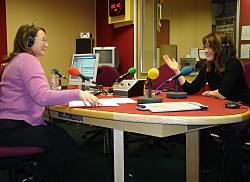
Appearing on Radio 4's The Westminster Hour with Carolyn QuinnI’m on The Westminster Hour tonight (Sunday): Radio 4, 10pm.

If you miss the show you’ll be able to listen again on their website.

If you want to get advanced notice of my media appearances like this one, you can use the media events service at Flock Together. You’ve got three choices:

  1. Using this feed: http://feeds.feedburner.com/LiberalDemocratsMediaAppearances, or
  2. By email: register at FlockTogether and pick “Media appearances” as one of the categories of events you want to be emailed about. (If you are an existing Flock Together user you can also change your preferences – login and then click “Edit your preferences” in the left-hand menu; you need to tick “Media Appearances” under “Email options”), or
  3. On the web: take a look at the dedicated Flock Together page.

Where does lottery money go?

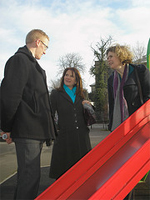
Lynne Featherstone at Alexandra Palace Park playgroundWent out after surgery yesterday to visit two of the local projects funded by the Heritage Lottery Fund.

First off – the makeover for Alexandra Palace Park – where there is a real transformation. Now we have views along the axis – like a mini (very mini) Champs Elysees. Landscaping and renewal around the rose garden. The children’s playground is now a delight and the views no longer screened by scary clumps of growth where mothers with toddlers used to fear strangers might lurk. The skate part and the graffiti wall are doing just fine. The fishing decks and revamp of the cafe make an afternoon or morning boating or walking, playing or fishing a delight. It was really great to see the park blossoming and fulfilling its potential in a way that it always should have – but never did.

Thank you Lottery Fund! And thanks too to the staff whose enthusiasm and commitment have seen it through from concept to completion.

The second of our visits was to the George Padmore Institute in Stroud Green. This was a treasure where the history of one man’s vision and drive (John Le Rose) led to the birth of the fight for rights in black education and arts. Black history is now far more to the fore – but this is the man who drove the agenda forward and somehow knew the path to force intellectual, cultural and artistic change. Lottery funds have and are supporting the archiving of the documents that give testimony to this history. This was a real treat of a visit – and thank goodness for the funding for without it such important and transforming history might not be preserved and archived.

A story with a happy ending: from house of horror to dream home

Having spent ten years in a one-bedroom larvae infested flat with a growing family, mother of two – Bonnie Tarpey-Wronski – recently got the keys to a beautiful new-build thanks to years of repeated intervention by her local MP, Lynne Featherstone.

Lynne Featherstone, who has been fighting Haringey Council for the family’s right to move from temporary to permanent social housing for over three years, visited the family last year to see for herself the state of the infested flat. Last week, the Liberal Democrat MP saw the family again, this time at the new three-storey house in Muswell Hill.

Lynne Featherstone commented:

“I’m just over the moon to see Bonnie and her family so happy and settled in. She has been through hell, living as a family of five in a crammed one-bedroom house, with her kids developing asthma from the mould.

“It really has been a long journey from a house of horror to dream home. I just wish every story could have the same happy ending.”

Bonnie Tarpey-Wronski adds:

“I’m just so happy. Lynne has been great and helped us get not only what we wanted, but much more. My kids sleep well at night now and they have the space and the peace to study and create a better future for themselves.”

Bus stop repairs "not good enough" says Nigel Scott

Local Liberal Democrat councillor Nigel Scott has demanded action from Haringey Council bosses after spotting slapdash and inconsistent repairs to bus stops signs near Alexandra Palace Station.

Road repairs at one stop, nearest the station, have been completed but a yellow bus stop sign has not been repainted; at the second stop, the sign has been repainted but only on the repaired piece of road – leaving the rest of the worn sign unpainted.

Nigel Scott has written to demand that Haringey Council ensures that when contractors repair roads they repaint bus stop signs and repaint the rest of the sign too, if needed.

Cllr Nigel Scott (Alexandra ward) comments:

“It is just not good enough that after repairs are done to roads bus stops signs are not repainted or contractors only paint the area they have repaired.

“Surely Haringey Council can ensure the whole sign is repainted when repairs are done to bus stops.”

Lynne Featherstone MP, adds:

“It is ludicrous that Haringey Council cannot get their contractors to repaint signs when repairs are done. It is even worse when they paint part of a sign only on the repair they have completed, and just leave the rest.”

603 bus

The bigwigs from Transport for London came to Parliament to meet with the London Lib Dem MPs to answer specific questions from them. Quite a line up! Tim O’Toole (tube), David Brown (surface transport), Ian Brown (overground) and the Commissioner for Transport – Peter Hendy.

Needless to say my constant refrain is ‘gissa bus’ – and specifically the extension to a full time route for the 603. What is like trying to get blood out of a stone is the cycle where I ask, I get told that a full time route is not financially viable – but then they won’t say what demand level will make it viable. However, today after pushing and pushing the point, David Brown has said that he will finally get back to me with some sort of figure. I could see scepticism in his eye – because he is convinced that the model TfL use to assess viability predicts demand accurately. I say bollocks to that. Anyway – I want to try and prove their model wrong. So – if they say 10 passengers per hour or 20 or whatever – I will find them!

Intimidation of Jewish students

It was dreadful when Muslims were vilified and attacked because ignorant and prejudice people connected them with the terrorist atrocities here and in America. Now it is Jewish people who are being intimidated and attacked because of what is happening in the Middle East. Equally unacceptable.

Today there was a lobby from students at Parliament – Jewish students – who are experiencing attacks, discrimination and intimidation from other students who – because they see the damage and carnage in Gaza – feel licensed to take that out on Jewish students.

I met one of them – a constituent who turned out to be a young woman from Muswell Hill studying at Manchester University, where she and other Jewish students were being intimidated. It’s fine to have divergent views, strongly held and strongly argued. It is not fine to translate that into hatred and the rest.

Are you a techno wizard?

This article appears in this week’s Liberal Democrat News:

Since the news that Nick Clegg was proposing to the Federal Executive that I should chair the party’s new Technology Board (a proposal the FE agreed to last Monday), the internet fraternity have been keen as mustard to give me their ideas – and I am keen to have them!

So this is great, but what’s become clear to me – other than the need to publicise that the Board’s work will be about technology in the sense of e-campaigning, computers and the internet, rather than technology in the sense of scientific research – is that there is a huge pool of untapped potential.

Because almost nobody whose conversation or email or Facebook message started, “I work in IT and I’ve got some ideas for how the party can improve…” and who clearly has a bundle of useful IT skills is actually using those skills very much to help the party at the moment. I want to enable that skilled army to employ its talents to the max.

One or two get it totally – and are wonderfully valued for that. A good few more are doing things like looking after their local party’s website (though, frankly, these days that usually doesn’t require much technical IT skill – skill yes, but not technical IT skill). But generally – there is a large pool of people with technical talent that we’re hardly tapping.

Yet looking at the tools the party currently has, and the resources we have available to improve them, there clearly is a lot of very valuable work which such people could be doing. So as I’m beginning to map out the whats and hows of the Board’s work, I have three clear priorities in mind.

First, really getting the most out of the opportunities the internet offers isn’t really about the technology – it is about how we use it – and getting those online opportunities embedding into our activities. As the writer Clay Shirky puts it, “The revolution doesn’t happen when society adopts new tools. It happens when society adopts new behaviours.” That’s why Nick suggested me for this position – because I use what the internet can offer – but in techno terms am an infant.

Second, we need to build on our efforts to give individuals – whether members or not and living in a target seat/ward or not – the opportunities through the internet to campaign on behalf of the party and to spread our message both online and offline.

Third, where we have tools that should or could be improved, we need to tap into the volunteer skills of members and supporters. We will in part do that by setting the right standards and frameworks for the party overall. But we will also only achieve this if we open up more of the code the party has acquired so that more people can contribute to it.

For example, our email list server is based on open-source software and is used by hundreds of people to run email lists, some of whom are expert programmers. And yet the only changes to the code that happens are those the party does or pays for centrally. Likewise, many of our other tools – such as the petition engine that we frequently use in my constituency – and indeed the party’s www.libdems.org.uk website – run on code the party owns.

So with the help of Richard Allan, I’ve put together a brief online survey asking people to volunteer information about the technical skills which they have – whether it is the programming or software development management skills to help us get more and better code written without having to rely solely on the stretched resources at the centre.

The survey is at http://www.libertyresearch.org.uk/take/505 – and please fill it in if this sounds like something for you, and let others know about it too.