MPs are pretty normal – shock!

Hansard’s report on MPs’ use of the internet was published yesterday and sponsored by Microsoft they held an evening for an invited cognoscenti and a panel of three blogging MPs – myself, Tom Harris and Douglas Carswell.

The report basically found we (MPs) were ‘normal’ – not a description often used in preference to abusing us! But in this case, we replicate pretty closely the rest of the world in our use of the internet.

I think all three of us bloggers were pretty clear that despite the dangers we believe it is important to say what we think. We all gave slightly different takes on the “why” – for me, it’s mostly about engaging with constituents first and foremost, in Tom’s case he is more looking at a national audience and promoting the party’s line and in Douglas’s case he talked about attracting a wider audience for views and issues.

I have no doubt, myself, that my use of e-campaigning was part of the magic that overturned a 26,000 Labour lead over me in two elections to victory by 2,395!

Graham Watson (Lib Dem Euro Leader) was there too – and explained that when your electorate reaches 5,000,000 you really are not going to be able to reach them any other way than by e-means!

With blogging and twittering and use of social networks like Facebook – we are all still experimenting and pushing the envelope. Some tweet all the time and blog multiple times a day. For myself, I do it as often as I can – but am still somewhat concerned that I don’t end up feeding the monster. In truth, it doesn’t take very long to write a blog as I don’t fret or anguish over my words (as you have probably noticed!) and I love writing.

Anyway – lots of interesting people at Microsoft for the evening – ranging from the techno fraternity (and a few sorority) to those involved in other allied areas like Tweetminster – the twitter feed for MPs.

This is all in its infancy really – and we all (elected representatives) have yet to use all the tools the internet offers to communicate with our various audiences. One thing was clear though – and very clear in Hansard’s Report – that MPs still see use of the internet as mainly a means of lecturing (informing) their electorate of their opinion or view – but as yet are not so keen on engaging and hearing back what the electorate thinks of them.

Well done Hansard for this. What I think will be really interesting is for Hansard to monitor what the effect is on votes for those internet savvy politicians compared with those who just basically use email and have a website (which is the majority).
David and Samantha Cameron’s tragic loss

David and Samantha Cameron’s tragic loss of their son Ivan broke on the phone-in shows as I was coming into work this morning. On LBC the radio show host asked people to call in who had experienced the loss of a child – and the calls and the death of Ivan had me in tears. This loss is unimaginable and tragic – and all I want to say publicly is how sorry I am for their loss and wish them the strength to endure. We are, in the end, human beings first and politicians second.

Not so equal pay at Cambridge University

Cambridge – bastion of male dominance – still! So- I’ve referred the buggers to the Equalities and Human Rights Commission for investigation.

It’s because of the appallingly wide gap between what the university pays men and women. The university’s own Equal Pay Report shows that men are paid on average nearly a third more than women – £37,157 compared to £28,247.

There are two reasons for the gap – if you compare people on each pay grade, then for two-thirds of the grades, women on that grade get paid less than men – and also the higher the grade, the higher the proportion of men. At the most senior level, there are seven men for every woman – but even for those women who have reached the very top, they are still being paid less than men in the same position.

So there are some real questions for the university to answer – but there seems to be too much complacency around, particularly in the half-baked attempted explanation that men get paid more because they tend to be pay on a higher pay grade. Well, duh! But why is that the case? And why, even when people are on the same grade, men usually get paid more?

There are some professions where change in pay and equal opportunities has been slow and a long time coming. I have a smidgen of sympathy for those where you have to have many years of service in order to get to the very top – and there is at least an argument that those years are needed to gain the necessary experience. The Law Lords might be a case in point.

But academia – despite its rather fusty image at times – is not one of those. Look at what happens to the youngest and brightest new academic stars – they are often snapped up and become professors at a young age. Decades of service are not needed.

The gap at grade 12 (the top pay grade) is over 5%, which is the threshold where, under the Equality and Human Rights Commission’s guidelines action should be taken. The university is trying to wriggle out of this by saying the gap is under 5% – if you exclude “market pay supplements and other pensionable and non pensionable payments”. In other words – the gap is smaller, if you ignore bits of it. Not got enough. Pay is pay. So – over to the Equalities and Human Rights Commission!

Safer crossings for schoolchildren after successful campaign

Children will now have a safer walk to school after a successful campaign by the Liberal Democrats. Zebra crossings around schools will now be proactively monitored and maintained by Haringey Council after agreement at a Cabinet meeting.

Liberal Democrat pressure has now ensured that pedestrian crossings used by schoolchildren will be re-painted when they are worn out and will be included in the council’s ‘Sustainable modes of travel to school strategy’. Previously residents had to alert the Haringey Council that crossings were worn out.

However, Liberal Democrats have said that this scheme does not go far enough and have called for all crossings to be monitored to ensure the safety of all residents.

Liberal Democrats have campaigned since last November for a proactive re-painting scheme when it emerged that several zebra crossings in the borough were dangerously worn out and not visible to motorists.

Cllr Martin Newton, who spearheaded the campaign, comments:

“Finally getting a commitment from Haringey Council to include monitoring and re-painting of worn out crossings and road markings around schools is a start. However, pedestrians rely on zebra crossings to cross our busy roads safely throughout the borough and the Council should be monitoring and proactively re-painting all zebra crossings and other road safety markings on a regular basis.”

Lynne Featherstone MP, adds:

“It was a ridiculous situation when it was up to residents to report that zebra crossings were not visible. At least now we have a first step by Haringey Council to show that they should be responsible for proactively repainting zebra crossings and not wait.”

Liberal Democrats welcome Labour climb-down over St Ann's Hospital consultation

Last night Haringey Council finally admitted that they failed to inform local people over the future of St. Ann’s Hospital.

Liberal Democrat Health Spokesperson Nigel Scott welcomed the statement made by Labour councillor Kaushika Amin when she admitted that residents were kept in the dark when St Ann’s Hospital was transferred to Barnet, Enfield and Haringey Mental Health NHS Trust in 2001.

Councillor Amin was responding to a deputation led by Mario Petrou at last night’s (23rd Feb 2009) meeting of the Full Council.Mr Petrou also raised new concerns over the future of the St Ann’s site.

Cllr Nigel Scott, Haringey Liberal Democrat Health Spokesperson, comments:

“Finally Haringey Labour have admitted that they are bad at listening and consulting with local residents. Cllr Amin apologised after years of Labour failing to recognise local concerns.”

Cllr Rachel Allison, Haringey Liberal Democrat Regeneration Spokesperson, adds:

“We must now press for the future of St Ann’s Hospital site to be decided by all stakeholders. The future of mental health services must be an important part of any consultation but the size of the site means that other uses are on the cards.

“Local people must have real input in decision making. Opportunities like this only come along once in a generation and we owe it to the people of Haringey to make sure this chance is not squandered.”

Lynne Featherstone MP adds:

“St. Ann’s could be a real asset for the whole of Haringey but nearly a decade of Labour incompetence has taken its toll. A clear plan is needed to ensure the future of St. Ann’s hospital and to move on from years of neglect and doubt.”

Independent scrutiny of Children's Services rejected by Haringey Labour

Haringey Labour councillors unanimously voted against a Liberal Democrat proposal at last night’s Full Council to establish a separate watchdog committee focusing solely on Children’s Services.

The committee would have been chaired by an opposition councillor and supported by a completely independent and impartial vice-chair. These changes would have allowed a fundamental change in the way councillors oversee the borough’s Children’s Service.

The measure would have directly responded to the severe criticism in the new Joint Area Review (JAR) report that specifically cited the failure in scrutiny as a contributing factor in not having systems in place that would have prevented the tragic death of Baby P.

Councillor Gail Engert, Liberal Democrat Spokesperson for Children’s Services said:

“These are constructive proposals that would make an immediate and lasting difference in the way we keep our eye on how Children’s Services are run.

“It is deeply worrying that in spite of a promise of change, Labour has rejected out of hand this simple and immediate overhaul that would have imposed real and robust checks and balances.”

Councillor Karen Alexander, Liberal Democrat Scrutiny spokesperson, commented:

“I am worried that setting up an ad-hoc panel as suggested by Labour will not have the powers of a scrutiny committee.If there are concerns about Children’s Services this panel will not be able to do anything about it.”

Lynne Featherstone, Liberal Democrat MP for Hornsey & Wood Green adds:

“There is a serious conflict of interest at the heart of Labour’s scrutiny system because it is chaired by a Labour member.

“It is impossible to see how a member of the Labour group can thoroughly and independently review, and when necessary criticise, decisions taken by colleagues from his or her own party.

“I am concerned that in spite of promises of change Haringey Labour wants business as usual. Given the scale of the tragedy and the legitimate concerns raised by local residents over the quality of services, Haringey Council needs to address these failings now.”

The banking system: lessons from my childhood

One of the questions on Politics Home this morning (I am a panel member of this daily tracker of opinions political) was do I think the banks should go back to a separation between our old safe, solid high street retail bank – and the speculative, take risks, make loads of dosh type investment banks?

Yes I do! I can remember being absolutely irate when our reliable, responsible banks were freed of such regulation and zoomed off to the realm of the speculative. I was upset because I liked slow and steady.

Perhaps this was because of a salutary experience I had about risk and loss. I had a very early example in my life of the dangers of the offers of a higher return on savings than the norm. In the flats where I grew up was a young financial buccaneer. He had his own merchant bank at the age of about 23 and all the families who lived in the block thought he was just the bees knees. All our families had seen this man grow since he was a little boy – and so when he had his bank all set up – he went and sought investment from lots of people who lived there – friends and neighbours. Many of these ‘investors’ were coming to the end of their working lives and I guess the offer was too good. I don’t know too much about the rates etc as I was a teenager at the time and not much interested in boring things like investment.

Anyway – however ridiculously high the promised return was – I expect a mixture of hope and trust and familiarity persuaded quite a few of the residents to place their life savings with this young man.

Of course, like all morality tales, this ended badly for these trusting folk – and all their money was lost. And the moral of the story was if it looks too good to be true etc.

The young man went to prison for about six years I think – so justice was done – but quite a few properly lived lives were ruined. These were not rich people – just people who had worked all their lives and put away their savings. They may have made a mistake in putting too much money with one person – but it was a harsh, harsh penalty for that.

Anyway – that was a merchant bank and therefore it was ‘buyer beware’. But when our safe, high street banks, changed into risk-takers – I guess many people didn’t really understand that they could play fast and loose with our money the same way investment banks could and did.

For those of us who had to literally beg for our first mortgages – when it was a case of being judged suitable to receive a loan on the basis that you would be capable of paying it back – the idea of a 100% or 125% mortgage is inconceivable as a model.

Were we, the population, collectively guilty of partying thinking we wouldn’t get a hangover? Maybe a bit – but if we thought the party would never end – it’s because the banks and the Government led us to believe that was the case. We couldn’t imagine that banks would be allowed to behave that way – let alone with the tacit encouragement of the Chancellor latterly Prime Minister.

But I think we relied on the banks to know what they were doing in the way they used to. If they said we could borrow like there was no tomorrow – live now and pay later – then there couldn’t be a problem with it. The banks led us up the garden path (albeit we were happily led) and now we find they were full of avarice and greed.

So when Gordon yesterday talked about a return to the separation of banks back to the old style high street banks – he is right but how dare he not accept or understand that it was under him that this dangerous financial model was given license and bred the monsters who have led to such a downfall. And yes – Gordon – it may be a global financial downturn – but the seriousness of our situation is laid at your door. No one else’s.

I can’t help feeling sorry for the prudent in all of this. Yes – of course those who suffer direct hits on job and home are first in line for help. But what about all those older people who supplement their meagre pension by the interest paid on a lifetimes work savings? As Vince Cable (Lib Dem Shadow Chancellor) says – time for thrift and sensible behaviour. But we need some assurance that thrift and sensible behaviour will be rewarded – not punished – as is currently the case. Now – there’s a novel idea!

Catch me on the radio this evening

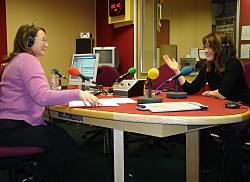
Appearing on Radio 4's The Westminster Hour with Carolyn QuinnI’m on The Westminster Hour tonight (Sunday): Radio 4, 10pm.

If you miss the show you’ll be able to listen again on their website.

If you want to get advanced notice of my media appearances like this one, you can use the media events service at Flock Together. You’ve got three choices:

  1. Using this feed: http://feeds.feedburner.com/LiberalDemocratsMediaAppearances, or
  2. By email: register at FlockTogether and pick “Media appearances” as one of the categories of events you want to be emailed about. (If you are an existing Flock Together user you can also change your preferences – login and then click “Edit your preferences” in the left-hand menu; you need to tick “Media Appearances” under “Email options”), or
  3. On the web: take a look at the dedicated Flock Together page.

National Nest Box Week

Lynne Featherstone putting up a nest boxThis week has been National Nest Box Week – so up when a nest box in my garden!

Haringey’s birdlife has drastically declined in diversity and numbers over the past thirty years, so I was doing my little bit to help – and to encourage others to do so too.

Diminishing biodiversity isn’t something that is only happening on the banks of the Amazon, but here in Haringey too! It saddens me that we see fewer and fewer birds in our gardens. Sightings of the house sparrow, for example, have fallen in Haringey by 80% in 30 years.

Loss of habitat and lack of food is really the reason why we see fewer birds in our gardens. So putting up a nest box in your garden is really the best and easiest way to help Haringey’s feathered friends.

Anyone wanting to find out more about how to fit a bird box should visit the National Nest Box website.