The latest news on the London tube strikes

As you may have heard on the news, an ongoing dispute between the Mayor of London and RMT /TSSA Unions has led to a tube strike starting this evening at 9:30pm. 

In my experience, tube strikes also affect buses, trains and roads as people use alternative transport for their commute.

The strike will start at 9.30pm today until the morning of Friday 7th. Another strike is planned between 11th – 14th as well, depending on further developments.

There are a number of tools you can use to plan an alternative route, including TFL Journey Planner and Google Maps. TFL has also released an advice document, outlining which lines will be affected, here.

In the meantime, please do not hesitate to get in touch via email, phone, or post if I can be of any other assistance as your MP.

An African-led movement for change

Here’s my final blog from last week’s visit to Burkina Faso – also available here.

What do you get when you combine a vibrant First Lady, a country in which most women have undergone female genital mutilation and many are facing health problems and complications in pregnancy, and funding from donor countries to support a country’s desire to achieve change?

I discovered that you get an environment in which it’s OK to talk about really difficult subjects like women’s genitalia and FGM/C-related health problems in school.

You get radio shows that allow women who’ve never felt able to speak up about their bodies to call in and ask how they can get help.

And you get the remarkable Suka Clinic, funded by a foundation set up by the First Lady, Chantal Compaoré. The clinic provides free surgery to repair the damage that FGM/C has done to so many women in Burkina Faso.

During my visit I went to the clinic, and saw hope being restored by the dedicated staff who run it.

After showing us the most harrowing video I’ve ever seen – of a baby girl having her clitoris removed – and photographs of some desperate pregnancy complications suffered by women who were sewn up as young girls, it would have been easy to focus only on the horror suffered by millions of women around the world.

But the clinic provides free reconstructive surgery to dozens of Burkinabé women every week – allowing them to have sex, give birth safely, and avoid a multitude of other health risks. All this costs just 6,000 Central African Francs, or $15, but changes lives beyond measure.

I also visited a school, where I saw a class of 15 and 16 year-olds – both boys and girls – engage in a lively debate about the dangers of FGM/C and design slogans to tackle the practice.

And I joined in the radio show in which a woman who hadn’t even known that her body was different to those of other women called in to seek help for the first time in her life.

At the clinic, I met one of the women who had gone through FGM/C as a little girl, had reconstructive surgery a few years ago, and now had a beautiful child of her own. Would she cut her daughter, I asked? “I don’t think so,” she replied with a wry laugh.

That’s the kind of voice, along with those of leaders like the First Lady of Burkina Faso, that can end FGM/C in a generation.

Join my campaign to end FGM in a generation

fgmNo woman or girl should ever have to suffer the horrific practice of Female Genital Mutilation (FGM.) But, in countries like Egypt and Somalia, more than 90% of girls and women over the age of 15 have been cut. Truly shocking statistics.

This has been a taboo for too long – FGM is child abuse and we must help bring the practice to an end.

As a minister for International Development, I have announced a £35million UK Government programme towards this aim, and am doing all I can to raise awareness.

The Department for International Development have launched a Thunderclap in support of ending FGM within a generation.

If over 500 people sign up, the thunderclap app will tweet the same message of support from everyone at the same time. This will get #EndFGM trending, bringing the issue to the attention of millions of twitter users.

Please do sign up and help raise awareness. Together, we can end FGM in a generation.

Support the Haringey Million Poppy Campaign

Two local community forums, Harringay Online and Bowes & Bounds Connected have teamed to up to create a living memorial to mark the 100 year anniversary of the First World War.

Inspired by the Royal British Legion’s new campaign, the team aims to collect enough money to buy one million Flanders poppy seeds. The seeds will then be packed and made available at shops around the Borough, ready for planting.

£1 in every 3 will go directly to the British Legion, and the rest will be used to co-ordinate planting events to get a million poppies growing in our area.

A hundred years on, it is as important as ever that we remember the sacrifices made and the consequences of such a terrible conflict.

By brightening the area with so many poppies, local people will be providing a dignified and poignant commemoration to the suffering of millions during the war.

If you would like to get involved you can donate through the campaign’s Paypal account here. You can also follow the two groups on Twitter using the handles @Harringayonline and @BowesandBounds.

Positive news from Burkina Faso on the work to end FGM/C

Today I am in Ziniaré, a village that has abandoned female genital mutilation or cutting (FGM/C).

While 76% of girls and women from 15 to 49 years old in Burkina Faso have undergone the practice, only 9% of Burkinabés, men and boys included, think it should continue.

So, what is working here?

Sometimes people see for themselves the terrible harm FGM/C can do. In Ziniaré I met Naba Siguiri, a customary chief who lost his 5 year-old daughter when her cutting went wrong. Siguiri has become an important voice in the fight to eradicate the practice in his village.

But where people don’t have a personal experience of the damage FGM/C can do, including complications in childbirth, other methods are needed to shift people’s opinions.

Here in Burkina Faso the government has an action plan that includes a huge communications and sensitisation effort. Community members are trained to educate their peers and across the village there are posters to remind people of the reasons they have committed to abandon the practice.

In Ziniaré I met Savadogo Jean, Zongo-Savadogo Fati and their daughter Savadogo Awa, they were 1 of the first families in the village to announce that they would not cut their daughter. The community was shocked by the decision at first, but as they learnt about the potential health impacts of FGM/C they began to accept their decision, and in the end congratulated their bravery.

Then there are the prosecutions. Burkina Faso has 1 of the most effective and well enforced laws against FGM/C in the world. 117 cases of excision were reported and 192 people were convicted between 2009 and 2013. Police and magistrates also patrol villages to give help and advice to villages and victims and investigate, prosecute and adjudicate on potential or actual cases. The officers I met are passionate about their work and also staff a hotline that people can call anonymously to report cuttings that are about to happen or have recently taken place. I heard many stories of cuttings the police were able to prevent, or victims they were able to help.

I also met an ex-cutter, Abzeta Kabore, an elder woman who used to perform FGM/C. Traditional practitioners undertake more than 95% of excisions here in Burkina Faso, often with knives or razors and with limited medical supplies. Kabore was prosecuted and spent time in prison, though she says that it was not the punishment alone that made her renounce her former livelihood. In prison she learnt about the negative health impacts of FGM/C and on her return to the village she refused further requests for girls to be cut.

DFID supports all of the people I met today and the Burkinabé government, through the largest ever donor programme on FGM/C which backs the African-led fight to eradicate the practice.

But challenges remain here. The government has so far focused on 2 high-prevalence provinces as they do not have the resources to cover the whole country just yet.

So we need to step up to the challenge. I’m calling on the international community to break the silence on this issue, and to raise their voices against this harmful practice.

I learnt today that we can only do this if everyone – the international community, parliamentarians, customary and religious leaders, communities themselves and even those who perform the practice – work together. Let’s do that, and let’s end FGM/C within a generation.

Voice, choice and control: Tackling FGM in Burkina Faso

Here’s a blog from my visit to Burkina Faso – also available here.

As a woman, a mother, a Member of Parliament and a government minister, I make my voice heard and take significant decisions every day of my life.

But there are millions of women and girls around the world who don’t have the luxury of having their voice heard or making choices about their futures.

One of the clearest examples of women’s lack of choice, voice and control is female genital mutilation or cutting (FGM/C), on which I have launched the world’s biggest programme as part of my cross-government campaign to end FGM/C within a generation.

FGM/C is still practised across a swathe of countries in Africa. In some countries, like Somalia, Guinea, Djibouti and Egypt, more than 90% of girls and women over the age of 15 have undergone FGM/C.

Let me be absolutely clear.  Even if it is practised not as a form of cruelty but because it is an entrenched social norm, FGM/C is child abuse.  It simply has to end.

And there are glimmers of hope. This week, I’m in Burkina Faso to see the efforts of a country that outlawed FGM/C in 1996 and is at the forefront of bringing the numbers of girls who have undergone FGM/C down and who are prosecuting those who continue the practice.

Although 76% of girls and women between the ages of 15 and 49 have undergone FGM/C in Burkina Faso, the prevalence among girls aged 15 to 19 has dropped by 31%.  That’s an impressive shift – but there’s a long way to go.

The Prime Minister, David Cameron, said last week that: “this year, Britain should lead the charge on women’s equality, women’s empowerment, and the empowerment of women and girls, not only because it is a good thing in and of itself, but because if you look at why countries don’t develop or why countries develop slowly, if they exclude women from the work force, if they do not give them equal rights, if there are not proper systems in place for maternal mortality and for safe childbirth, if you don’t have family planning, that country will be held back.”

With that in mind, I’m here in Burkina Faso to find out what we can learn from the African-led movement against harmful practices that damage women and girls. I’ll tell you about what I find in a series of blogs this week, and through a range of activities for the International Day of Zero Tolerance of FGM/C on the 6th February.

I hope you’ll join me here in the fight to help give women around the world the voice, choice and control they deserve, and end FGM/C within a generation.

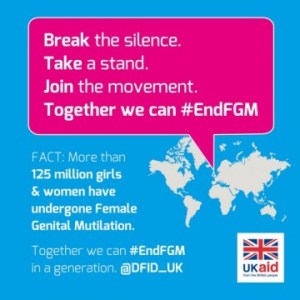
Break the Silence. Take a Stand. Join the Movement. Together we can #EndFGM.


Support for our wonderful high streets

I have always loved living in Haringey – an area that has such an abundance of independent shops and small businesses. As the MP for Hornsey and Wood Green constituency, I am proud to represent such an entrepreneurial and vibrant area.

It’s the traders themselves and customers that make the high streets – but in these tough economic times, the Government should step in too, to help out small businesses and retailers.

So, I am very pleased that the Coalition Government has made significant changes, such as:

  • Reducing the rates bill of small businesses, shops, and pubs by £1000 for the next two years.
  • Continuing the doubled small business rates relief for another year.
  • Introducing a reoccupation relief, which will halve rates for 18 months when a business takes over a long-term empty shop.
  • Giving local authorities the power to provide additional rate relief for eligible businesses (but not pay day lenders, betting shops or pawnbrokers).

We are also encouraging innovation through the Future High Streets Forum, which will advise the Government on how to continue improving the high street environment.

It is so important that this help is provided – to encourage small businesses, to support retailers, and to keep our high streets diverse and vibrant.

Unfortunately, our local Labour-run Council don’t seem to share this sentiment – they have raised high street parking charges to £3 per hour. Traders say this is harming their businesses and forcing shoppers to go to superstores with cheap or free parking.

The Coalition Government has also launched a consultation about how to address this kind of unnecessary behaviour by local authorities. You can contribute here.

The economy is improving, and 600 new enterprises have opened in our area since 2011. The Lib Dems in Government will keep fighting to ensure that the UK is open for business, and that small businessmen and retailers see the benefits of the economic recovery.

Growing economy – Good news for Haringey!

Great news – the economy is growing at the fastest rate we’ve seen since 2007 – according to the Office of National Statistics.

The International Monetary Fund (IMF) also increased its growth forecast for the UK economy from 1.9% to 2.4%.

The UK has also seen a sharp drop in unemployment, and there are now more people in work than ever before. All good signs that the economy is recovering.

And we’re really leading the way in Hornsey and Wood Green. There are now over 1100 fewer people claiming Job Seekers Allowance than there were in 2010.

Youth unemployment here is now 3.8% – almost halved since 2010.

And finally, the number of registered enterprises in Hornsey and Wood Green is on the up, from 4,855 in 2011 to 5,450 now.

The plan is working – and so are we!

What changes would you like to see in Haringey?

Here’s my latest Muswell Flyer article – on the changes I want to see in our borough this year. Also available here

The Christmas festivities are over and I hope everyone had a great time welcoming in the New Year. Alongside my usual resolutions, there is something specific I want to see in 2014.

This year, I want to see a change in how our local services are run and how our council tax money is spent. And with a local election taking place in May – change is a real possibility!

Our borough has so much potential – it is a truly vibrant and diverse area. But, like many Haringey residents who contact me, I am fed up of paying one of the highest rates of Council Tax in London and receiving a poor service in return.

Last year, Haringey Council (which is currently run by Labour) failed to deliver on many key local services.

On housing, the Council allowed £3.7 million to be spent on bonuses for housing staff while cancelling vital and long-overdue repair works for local homes. I receive so many complaints from local residents in social housing about the lack of repairs – and I just cannot believe that millions have been spent on bonuses for failure.

Our local streets are also not up to scratch. A survey I ran last year on rubbish collections turned up over 400 complaints about missed collections, bins in the wrong place, and piles of rotting rubbish.

Another survey revealed hundreds of complaints about potholes and lighting, too – despite the Council promising a ‘pothole blitz’ earlier in the year.

And also – the Labour-run Council is still refusing Lib Dem calls for an independent review into Children’s Services, despite further shocking failures to protect some of the borough’s most vulnerable children.

This is a small summary of the problems we have in Haringey. Labour has had 40 years in charge of Haringey Council, and I think it’s about time that changed.

In contrast to Labour, the local Lib Dems are constantly campaigning for improved local services. They’ve been instrumental in saving our parcel collection points and local train services, alongside pushing the Council into action on numerous issues – forcing them to consult on 20mph roads and to build new homes to ease the housing crisis, for instance.

The local Lib Dems are also committed to continuing the fight against development on Pinkham Way, and to improving the state of our streets. We’ve fought hard for independent shops by campaigning for thirty minutes free parking, and free parking over the entire Christmas period. And, the Lib Dems are committed to supporting our local Credit Union as an alternative to payday loan shops.

For me, the choice is easy. What we need is a Council that listens to residents and works for them. I will be campaigning hard to help the Lib Dems take control of the Council so that we can see real, positive changes to Haringey in 2014. Now, that really would be a happy new year!

Lib Dem action on tax helps to ease the cost of living

Here’s my latest Ham and High column – also available on Lib Dem Voice.

There are so many perks of living in Haringey – vibrant high streets, good transport links, wonderful parks and views – to name but a few!

But on the downside, our bin collections, roads and other public services are notoriously bad. Haringey Council – which is run by Labour – has been rated the worst in London.

Week in, week out, Haringey Labour seem to lurch from one crisis to another. They failed to meet their own targets for making our local roads safe, and allowed £3.7 million to be spent on bonuses which could have been spent on repairs to local homes.

This just isn’t fair on local residents or the hard working officials and frontline workers at the Council. We all deserve a Council that is run efficiently, and directed to spend taxpayers money on the things that matter most.

Despite the poor services, under the previous Labour Government the average Council Tax bill in Haringey increased by a whopping £474. Year on year, Council Tax for Haringey residents increased way above the rate of inflation.

Constantly rising Council Tax did not help individuals and families with the cost of living – particularly after the recession began.

The Liberal Democrats, however, are taking steps to help with the cost of living. Addressing spiralling Council Tax bills is one of these steps.

Since the Liberal Democrats entered Government in 2010 – Council Tax for Haringey residents has been frozen. This is due to successful local Liberal Democrat campaigning, and the Government giving extra cash to any Council if they do not increase Council Tax.

This protects residents from the kind of arbitrary tax rises we saw under Labour.  A typical Band D Council Tax bill in Haringey will be £229.63 less from April 2014 than if Labour’s increases carried on as before.

The Liberal Democrats in Government have also secured a £700 tax cut for all workers.

In April, the personal tax allowance (the amount of your salary you can keep before being taxed) will rise to £10,000.

This means that almost 90,000 residents will get to keep an extra £700 of their pay-packet this year. This is a flagship Lib Dem policy – it was on the front of our 2010 manifesto and it has been delivered in Government. We’re now campaigning to make it an £800 tax cut.

This is real Lib Dem action to bring the cost of living down for local residents. The Tories alone would not have done this. In 2010, David Cameron said ‘we couldn’t afford it.’ Labour had 13 years in Government to bring in policies like this – and they failed to do so.

There is still so much work to do. The economic crisis has taken its toll on many in Haringey, and we are only just beginning to see signs of recovery.

But these measures, Council Tax freezes and the £700 tax cut for all workers are designed to help with the cost of living, and they wouldn’t be happening without the Lib Dems in Government.