Should Haringey have a blanket 20mph speed limit on residential roads?

Here is my latest column for the Highgate Handbook and the Muswell Hill Flyer:

Last year there were six deaths in Haringey – as well as injuries. One little girl, for example, had both legs broken and will never be able to do sport or such like again – in her life.

By the time you read this – the Liberal Democrat group on Haringey Council will have put forward a proposal for 20mph in residential streets across the whole of Haringey.

From evidence elsewhere, 20mph saves lives, reduces seriousness of injuries and cuts pollution. 20mph as a pan borough speed limit has the downside of being a blanket policy – but the big upside of being simple, uniform policy. It’s a common complaint of motorists that rules are too complicated and are enforced wrongly.

Because of simplicity – there are no physical measures like humps or chicanes – 20mph across the whole of Haringey’s residential streets would end up being massively cheaper than putting in separate schemes for each street with humps or other measures. The estimates are something like £22 million to deliver a 20mph speed limit street by street (30% of Haringey’s streets already do have traffic calming) but £600,000 for the pan borough option. That’s quite a difference!

There would clearly be a need for enforcement to make sure that there was a penalty to not observing the limit. Of course, ultimately, there needs to be more than one policy to tackle traffic and vehicle management. One aspect won’t be the total answer. Education is vitally important because in the end – the objective must be to get people to change their own driving behaviour rather than change the fabric of our streets.

However, in the meantime, on financial grounds alone – in the middle of this economic crisis – perhaps we should consider the pan borough idea. For every road traffic accident where the injured person is provided with NHS ambulance services, the charge is £177 for each occasion. Where the injured person receives NHS treatment, but is not admitted to hospital, the charge is £585. The daily charge for NHS in-patient treatment is £719. That’s not to even begin to count the personal cost, police time on accidents, loss to the economy of working days that someone has to take off and so on.

You can imagine what this comes to in mega-millions across the country. The savings would be huge to the NHS – where despite funding being ring-fenced with real terms increases – budgets will be under enormous strain. But more importantly – lives would be saved and injuries minimized – and pollution will be reduced.

Can we really afford not to introduce pan Haringey 20mph speed limits? Let me know what you think!

The Big Society

The way we have been living, spending and behaving – combined with an overweening state – has led to a diminution of human potential and to operating in ever decreasing circles. We seem to value ourselves by what we do and what we buy (or cannot buy) – rather than whether we are good, kind, thoughtful or have other personally admirable and altruistic traits. We follow prescribed routes from centralised diktats where thinking, personal responsibility, professionalism and non-conformity are driven out by targets and tick boxes.

In 2007 I wrote a chapter for a book ‘Reinventing the State: Social Liberalism in the 21st Century’. This starts from the basis that New Liberalism was the outcome of a process of inventing a new kind of state a century ago and that after decades of over-centralisation we need to reinvent it now along social liberal lines.

Much of what I wrote was to do with how we adapt to the ending of the old order, where state, church (or other religions), family, schools, the judiciary and other pillars of society that governed our ‘norms’ no longer held their previous sway or respect.

An increasingly authoritarian approach to almost everything under Labour moved us towards a population controlled by legal parameters rather than social ones.

Change has to come from within – and it is about the behaviour of the people who are part of those structures. This is not about morality – but more about engagement – where consideration for others and the common good comes as high at least on out list as simply our own well-being.

There is a genuine and urgent need to radically reform and change the balance between the state and the people  – that is now under way and part of the answer. The even bigger challenge is  – how do we change behaviour?

Muswell Hill Children's Library – scrubbed up well

Delightful visit to Muswell Hill children’s library to open it now it has been restored to its former glory. You really have to go there to see how fantastic it now is. The roof has huge, ornate sky-light type windows in – glorious – but in all the years I did my surgery there when I was a Muswell Hill councillor – you would never had noticed – as the dirt and grime of years obscured their magnificence. The walls had always been peeling and decrepit – and an old mural across the length of one wall was dingy and dark. The mural had been lovingly restored – and now the library is quite magical. No doubt lots of local children will spend many a happy hour. Congratulations to everyone who worked so hard to make this finally happen.

Local MP opens colourful dance showcase in Wood Green

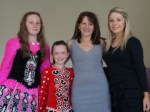
Lynne with Irish Dancers at Haringey Dance ShowcaseTo help celebrate the amazing dance skills on offer in multicultural Haringey, Lynne Featherstone MP, on Friday, opened Haringey’s Big Dance Showcase at the Asian Centre in Wood Green.

The Liberal Democrat MP kicked off the fast moving, colourful display of talent, that saw dancers from all walks of life and corners of Haringey show off their best moves, including Irish dancing, Indian chair dancing and African-Caribbean street dancing.

Lynne Featherstone MP comments:

“Wow, I’ve been blown away by the talented dancers here today, from young to old, from slow, gentle dance to explosions of energy!

“I’m really proud to be representing such diversity and energy. What a fantastic way to celebrate multicultural Haringey, in this colourful collaboration between our Asian, African-Caribbean and Irish cultural centres.”

Trans identity

During the committee stage of the ‘getting rid of ID cards’ Bill – the issue was raised as to how this would impact on those living in an acquired gender. It is currently the case that a passport will be issued in the acquired gender on production of a medical report. In fact, it is the passport in the acquired gender that then helps the individual who is transitioning or who has transitioned to acquire the Gender Recognition Certificate which means that that person’s gender will become, for all purposes, their gender. There is more information about the Gender Recognition Certificate here.

The discussion on this centred around whether there would be an impact on the transgender community when ID cards are withdrawn.

Julian Huppert (LibDem MP for Cambridge), in the debate in committee on ID cards and their relevance to transgender identity, pointed out that the trans people he had consulted with, wanted anything but to be separately identified because they would then be the only people to hold two identities (legally) and more identifiable as not of one gender. In fact he went on to question whether there was any need at all, even on a passport, for there to be a description of gender. Cambridge is the first authority to have had a transgendered Mayor and several councillors.

I would be interested to know how many people with gender identity issues look in at this blog – as the Government is now committed to a Transgender Action Plan and information from the Trans community will be key to that plan. For those who don’t want to publish on a blog – please feel free to contact me more privately.

I read one blog piece from one member of that community who was clearly following the debate. I’ve pasted this below from one of Julian Huppert’s constituents.

It’s nice to see an MP who one voted for doing some positive work on issues that affect you, even if that positive work is having to defend the possibly well intentioned but certainly badly thought out actions of the new opposition. You’d think Meg Hillier, having proposed an amendment to the bill scrapping ID cards relating to transgender people, (Specifically, New Clause 3) might have done some basic research on the issue. Clearly she had not and neither had her colleague, Julie Hilling, before also speaking in support of the clause. They were, to my mind, rather unprepared for the somewhat better researched responses from Lynne Featherstone MP, Equalities Minister, and Dr.Julian Huppert, MP for Cambridge. (My local MP)

The amendment was to keep ID cards for transgendered people for a period as, according to Ms. Millier, it’s the “only document that could be given to someone in an acquired identity without a gender recognition certificate”. As anyone that’s been through the process knows, this is nonsense. In regards to passports, the United Kingdom Passport Service will issue a new passport if you can produce medical proof that you are transitioning. This new passport will have the appropriate name, photo and gender marker. In my case, this took around three weeks mostly because I had not enclosed my original birth certificate but Dr. Huppert makes reference to another of his constituents who managed to get a passport in 5 days.

I was particularly pleased that Dr. Huppert went on to suggest that we simply remove gender markers from ID documents. This is, in my mind, a much more satisfactory solution to the problem for a much wider group of people, for example anyone neutrios that rejects any particular binary gender identity, than having to carry two ID cards. Indeed, as he points out, if it is only transgender people that have valid ID cards, the mere act of producing an ID card outs oneself.

Labour went on to try to push for a government consultation on the issue. This appears to be a rather poor attempt to save face on their part as the only issue is one they tried to construct in their own minds without conducting the most basic research.

Haringey's finest

I went to two events yesterday that epitomise Haringey’s finest: the Haringey Dance Showcase at the Asian Centre and then Young Haringey Heroes awards at the Bernie Grant Centre.

The Dance Showcase was a delight. It was a collaboration across three of our community centres –  the Asian Centre (which hosted), the Irish Centre and the Afro-Caribbean Centre. The performance started with a chair dance with very beautifully clad older ladies in amazing saris who told the story through their hands and movements sitting in chairs and went all the way through to Irish dancing with the most wonderful young girls (pictured) giving us a real Irish flavour. So from Bollywood to belly and from street to Turkish – Haringey’s diversity was danced to us.

In a borough as diverse and multi-cultural as Haringey with 225,000 residents , nearly 200 different languages and over half the population here from a culturally diverse background – this was Haringey at its best.

I went straight onto the Bernie Grant Centre for the Young Haringey Heroes Awards 2010. This was the third year of these awards where we celebrate the achievements of children and young people from Haringey. As always in Haringey – there was an array of performances as well as the awards themselves.

The awards I was there to present was for the Junior Outstanding Progress by a child new to the UK – winner Andre Toth – and then the award for Outstanding Progress by a young person new to the UK where there were joint winners – Andres Ladino and Mohamed Mohamed. These three had all faced the challenges that coming to a new country, new culture, new language and new everything – and had learned English and then helped others to adapt, passed exams with flying colours and generally adapted to this strange new world brilliantly.

Congratulations to all the awards winners – as ever – a very uplifting occasion.

Blame Labour

The former Labour government withdrew its offer of nearly £9million it had promised Haringey for new primary school buildings. Yes – it was Labour who renegged on the money – not the coalition. I am putting this out there – because locally Labour are trying to say this is down to the coalition. No – it’s not.

PS This is not the money already committed to Rhodes Avenue primary school expansion. But of course – now Labour want to whip that funding away as well.

MP takes fight for accessible health information for Haringey’s blind and partially sighted to GPs

Stepping up her fight to improve access for blind and partially sighted people to information from local health services, Lynne Featherstone MP has this week written to all local GPs urging them to provide details of their services in Braille and audio formats.

This latest initiative follows a successful drive in February by the Hornsey and Wood Green MP to get the local Whittington Hospital to agree to produce information about their services in formats accessible to blind and partially sighted people. But to ensure the whole local healthcare system offers accessible formats, as required under law, and for the information to be included in referrals to the hospital, GPs need to follow suit too.

Lynne Featherstone MP comments:

“It’s great that the Whittington is continuing to extend the service of providing health information in accessible formats, but for the local health system to be fully accessible, GPs need to do the same.

“That’s why I am calling on them to act now to provide details of their services in Braille and audio formats. We all have the right to keep health information private, and I will continue fighting to make sure that is the reality for blind and partially sighted people locally too.”

Section 44

Yesterday was a good day for civil liberties.

Theresa May came to the Commons to make a statement in response to a decision by the European Court of Human rights that judged that the use of stop and search powers under section 44 of the Terrorism Act 2000 amounted to a violation of the right to a private life.

Section 44 was already going to be dealt with – so it was a decision welcomed by the coalition government. Alan Johnson, (Labour ex-Home Secretary) said he was shocked that this Home Secretary was not going to appeal the decision. He was pretty much on his own in this view – as other Labour back-benchers stood to commend the government’s actions. But it was a reminder how authoritarian the last government had been.

Having spent five years myself on the Metropolitan Police Authority (2000-2005) and seen the explosion of the use of these powers – I am delighted with the decision. The powers were never meant to be used, for example, to keep the whole of London covered permanently as it was. This meant that during those years anyone could be stopped without reason. Needless to say that resulted in some communities feeling the effects of the powers disproportionately.

The Home Office website describes it thus:

The court said the powers were drawn too broadly – at the time of their initial authorisation and when they are used – and did not have enough safeguards to protect civil liberties. This means that the laws setting out the use of stop and search powers had then to be repealed or amended to bring them in line with European law.

Interim guidance for the police has now been introduced which sets a new suspicion threshold. Officers will no longer be able to search individuals using section 44 powers. Instead they will have to rely on section 43 powers – which require officers to reasonably suspect the person to be a terrorist.

Police may search only vehicles under section 44 of the law, and then only if they have reasonable suspicion of terrorist activity.


The changes will bring the operation of counter-terrorism use of stop and search powers fully into line with the European Court’s judgment, while also ensuring that the public are protected.

Theresa May concluded: ‘The first duty of government is to protect the public. But that duty must never be used as a reason to ride roughshod over our civil liberties. I believe that the interim proposals I have set out today give the police the support they need and protect those ancient rights.’

Hurrah!