What’s in a name?

Here’s my latest column from the Ham & High:

I had two interns a while back whose surnames were Hussein and Patel. They were bright as buttons and went on to get very good jobs – one at the Ministry of Defence and the other in public relations.

Prior to coming to my office they told me that they had applied for hundreds of jobs but not even got through to the interview stage. Now much as I’d like to hope that my interns get valuable experience – after all, that is the point – it was a striking change that once they’d got “worked for an MP” to put on their CV they suddenly got much more interest from would-be employers.

So that got met thinking that there might be a discard of applications because of an unconscious bias – a bias that is only beaten back when there’s a strong contrary hook in the CV for people to latch on to. If that’s the case, then the answer is simply – move to anonymous job applications where the application is processed, at least until interview stage, using a reference number with the name withheld.

Without a name the ethnicity, gender and age of the applicant would be hidden – and the application would be judged on its merit in terms of qualifications and experience. Of course, when it comes to interview, all would be revealed. But once an applicant is in the room – they’ve got a chance to show what they’re made of.

We give children numbers to write on their exam papers to ensure that there is absolutely no bias in marking. This is really the same kind of thing. And it’s also what some employers do at the moment.

I floated my thesis in the second reading of the Equality Bill and it caused quite a hoo ha in the employment world. The Chartered Institute of Personnel and Development supported the idea – although did not believe it should be mandatory. Some in the human resource industry thought it was a stupid idea – though I was a bit surprised that some said it couldn’t be done, given some firms are doing this already!

Undeterred, at the Committee stage of the Bill I tabled an amendment that would see this brought into law. The Solicitor General, Vera Baird (Labour Minister) – after sneering for a bit as is apparently mandatory when a good idea comes from an opposition MP – admitted that the Department of Work and Pensions was doing some survey work to find out if my theory was correct. She said she was sorry to tantalise the committee as the work would not be finished until the summer – but initial findings showed ‘significant discrimination’.

I was really excited – because if there is a big problem here – then the use of anonymous CVs is a really simple, effective (and low cost!) way of fixing it. And so many benefits flow from removing discrimination in the job market in terms of opening up opportunities and spreading wealth – brining pluses such as greater social cohesion and economic efficiency which we all benefit from.

Then the Mail on Sunday gets the wrong end of the stick and blasts the Government for carrying out this research. Well excuse me – but research to see if a change in the law is required sounds pretty sensible to me – especially on an issue as important as discrimination in employment practices. The Mail quoted various grumpy employers not liking the idea that research is being done to check whether discrimination is taking place – but if that’s the case they shouldn’t have anything to fear from the research. And a smart employer would also know the depth of scientific research that already exists into the myriad of subtle ways that biases and discrimination can creep into human decision-making processes – as seen in bestselling books such as Malcolm Gladwell’s Blink.

Blimey – this is a proposal that actually won’t cost business any money and might drastically improve the situation for applicants for jobs – bringing fairness and equality – and still they moan.

So what’s in a name? Quite a lot!
Proof is in the pocket: the Equality Bill

Earlier this week I did a blog post for e-Politix.com:

Proof is in the pocket

Perhaps you have to be a solicitor to understand why it is necessary to rewrite the law to say the same thing. Working on the Equality Bill has been like a labyrinthine legislative version of spot-the-difference. On the one hand a myriad of regulations and legislation spanning 40 years, and on the other a new single tome – the Equality Bill.

To be fair, there are a few obvious differences – such as ending disparity of protections between different types of discrimination, most notably age. However, it will come as no surprise that, as a party with liberty and equality at the heart of our ideology, we wanted more than just a re-stating of existing law. Just tidying up the legislation implies that those who face discrimination are well enough protected. This could not be further from the truth, particularly when it comes to the workplace.

The flashing fluorescent elephant in the room when it comes to employment discrimination is of course equal pay for women. What the government is proposing is new, but not radical. The bill gives powers that require companies with over 250 employees to publish rudimentary information about the difference between what their male and female employees are paid.

When it comes to equal pay, equality campaigners could be forgiven for thinking they are stuck in a time-warp. Flash back to the Equal Pay Act 1970 and the government of the day imposed a time delay to allow businesses to comply. Forty years later, the government is giving businesses time to comply voluntarily with its pay gap publishing requirements. How much more time is needed, and more importantly, how much longer should women wait? My thinking is that they have waited long enough.

Good regulation must engage all stakeholders. Only through listening can government understand how to give the greatest effect to its intentions and to make sure any possible negative consequences are properly accounted for.

Businesses have legitimate concerns about how new equal pay requirements might affect them. In a time of recession when margins get even tighter, new regulations that impose compliance costs must be carefully considered and where possible mitigated against, for example by excluding smaller businesses.

My experience is that businesses are alive to the problem of unequal pay, but I am slightly more suspicious about how they think it should be solved. If the business lobby is to be believed, the pay gap is all the government’s fault, because of the poor quality of careers advice given to young women. Careers advisors telling girls to be hairdressers not bankers does not account for the systematic discrimination against women that sees them receive roughly 17 per cent less pay. If only the problem was that simple to solve.

The issue goes much deeper, to the core of business practice. It is about their policies, their culture – the whole way of doing business and how this impacts on employees both male and female. All too often equal pay is seen as just a women’s issue, but what about the business culture where it is frowned upon for a man to take emergency time off to look after a sick child who has been sent home from nursery. More often than not this duty seems to fall on the mother. The implications of this mentality will ripple throughout her career and will ultimately be reflected in her (and his) pay.

To tackle this we must expose the impact of such practices through revealing the true extent of pay disparity. The government’s pay gap information is a feeble, half-hearted measure that even businesses agree won’t do what it is designed to. A proper pay audit is when you get under the bonnet of a company and actually look at the nature of the jobs, comparing them and how they are paid. Government should support businesses in this process by making it as simple and as inexpensive to carry out as possible.

As the bill passes through Parliament, where the minutiae of the differences between old regulations and new law is raked over, I can’t help fearing an opportunity to tackle gender pay inequality head-on is being missed. I very much hope it is not another 40 years before this inequality affecting half the population is looked at again.

Why we need more workers in the boardroom

Cross-posted from Liberal Conspiracy:

Trying to put the pieces of the economy and our financial system back together again, it is clear that one of the underlying problems has been the vulnerability of many institutions to lop-sided incentives.

We’ve seen it as its most obvious with dealers – who can run big risks, retire very rich very young – and not have to worry about the long-term consequences, because they’ve long since left the scene. Another example has been in the boardroom – huge bonuses in the good times, and if it goes wrong? A nice little pay off and pension pot.

So how do we even out the score – especially in those institutions deemed too big or too crucial to be allowed to fail, which immediately sets up all sorts of risks of one-way bets?

Part of it is about control of the bonus culture. Part of it is about better management and identification of risk. Part of it is about getting remuneration committees to get external advice – rather than relying on the cosy arrangements of internal advice, which means it’s far too easy to have a situation of “you talk up my pay, I’ll talk up yours”.

Yet there is one group who really can see at first hand the ups and the downs of risk taking – and that is the ordinary workforce. It’s these people who suffer real financial hardship when risks fail to come off – but can also see in their job security (and – though not as often as perhaps should be the case – in their own pay packets too) the benefits when things do go well.

Having a stronger voice from the workforce in the senior decision making would be a vital safeguard in helping to control the risks firms run – because some of the people who really do suffer when the risks go wrong will be making the decisions, not just those largely on a one-way bet.

As an added bonus – recruiting some directors from the workforce would also add some much needed diversity to the make-up of company boards.

Diversity is about more than just “let’s add one middle-class white woman to a board of middle-class white men”. It’s about having a diverse set of experiences and knowledge and outlooks and instincts. That brings business benefits which some of those boards that collapsed in single-minded, risk-loving groupthink could have hugely benefited from.

That’s win, win, win for everyone.

The European elections

As I write, Labour’s result in the Euros in Haringey are coming in andit is their worst ever. Their vote has dropped even further than lasttime – and now their vote share across the whole borough (Tottenhamand Hornsey & Wood Green combined) is only 28.5%. I can’t find anyelection of any type since Haringey was created where Labour got sucha low share of the vote – truly an historic low!

The Liberal Democrats, on the other hand, have finished only justbehind on 23.5% – up nearly 5% on the last Euros and our best everEuro result in Haringey. All good signs for the big contest next yearfor control of Haringey Council.

The real shock of the night in Haringey, however, was the fall of theConservatives – their vote dipped, taking them to four place in theborough – behind even the Greens! Again, that’s an historic result -the first time the Conservatives have finished fourth across Haringey. Given the stink which Labour is in, the scandals, the amount of columninches that Cameron gets – that’s quite a result!

Of course, I declare a parochial interest in the result in the Hornsey & Wood Green half of the borough – for obvious reasons – and so wasvery pleased with the box count results which put the Lib Dems stillway ahead this side of the borough according to our tally – usuallyextremely accurate.

Watching across the country, however, the sight of Nick Griffinleering at a camera, and stating quite unashamedly that you could tellby looking at people whether they qualified to join this racist,right-wing party, was a sight I hoped we would never see. The hideousbile of the far right taking a place in Europe – the very territorywhere history is scarred by fascist politics – was the nasty lesson ofthe night. We need to look very carefully at how we counter this smallbut insidious inroad into mainstream politics.

The Euros are never easily translatable into General Election results.It is clear that Labour have had one of the most dreadful nights intheir history. It is equally clear that there is no great love for theTories out there either. The beneficiaries have been the smallerparties – in particular UKIP etc – but that these parties do not pickup the vote under the first past the post system of the GeneralElection.

By the time you read this – who knows what will have happened. WillGordon have survived another night of the long knives as the LabourParliamentary Party and the plotters try and find the courage to killhim off? It is only their disarray that failed first time round. Buthe will fight on as long as there is any chance of surviving.

But what about our poor country in the meantime? Whilst politiciansfret and worry about this swing or that seat – peoples’ lives arestill being wrecked as jobs are lost and homes repossessed andbusinesses closed. Let’s hope now that as soon as his humanlypossible, the expenses scandal is cleaned up and a general election iscalled so that the people of this country can have their say.

(c) Lynne Featherstone, 2009

Judgement day!

Today’s Ham & High has my latest newspaper column:

Judgement day! Today we go to the polls to vote in European MEPs – and whilst the Euro election is never the nation’s hottest, must vote election, never before will people voting be voting less on European issues – if they vote at all.

The expenses scandal has engaged people in a way that we haven’t seen before – and not necessarily in the way one might have wanted – but engaged all the same. To have the fall of the body politic and the constitutional crisis played out against the backdrop of such an election has increased the pressure on Labour and Tories to accept that the old ways are dead. The old school, the gentlemen’s club, is finally at an end. But look what it has taken.

Normally, by mid-May political parties can look to punt difficult issues into the long grass – hoping that the combination of Parliament not sitting during the summer and so many people, politicians and public alike, going on holiday, will mean heads of steam and pressure will dissipate in the summer sunshine. And then in the autumn – the political establishment can return to business as usual. But this year, with elections in June – that option has not been there.

The threat of ballot box retribution from the public has instead kept eyes most firmly focused on the need to change and to change soon. Well – most eyes, because despite all the power and privilege and opportunity of his position as Prime Minister, Gordon Brown seems to have been moving all mightily slowly.

Quite what message the public decide to send today we won’t know fully until Sunday. Some local elections count tonight (Thursday), some tomorrow (Friday) and then there are the Euro results on Sunday evening.

Whatever they bring, it was very heartening to read the leader in The Observer last weekend, which finished with a line that I felt, just for once, gave Liberal Democrats our due: “It is a moment to reward the principled consistency of the Liberal Democrats’.

I hope so. As the article says we have a, “decent record of taking minority stands that are then vindicated” – and goes on to describe our lead on the environment, on civil liberties and on the debt bubble where it says we were, “quietly but consistently ahead of the Westminster curve”. Likewise on transparency about MPs and their expenses – where the Lib Dems opposed the Conservative/Labour stitch-up in 2007 to attempt to exempt Parliament from the Freedom of Information Act. Oh how different the world would be if they’d got away with keeping all those expenses secret!

It’s great in a way to see the Conservatives – and many Labour cabinet ministers – scramble now to say how much they are in favour of reform. They may have done little in the past – even when offered the opportunity in the voting lobbies in Parliament – but now taking up long-standing Liberal Democrat policies is very much this summer’s fashion!

As for the European elections themselves – our jobs, our safety and our environment depend on a strong Europe. Business crosses borders. Pollution crosses borders. Criminals flee across borders. Our ways of governing need to cross borders too – and that’s why the European Union is so important. That importance is why I want an in/out referendum on Europe, so we can settle for another generation that festering question. I may be older enough to have voted in the 1970s referendum – alas! – but many weren’t, and anyway – that was a different world. So let’s have a vote on the heart of the issue – not the details of one treaty or another, but the big question of in or out – and settle the issue for our times.

It’s been a good few months for the Liberal Democrats – as with leading the way on campaigning for a fair deal for Gurkhas who have put their lives at risk for this country. For a long time we have watched both Labour and Tories take our ideas, move onto our territory, espouse and adopt our policies. And whilst it is satisfying to be able to say – we told you so – I would much prefer that to translate into votes for Liberal Democrats. More votes, more elected Lib Dems, more Lib Dem policies carried out. Our political system is in flux and our economy in dire need of radical change – now’s the time to seize the chance for real change.

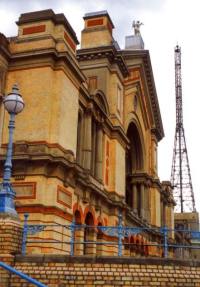
What's going on at Alexandra Palace?

Alexandra PalaceHere’s my latest column for the Highgate Handbook and Muswell Hill Flyer:

Beautiful building, fantastic location – but a financial nightmare. That’s been the history of Alexandra Palace over the last few decades as one bungle after another has seen tens of millions of pounds wasted – with the bill for clearing these losses landed on the Haringey Council Tax payer.

Over the last couple of years we’ve seen Haringey Labour desperately trying to wash their hands of the problem – but wanting to do so by selling off much of the site on a mammoth 125 year lease to a private developer. A deal was sort-of struck with Firoka, which has since fallen through – leaving Haringey facing a £6.2 million claim from Firoka.

Liberal Democrat councillors have repeatedly criticised this deal – the way in which it was rushed through, the lack of decent public consultation, the lack of proper safeguards in the deal (especially for the historic TV studios) – and the failure to sort out crucial details.

Following the collapse of the deal, there have been two independent investigations – both with damning conclusions about how Labour councillors have behaved. The second one – known as Walklate 2 – concludes that “entering into and maintaining the licence [with Firoka for them to take over Alexandra Palace] has led to losses to the Trust in the region of £1,500,000. The Trustees were not given financial information of the effect of the licence … nor were they given the opportunity to consider whether they wished to revoke the licence.” That is £1.5 million in losses in addition to the £6.2 million claim.

As the reports have shown, the Trustees of Alexandra Palace were kept in the dark about major parts of the deal, they were not told of the concerns raised by some staff and they were not told key financial information either. In other words – there was such a drive to try to get Ally Pally off Haringey’s hands that things were rushed, kept secret and done badly.

The report also concludes that, “There is a moral imperative on any senior management team, particularly in the public sector, to take collective responsibility for such matter and this simply did not happen.” Mistakes, losses – but no-one carries the can other than the rest of us – who have to pick up the pieces through our Council Tax bills.

You just wonder when this pantomime of hideous errors and misdeeds will end; when we the taxpayers will stop having to foot the bill for incompetence and possibly worse and when our beloved Ally Pally will be free of the smell of things not quite right. Next local elections perhaps?

If you missed it before, you can still watch my short YouTube film about Ally Pally.

The Equality Bill

My latest local newspaper column was about the Equality Bill:

Fanfare please! At last – the much trailed, much vaunted, long-time in gestation Equality Bill is here and going through Parliament.

So what’s in it? Well – there’s not space to cover the great tome in just one column – but here’s a taster.

Much of the Bill is a bringing together of all the bits and pieces of equality legislation over recent decades – and that’s one of those small sounding administrative changes (putting all the rules together in one place) that will actually have a big impact (clearer legislation means easier to understand, fewer mistakes and – sorry lawyers! – even a bit less legal work in future). That’s one of the reasons why broadly speaking the Liberal Democrats are backing this Bill, although as it goes through Parliament we (in particular – myself, leading on the Bill in the Commons – and Lord Lester, who basically wrote the book on equalities, leading on the Bill in the Lords) will be working to improve it.

Now getting to the contentious stuff – and making sure than men and women are paid equally for equivalent jobs. I’m a great fan of pay audits – making companies and the public sector check their pay to ensure that they aren’t discriminating in what they pay men and women. Of course, when this issue comes up, there’s always a chorus of voices saying, “Oh, we’re fine in our firm/industry/sector”. Well, if that’s the case – a clean bill of health will be a good mark in favour of a firm that will make it easier to attract good quality staff. And if it isn’t the case – well, that’s the whole point – to bring that to light.

But the Government has wimped out of requiring firms to carry out pay audits. It says something about the struggle there is still to be had for men and women to be treated equally that there are 1,001 things the Government is happy to order firms to do – but at the basic level of not discriminating in pay, it has blinked. Instead, the Bill proposals a weak voluntary scheme for several years, with maybe, perhaps, possibly further action after that.

Better news though – one way firms get away with unfair or unequal pay practices is by banning staff from telling anyone else how much they are paid. Rather a restriction on freedom of speech – and the Bill will ban this sort of censorship.

Next, religion – or more accurately, the Government’s intention to extend the current existing public duties to race, gender, disability and sexual orientation to religion and belief. This would mean that public authorities would be obliged in carrying out their functions to advance equality of opportunity and good relations between different groups. Obviously we all would subscribe to promoting good relations etc – but a public duty? Religious views on things like abortion, alcohol, homosexuality and sex education in schools are varied – to put it mildly. It would be absurd to require public authorities to accommodate all the different religious views in these policies which affect us all. This is a road to hell (if you will excuse the religious connotations) paved with good – but ludicrous – intentions.

And one more major issue to pick out – the proposed new duty for bodies receiving public funding, requiring them to consider the equality gap between rich and poor. In some ways this is no different from saying that when our taxes are spent by public bodies they should bear in mind whether or not they are damaging our environment in how they go about spending them. Thinking of the wider implications of spending makes sense and if you can use the spending to help achieve more than one goal – then that’s even better news as it’s more value for money in the cash-strapped times. But the way this duty is laid out in the Bill is, I fear, simplistic and unfair, it’s wording is broad enough to attract controversy, worry and legal arguments, but too weak to have much of an impact. The worst of all worlds. This is a case where the role of Parliament in amending Bills can be crucial.

That’s only a brief sample of the points covered by the Bill – and even for those, it’s a pretty brief summary of what the Bill does and my views on it. You can keep up with them in more detail as the Bill goes through Parliament via my list of blog postings on the topic.

Lap off!

Here’s my latest column from the Ham & High:

Watch out! A lap-dancing club could be coming to your local high street soon. Would you like one to open up in Highgate Village, Muswell Hill Broadway or Lordship Lane?

Whilst I don’t believe government should be in the business of banning lap-dancing clubs from existing – people should be free to choose – there’s a time and a place, most particularly a place, for such establishments. I don’t believe that they should be sited right next to schools, near to vulnerable young people or in a busy shopping street in the middle of residential area.

Whilst the current furore over an application for a lap-dancing club is in Crouch End Broadway – there is in fact a rush of new applications as people try to get in before the laws are tightened up by the Policing Bill, which is currently going through Parliament.

Currently the license needed is the same for lap-dancing as for a pub or club. The new legislation will reclassify lap-dancing as a ‘sex encounter’ establishment which will then require the same license as the rest of the sex trade. This will give local authorities the right to refuse an application on the grounds of location – particularly if the site is near schools etc.

Giving this extra discretion seems very sensible to me – a pub and a lap-dancing club are very different establishments. Indeed, I can’t imagine why it took so long to recognise that difference as lap-dancing (if you will excuse the expression) is very ‘in your face’ sexual – that’s the point of it!

Facing this future where local authorities and local people have more control over where such places can open, those running or wanting to run lap-dancing clubs are trying to get their applications approved before the rules change. In addition, the Lap Dancing Association is lobbying MPs to try and get ‘grandfather rights’ which would mean that clubs with existing licenses will automatically be granted a new type license.

There is another battle shaping up over whether or not the final legislation will include an exemption for venues hosting lap-dancing less than once a month. This would greatly weaken the new rules – which is why I’m opposing this change.

When the final rules become law, they will be ‘optional’ in the sense that councils will be able to decline to use the new powers to judge and reject applications. On this – Haringey Council has said that it will take up the full powers – thank goodness.

So whilst in Parliament I’m fighting to stop the rules being watered down, meanwhile, back on the home front I have joined up with the local campaigners and local Liberal Democrat councillors to fight the Crouch End application.

Lap Off is the name of the campaign. I hope that the licensing panel will turn it down on May 14 – and I hope to be able to speak to support the campaigners on the night. With Rokesley School literally a stone’s throw away, Hornsey Girls School just around the corner, and both Action for Kids (a charity for young people with learning disabilities) and the YMCA with vulnerable residents all within a tiny distance – in my view it would never in a million years qualify for a license under the new legislation. And what woman or girl would honestly feel completely comfortable getting off at the bus stop outside such a club at night when they return home from an evening out?

But even under the existing rules, I believe that the actual detrimental impact on people’s lives as well as the usual noise, litter, etc should be enough to stop the proposal in its tracks.

To sign the petition to the licensing sub-committee go to www.petitiononline.com/lapoff/petition-sign.html.

Sheer madness

Here’s my latest Ham & High column:

A woman came to see me recently to tell me of the appalling state of Haringey’s mental health services. Her husband is bi-polar and sometimes suicidal. From time to time he has to be admitted to the acute ward at St Ann’s – our local mental health facility.

She says the ward is enough to make you want to kill yourself. It is a ward with psychotic and highly disturbed patients. If you or I were placed in such a ward – we would be frightened – as was my constituent’s partner. He was so frightened he could not sleep at all due to the noise and disturbances from the other patients throughout the night – and of course these conditions hardly assist recovery or state of mind.

And when he’s at home and there are troubles – the theoretically 24-hour help is often on answerphone – and when not, she has even been advised just to give her husband warm milk! What a contrast with Camden, where – if you need help – a psychiatric nurse will come to your house to deal with the situation – and perhaps remove the need for admission to hospital.

To add insult to injury – with so many vulnerable people who need so much help – the Mental Health Trust is now proposing to reduce the number of acute beds at St Ann’s Hospital for those who do need admission. It may be unsuitable for some admissions – but it is all we have and we need a place of safety for those who are in acute crisis.

I am meeting with the Chair and Chief Executive and will point out how for many people, these beds are often the last resort. Acute wards are, even in St Ann’s, a place where a severely ill person is surrounded by professional nurses and doctors – even though the circumstances are clearly not ideal.

Haringey residents come to my advice surgeries to tell me how they have not been able to get their loved partner / child / parent admitted into an acute ward – despite obvious need. Of course each case has its own particular circumstances, but from questions I have asked in Parliament, it is clear that there are more people to each bed in Haringey than for almost any other area in London – and that’s before the proposed closures.

The Trust claims that people in acute need can be dealt with adequately in the community. I do welcome more support in the community, but in moments of crisis there must be the option for a higher degree of care and supervision.

And unless the care in the community is exemplary, then reducing beds in the in-patient facility we have seems mad. We should be investing in making the acute wards better – not reducing beds. My own angst is that the Trust is in such a state it is making these reductions for cost purposes rather than meeting the needs of those with mental health issues in Haringey.

The Trust is currently consulting on the issue – so now is the time for us to have our say. I am keen to hear your views, particularly if you have any direct experience of our local mental health services, so I can feed them into the consultation. You can write to me at lynne@lynnefeatherstone.org or House of Commons, London, SW1A 0AA. Please indicate whether you wish for your views to be treated confidentially or if you are happy for me to share them with the Trust.

The consultation deadline is the 23rd March, so please make sure that I get your views before then. If you want to find out a bit more about the consultation, have a look at the Trust’s website.

Also, my Liberal Democrat colleague Councillor Ron Aitken is chairing a scrutiny review at Haringey Council on the proposals – two public meetings are planned . The first was on Monday 2nd March but the next is on Wednesday 25th March at 6pm at Haringey Civic Centre. Please do come along and share your views.

All too often mental health is treated as the Cinderella service of the NHS and rarely gets the prominence or the resources it needs and deserves. I am determined that this should not be the case in our Borough.

Soul food

No political party has the monopoly of wanting the best for our children, but in their quest for higher standards, I hear neither of the other parties arguing for the value of a holistic education.And by this I don’t mean essential oils and or teaching children how to manage their chakra.

In the drive for three Rs, we are forgetting key aspects of what children need to understand to become rounded individuals.For me this was brought into sharp relief in case I was dealing with for a local resident in Hornsey & Wood Green.A Suzuki method music teacher contacted me to complain of the difficulty of getting schools to make time for children to do music lessons.Her view, which I share, was that the rigid structure of the national curriculum left little time in the school day for children to take on music lessons – particularly young children who don’t have much time and energy left at the end of the school day. I raised this with Ed Balls who rejected the concern, proudly extolling the virtues of the national curriculum and the wonders it had done for school children.

Yes it is important that a child should start secondary schooling being able to read, read and do arithmetic.But any teacher worth their salt will instinctively teach this.Focusing on the developing the professionalism of teachers with discreet checks here and there will make sure this happens.

Tory and Labour Governments have dogmatically pursued the mantra of national curriculum and what I call the three Ts – test, test and test again.But these pedagogic edicts issued from Whitehall have been the death knell for curricular activities that nurture the soul.If you can’t label it, level it and then test it – then it’s out.

For a brief moment I did think there was a glimmer of hope on the horizon.However, my joy at the ending of Key Stage 3 testing was quickly replaced with despair with what Labour intends to replace them with.A school in my constituency was unfortunate enough to take part in a pilot.This ‘radical’ new programme is supposed to free teachers from the shackles of SATS, but the name says it all – single level testing.

Education is about helping children to become better adults.As Liberal Democrats, we must continue to be all the forefront of pressing for holistic schooling.

This piece appeared in a booklet published by the Liberal Democrat Education Association in Spring 2009.

(c) Lynne Featherstone, 2009