Join our call for urgent repairs to the Noel Park estate

Here’s my weekly Ham and High column – this time on the urgent need for repairs to the Noel Park estate – which the local Council are ignoring. 

Last week I held a public meeting in a part of my constituency which has been neglected by Haringey Council for decades.

Council properties on the Noel Park estate have not had any substantial repairs or ‘decent homes’ work for over 30 years now. Week in, week out, residents contact me in despair about the state of their homes – and express their frustration at the lack of repairs.

I’ve heard horror stories about individuals and families living with extreme mould and damp, broken windows, and faulty appliances. Yet Labour-run Haringey Council and their housing contractor Homes for Haringey seem unable to complete basic repairs in an efficient and timely manner – let alone organise ‘decent homes’ work, which would see bathrooms and kitchens replaced.

It’s particularly bad for residents on the Noel Park estate, who have seen the council spend the government’s ‘decent homes’ fund on other local estates and blocks – sometimes twice over – while they are ignored.

And to make matters even worse – it was revealed last year that the Labour-run Council allowed £3.7 million to be spent on bonuses for Homes for Haringey repairs staff. That’s £3.7million that could have been spent in Noel Park.

One local resident said: “Residents on the Noel Park estate need urgent repairs, but the council and Homes for Haringey have not taken action.

“It’s not fair for the council to spend so much money on other places, and waste money on botched repairs, when the Noel Park estate is in such desperate need.”

The local Noel Park Liberal Democrat team and I decided enough was enough. Over the last year, we’ve run a petition calling on the council to make vital repairs to the estate, and to spend money on buildings, not bonuses. We’ve done hundreds of pieces of casework on behalf of residents, to try and get them vital repairs.

More recently, we met with housing chiefs from both Homes for Haringey and Haringey Council. At the meeting, they committed to make urgent repairs to Noel Park properties and consult residents about more substantive repairs – but we have heard this before.

That’s why I called the public meeting – to finally give residents the chance to have their voices heard.

The meeting was absolutely packed full of local residents, who were very angry about the status quo. They shared stories about the troubles they face on a day to day basis.

This time, the council and Homes for Haringey made the promises about repairs directly to the residents.

I will keep a close eye on this – and ask the residents whether repairs have been made. If they have not – I will have no qualms about publicising the further failure on my website.

These residents have been ignored for too long. I hope, as a result of the Lib Dem campaign and the public meeting, the residents will finally get the repairs and living conditions they deserve.
You can sign the petition, calling on the Council to spend money on homes, rather than bonuses, here.

Uganda – A great leap backwards for gay rights

Here’s a copy of a recent post by me – also available on Lib Dem Voice.

Uganda’s new anti-homosexuality legislation is abhorrent. It imposes draconian penalties for repeat offences of homosexuality, so-called ‘aggravated’ homosexuality, same-sex marriage, attempting to commit homosexuality and for the loosely defined ‘promotion’ of homosexuality. This is nothing short of a great leap backward – not just for Uganda but for gay rights across Africa. I believe it marks a growing state-backed homophobic trend across the continent, one we cannot and should not ignore.

From Day 1 in my role as Africa minister at the Department for International Development (DFID), strengthening the department’s LGBT rights strategy has been one of my top priorities. I instructed every DFID country office in Africa to report back to me with details of their respective LGBT rights strategies, with proposals for doing more. The approach DFID has taken has been led by local gay campaigners in each country and, up until recently, they have asked that we take a subtle approach, raising our concerns only in private with their respective politicians. So, respecting their wishes, that is what I have done in African counties I’ve visited – raised my concerns behind closed doors with the Governments and privately met with local LGBT groups.

But this approach clearly didn’t work in Uganda. It failed to prevent new anti-gay legislation, and I fear it won’t deter similar legislation in other parts of Africa.

I will continue to do everything in my power to promote gay rights and equality – both at home and abroad. I’ve also invited Stonewall and the Kaleidoscope Trust to meet with me early next week to discuss how they and their international networks can help. We need to work closely together, jointly where possible, in defending and promoting human rights everywhere.

Because that is what this debate is about – not Western imperialism or Western impositions on African cultures, but the universal values of tolerance, love and mutual respect.

Homes for Haringey in the dock again!

A couple of weeks ago I held a meeting (packed) for residents of the Noel Park estate where they could tell Homes for Haringey and Haringey Council face to face about the appalling failure on repairs. Tale after tale of real suffering due to repairs not being done or done so badly they needn’t have bothered.

Today the  Tottenham and Wood Green Journal highlights – with a brilliant example – a level of incompetence by Homes for Haringey that is beyond belief.

‘Haringey’s council housing arm has come under fire after sending a bricklayer to fix a woman’s mould-covered window and then a gardener to repair her broken stair.

Staff at Homes for Haringey (HfH) then ignored her complaints, telling her all the repairs had been done, according to their reporting system.

Meanwhile Hornsey and Wood Green MP Lynne Featherstone called a special meeting last week specifically to discuss the issue of HfH’s failure to carry out urgent repairs and basic upgrade work on its decrepit homes on Wood Green’s Noel Park Estate.

Teresa Martin, 68, regularly called HfH to chase up progress on repairs to the maisonette she has lived in for 32 years in Lordship Lane, Wood Green.

But a gardener used the only material he had to hand – some garden fencing – to repair a collapsed stair after he was assigned to the job, and a bricklayer was sent packing after being dispatched to treat and fix her mouldy windows.’


In Praise of Civil Servants

When I first became a minister at the Home Office in 2010 we newbie ministers were invited by the Institute for Government to an induction. It’s a great idea to give new ministers some external, impartial advice on how to make the most of the job – and the advice I got that day stood me in better stead than any before or since.

Essentially there were two pieces of advice that I took to heart. Giving that advice were Michael Heseltine and Andrew Adonis – and whilst I know they are nothing alike, it’s the very fact that two such different people politically (from each other and from me!) had useful advice to give which shows there are common challenges ministers of all parties face.

The first piece of advice was to prioritise ruthlessly. We would find ourselves hit by a tsunami of work – a never-ending juggernaut all through our time in office – that was simply the business of government. If we weren’t careful we would do all our work, read all our submissions, make all our speeches, attend all our government meetings, take debates in Parliament and more – and we would exit our ministerships as good little ministers. Yes we would have done our work well but not used the extraordinary opportunity of our positions to deliver something we wanted to deliver during our time in the sun.

The second piece of advice was to trust our civil servants. They would, we were told, strain every muscle to enable us to deliver our mission if we made it clear what we wanted. They were not the satirical stuff of which ‘Yes Minister’ or ‘The Thick of It’ was made (although there have been some recognisable moments during my time in government!). We were told how civil servants are hard-working and noble in their efforts to make their new minister’s missions come true.

So I went back to my office, then at the Home Office as Equalities Minister, and set out my priority: introducing same-sex marriage. It was liberal. It righted a wrong and it would mean a huge amount to those it gave the freedom to choose to marry. I believed it was possible. Thus I decided and set my course.

The civil servants then got to work. Always willing to raise decent questions about how and when, but always willing to stick to the priority and find a way to make the details work. From a standing start they guided me through all the many many hoops, pitfalls and dangers that I had to get through. I had nothing but support, advice, energy and dedication to my mission.

And now it is the law.

And then I went to the Department for International Development (DFID) and did the same thing. I prioritised Female Genital Mutilation (FGM). I said to my civil servants I want to campaign in government on FGM (campaigning in government was a bit of a new concept for them at that point). And as I hope you have noticed – it is now in the media on virtually a daily basis. In fact – the media deserve plaudits for their coverage on this too – particularly the Evening Standard.

I have instigated a £35million program to end FGM in a generation, working with the many opponents of FGM in the communities where it happens. The diaspora in our own country who practise FGM and their mother countries where this terrible practise has gone on for 4,000 years are inextricably linked. We won’t stop it here if we don’t end it there.

That is why we are supporting the African-led movement to end Female Genital mutilation and the UN resolution banning it worldwide.

And now my campaign stretches right across Whitehall – into the Department of Health, the Home Office, the Ministry of Justice and the Department for Education. I’ve had the privilege of working with phenomenal campaigners like Nimko Ali and Efua Dorkenoo, who for years have been so instrumental and inspiring with their work on FGM.

Without such dedicated civil servants understanding what I was trying to do and helping me do it – I could not have been so successful.

And not to forget that there is even more praise due to the DFID civil servants around the world in the most dangerous of locations – providing our programs to end extreme world poverty by delivering on health, education, water and sanitation and much more to the poorest and most marginalised people in the world.

A big thank you to all my civil servants!

£7.6 million funding win for Haringey Health Services!

Here’s my latest Muswell Flyer column – also available here.

Over a year ago I wrote a column about a new local campaign for fairer health funding in Haringey. We all rely on our vital local GPs, walk-in centres and hospitals – and I wanted to make sure they were getting a fair deal.

It had shockingly come to light that our local health services were severely underfunded in comparison to neighbouring boroughs such as Islington and Camden.

This was having a knock on impact on Haringey residents. The underfunding meant longer waiting times and less preventative care. One local resident went to get a free blood pressure and cholesterol test, offered by the NHS in an Islington supermarket. She was turned away because she had a Haringey postcode.

Another resident, a community nurse, told me that nurses in Islington had better training opportunities than those in Haringey.

When I met with Haringey GPs to discuss the problems caused by the underfunding – I heard horror stories about the longer waiting times Haringey residents have to face.

Something had to change. The core of the problem was an outdated funding formula, which discriminated against Haringey because we are an ‘outer London’ borough.

So – with the support of thousands of local residents, the Haringey Liberal Democrats and I lobbied the Department of Health and NHS England for a new funding formula – one that gives boroughs like Haringey a fairer deal on funding.

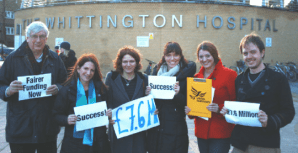
And in late December, we got some good news – NHS England have finally changed the funding formula, and Haringey health services will now receive a £7.6 million increase in funding.

Lynne Featherstone and the Haringey Lib Dems celebrate a £7.6 million funding victory

This is an above inflation increase in funding, and a higher percentage increase than Islington and Camden. There is still a way to go until we get truly fair funding – but this is a great first step! The Haringey Lib Dems and I will keep campaigning to get more money for our vital services.

Now we have some extra funding (and hopefully there will be more to come!) I want to make sure it is spent well, on the health issues that matter most.

That’s why I’ve launched a survey, so residents can let me know what their priorities for improvements are. Whether you want to see longer opening hours, shorter waiting times, better services or something else, just let me know.

Residents can take part in the survey by going to www.tinyurl.com/HaringeyHealth

I look forward to seeing what your priorities are, and passing them on to our local NHS representatives.

My priorities for tackling violence against girls and women overseas

This week I wrote to all MPs, in my role as Ministerial Champion for tackling violence against girls and women overseas.

Violence against girls and women is one of the most systematic, widespread human rights abuses in the world. One in three women will experience it in their lifetimes. The UK Government believes this can change, that every woman and girl has the right to live free from violence and abuse.

In the letter, I outlined my priorities for this year. In short, they are:

  • Defending/securing the rights of girls and women to live free from violence, through international negotiations such as the Commission on the Status of  Women in March and the ongoing negotiations on the framework which will take us beyond the Millennium Development Goals (MDGs).
  • Eliminating FGM/C within a generation.
  • Sharing what we know works to prevent violence against girls and women, by investing in research and working with others to ensure what we do is based on strong evidence.
  •  Forging strategic partnerships in the international system to ‘lock in’ prevention of violence against girls and women, making sure we get the best outcomes for girls and women by working closely with others over the long term.
  • Linking our international work with domestic, particularly our work on FGM/C and Early and Forced Marriage where there is significant read-across, and through the UK’s National Action Plan on violence against women and girls.

You can read the letter in full here – and find out more about my work at the Department for International Development here.

Volunteering to fight crime could really pay off!

Here’s my latest Ham and High column on the new Lib Dem campaign for a council tax discount for special constables:

Crime unfortunately affects the vast majority of people at some point in life. When I’m out on the doorsteps or at my local constituency surgery – I often hear awful stories from people who have been victims of burglary or fraud, for instance.

On the whole, crime is currently falling – but we must remain vigilant. Figures recently revealed the Muswell Hill area to be in the top 10 UK ‘burglary hotspots’ – and other types of crime in the Wood Green area remain a concern to local residents.

The Haringey Liberal Democrats and I have a long history of working closely with our local police to tackle crime and to reassure residents about police action.

We opposed the Conservative Mayor of London’s changes to policing in the Capital, which saw Muswell Hill police front counter closed and Hornsey downgraded.  Now – we’re still campaigning for a replacement police base and front counter in Muswell Hill and for better street lighting in the Borough – in our bid to tackle crime.

In addition, we’ve just launched a campaign to give local Special Constables a 50% discount on their Council Tax.

special constables 2

Special Constables have the same powers and responsibilities as regular police officers, and spend up to 16 hours a month volunteering with the police – all without pay – in order to help make our community safer.

We think these volunteers deserve to be rewarded for their hard work and assistance in tackling crime. And, if the Council Tax discount helps encourage more people to become Special Constables – all the better!

An increase in volunteer Special Constables will help support the local police in the borough – and make residents feel safer, too. In Haringey we only have 62 volunteer Special Constables – way behind other London boroughs like Barnet (who have 233) and Enfield (180).

Some other Councils in the UK are already awarding the volunteers. In Hull, for example, Special Constables are already able to claim a 50% discount on their Council Tax. It should be the same in Haringey, too!

We’re encouraging local residents to get involved in this campaign by signing a petition and registering their support. Residents can sign up here.

Later in the month, the Haringey Liberal Democrats will be presenting the petition and the proposal to Haringey Council – who will take the decision on whether to adopt it.

The more signatures we have, the more chance we have of convincing the Council and being able to reward our hard working police volunteers!

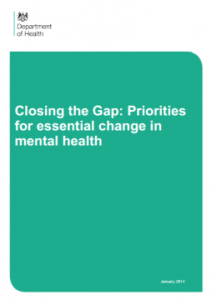
Closing the gap on mental health

ClosingtheGap

One in four of us will suffer from a mental health problem in our lifetime. It is a stark figure, made worse because there is still a stigma attached to psychological conditions.

To address this, Nick Clegg and the Lib Dem Care Minister, Norman Lamb, recently launched the Coalition Government’s new action plan for mental health.

The plan outlines 25 priorities for improving the support and care provided to those with mental health issues. These include integrating mental and physical health provision, promoting psychological wellbeing for children, and increasing access to care.

Priorities have been distorted for years. The last Labour Government introduced waiting times for hospitals, but they failed to bring them in for psychological treatment – this needs to change.

As Nick Clegg said, ‘it is time to bring mental health out of the shadows and to give people with mental health conditions the support they need and deserve’.

This will be a multi-agency approach, as it is not simply a matter for the NHS. Better support in education, employment, and housing will give people the help they need to get on.

Ignoring mental health now will just compound the problem in the future – so the Liberal Democrats in Government are taking action.

I am delighted that Nick Clegg has made this a priority. I strongly believe that these changes to mental health care will help create the fairer society we need, as well as providing a positive model for other countries.