A Bright Yellow Future for Girls in Ethiopia

Here’s my latest blog on the Huffington Post website, from my visit to Mozambique and Ethiopia with Deputy Prime Minister Nick Clegg. 

Today I met a future doctor, accountant and engineer. They were all 13 year old girls. The aspirations of these Ethiopian girls is heartening. The engineer says she wants to train to help “build up her country”. I wouldn’t bet against her doing just that. And the UK Department for International Development (DFID) is working with Ethiopia to make sure she is joined by many others.

The deputy prime minister and I are in Kokebe Tsebeh school in Addis Ababa this morning to launch the first Girls Education Challenge Fund projects in Ethiopia, following a launch in Mozambique yesterday. These projects together will help educate 89,000 girls in remote areas, targeting whatever holds them back – using radio to emphasise the benefits of girls’ education to the community, giving grants for uniforms to the poorest students and bicycles to the most remote, and making schools feel safer. But this is just the start, with the Challenge Fund due to benefit one million girls in total around the world.

2013-02-15-PageMMaputo.jpgLynne Featherstone and Nick Clegg meet school children at the launch of the Girls Education Challenge Fund in Mozambique. Picture: Crown Copyright 

Girls education just makes sense. With education, girls are likely to have children later and are less likely to experience HIV or AIDS. Its not just the health benefits for the girl – benefits often accrue to any children she may have too. And each year of education can add around 10-20% to her salary later in life.

We went on to meet Bethlehem Tilahun at her SoleRebels shoe factory. She’s showing just what women can achieve here, building up a business from scratch to now employ 120 people making fantastic shoes (Nick Clegg was given a rather stylish bright yellow pair, with recycled tyre soles). And she did it with little help.

How can we make more Bethlehems? Ethiopia and its partners, including DFID, are working on just that. Maybe access to finance or business training is the answer. Maybe extending education to those without, particularly girls, will help. Either way, Ethiopia and its girls are on the move. Sometimes in bright yellow shoes.

Mobile Money Opens Up New Opportunities for Mozambique's Small and Medium Businesses

Here’s my latest blog on the huffington post website. I am currently in Mozambique with Deputy Prime Minister Nick Clegg. 

There is money in the air in Mozambique. The deputy prime minister Nick Clegg and I have just watched Nilza and Herculano transfer 100 meticais (about two pounds) via mobile phone. They may both be standing in front of us for this demonstration, but in a country where less than 12% of adults have a bank account, the benefits of these mobile money systems can be large.

The Department for International Development (DFID) supported the launch of M-Pesa mobile money transfer when it was first launched in Kenya in 2007, and we went to check it out ahead of its launch in Mozambique. Mobile money means more small, safe, cashless transactions can happen – urban workers can send money back to rural homes; small shops and stalls can trade more and grow their business.

mozambique

Deputy prime minister Nick Clegg and international development minister Lynne Featherstone in Mozambique. Picture: Crown Copyright

It is these small and medium-sized businesses that are critical for inclusive growth and job creation in Mozambique. And in the north of the country, in the Beira corridor, DFID is supporting such companies in the agricultural sector, helping them grow and link into supply chains, providing access to funding that might not otherwise have been available through our partner AgDevCo. We met several of the businesses today, and had the privilege of talking to their managers. Their enthusiasm, their commitment, was palpable (and their products weren’t half bad either, I can recommend the Chibuku, a non-alcoholic soya banana and maize drink).

What links these two things, mobile money and support to small agricultural business, is inclusion, in this case financial. 80% of Mozambicans are excluded from the financial sector (be it bank account or loan).

And inclusion matters here. You may have seen Mozambique feature in the news, as large natural resource finds have grabbed headlines. It’s still a very poor country, but these finds have the potential to transform all that within a generation. Yet poised as it is for massive growth, the challenge Mozambique faces is making sure all are included in that growth, that all can benefit. And Nick and I are proud to have seen today the UK already working with our Mozambican partners to tackle this.

Moving Towards a World Free From Female Genital Cutting

Today is the International Day of Zero Tolerance to Female Genital Mutilation. Here’s the text from my Huffington Post blog on this issue: 

Why in this present day does female genital mutilation or cutting (FGC) continue? For far too long it has been an issue that people have tended to shy away from, and in my view, neglected.

But we can no longer shy away. What FGC actually entails is difficult for most of us in the UK to imagine. But to dispel the taboo, we need to talk about the details.

FGC is a cultural practice involving the partial or total removal of the external female genitalia. In its most extreme form the external genitalia are cut out and the girl’s vagina sewn up, to be cut open on her wedding night and for each birth. It’s commonly done by a village elder or family member – often without anaesthetic or surgical equipment.

The effect can be devastating, causing severe, life-long physical problems and sometimes even death. Yet, according to the World Health Organisation, more than 100 million women – including in the UK – have undergone the practice and an estimated three million girls are at risk each year in Africa alone.

So there’s no question that it’s a sensitive matter but that’s no reason to ignore it, especially when we know what a devastating impact cutting has on women’s and girls’ physical and mental health, wellbeing and future opportunities.

Today is International Day of Zero Tolerance of Female Genital Cutting and it is an opportunity to highlight what is still a relatively little-known practice.

I believe that with the right support it will be possible to see the elimination of FGC within a generation. Across Africa there is increasing momentum to end FGC. In December, the UN General Assembly passed a resolution banning the practice. This resolution was led by the Africa Group and should encourage us all to support efforts to end FGC. The time is right to act and Senegal is leading the way. In January, 427 Senegalese communities came together for the first ever regional declaration of abandonment not just of FGC but also forced marriage.

The UK is committed to playing its part in supporting these African efforts to end FGC. We are developing a major new regional programme to support efforts to end the practice in many countries across West and East Africa and beyond. In addition in Sudan, which has one of the highest rates of FGC in the world, we are working on a long term programme to support national efforts to end the practice.

But the scale and the nature of FGC is such that UK government action alone will not be enough. As the Government’s International Champion on Tackling Violence Against Women and Girls Overseas I want to see FGC recognised internationally as part of the mainstream development agenda and for other countries and donors to be supporting the elimination of this practice.

This is something I will be pushing for in March when I attend the Commission on the Status of Women at the UN in New York. This year’s meeting is specifically tackling the issues of violence against women and girls and will be vital in raising the profile of one of the world’s most pervasive yet hidden forms of gender-based violence.

Join an online discussion with me today at 12.45pm (UK time) on ending FGC in a generation. The live Google+ Hangout event is taking place with the United Nations Population Fund (UNFPA),UNICEF, as well as representatives from Senegal, Egypt and Kenya. Send us your questions by leaving comments below, tweeting @DFID_UK using #endFGM or posting questions to the Google+ page.

Marriage (same sex couples) Bill – passed 2nd reading today

Today was definitely a day to remember! Equal Marriage came to the Commons for 2nd Reading and passed with a majority of 400 to 175 – a huge leap forward on the journey to full equality. Equal Marriage will become a reality.

A real hurrah for the happiness that this will bring to those who have been discriminated against and prevented from expressing their love for each other in the way that everyone else can.

As the originator of this change to legislate for full equal marriage I have fought for its safe passage throughout. On this journey I have been helped by many, many people who believe in equality and fairness – and I want to thank them profoundly for their support. There are too many to mention – but here are just a few.

So – thank you to the superb team of civil servants who worked tirelessly to ensure that a very challenging and difficult proposal was executed to the highest of standards including handling the biggest response to any consultation in history.

Of course – above all – a massive thank you to the Liberal Democrats who have always been staunch campaigners and believers in equality and have the stand out record on LGBT rights. Special thanks obviously to Nick Clegg who when I first ‘phoned him to say I was going to embark on this endeavour said I had his full support and who has been there every step of the way. Also thanks to Ed Fordham, Brian Paddick, Adrian Trett, Stephen Gilbert, Stephen Williams, Caron Lindsay and many others in the LibDems for continually pushing and pushing to get the messages out there. And congratulations to Stephen G and Stephen W for great speeches in the chamber today.

Less obviously in terms of public perception as having a major role in this – but a big thank you to Theresa May. She was my Secretary of State and without her support – genuine support – this would not have got out of the stables. David Cameron, very helpfully and also genuinely – at the Conservative Conference made it a key commitment himself – and he has been steadfast throughout – despite the angst of some of his backbenchers. Thanks to my colleague during my time at the Home Office, Nick Herbert, who went out to bat for this whenever necessary?

Thanks too to Labour’s Angela Eagle, Chris Bryant and Ed Miliband for making sure that cross party support helped see this through. And thanks to Labour for taking so many of those earlier steps up to and including Civil Partnerships.

Then there are the LGBT groups who have at every trial and tribulation – and there have been many – kept pushing forward and kept responding with reason to the appalling things that have been said during the passage of equal marriage. It was whilst listening to these campaigning groups as Equalities Minister when I was working on Civil Partnerships in Religious Premises that I realised that only equal marriage would answer the call for equality. And I am very glad that the legislation is permissive and will allow those religions who wish to perform marriages to do so.

Huge thanks also go to the LGBT media and LGBT people who work in the media – who have worked tirelessly to raise the profile of the campaign. And special mention for the Out4Marriage campaign – a fantastic effort.

Huge thanks also go to those brave individuals from religious groups who put their heads above the parapet and have stood up for equality against some of the most depressing and terrible things that have been said. I respect and have respected all the way through the opinions and views of those who do not support this change. I can understand that for some people it seems strange and for some it is against their religious beliefs – but nothing really excuses some of the awful things that have been said and written in this regard.

And thanks too to all the countless individuals who have had to endure the sort of attacks and foul comments on websites and who with endless patience have responded and tried to explain what equality actually means. And to all those others who simply believe in equality.

So heartfelt thanks to all who sped this very important Bill on its way. Apologies to anyone I have omitted. No doubt there will be amendments and many arguments as the Bill wends its way through its legislative journey – but change will come.

Good wishes to the team who will now take this through – Maria Miller, Hugh Robertson, Helen Grant and Jo Swinson.

And one very happy LibDem going to have a glass of wine to celebrate a great day in politics.

Independent shops – we love 'em!

We really love our independent shops in Hornsey & Wood Green. So now I’ve launched a competition to find which one we love the best.

This is part of my mission to support the many independent retailers we are lucky enough to have here. It runs alongside our Liberal Democrat campaign to introduce 30 minutes of free parking to Haringey’s high streets.

Constituents can nominate and vote for their favourite independent retailer in three categories: best customer service, the most attractive shop front and the overall best independent shop.

Many shops have already agreed to actively participate and are already giving voting forms to their customers and are putting up posters.

We are going to have a special event in the summer to announce the winners. And one voter will also receive a £100 voucher to spend in their favourite independent shop.

You can nominate and vote via the forms available in the shops or online here.

Whittington! Call this off and go back to square one.

Not much shocks me after so many years in politics. But the revelation at a Board meeting that the Whittington intended to sell off a third of its site, reduce wards and staff was a bolt from the blue. Given that we all – the local MPs from Islington and Haringey – meet with the CEO regularly and nothing of this sell off had ever been mentioned – what on earth was the Whittington thinking?

Look at the recent past. It’s only three years since we took to the streets to march, petition and fight the proposed Labour closure of the A& E. We won. Thank goodness. Of all the stupid paper ideas that Trusts dream up – this was one of the worst because it would not have worked and would have meant that local people lost an absolutely vital service. Under the pressure of the General Election and huge efforts by local people and politicians – the Labour government backed off and the A&E was saved. And subsequently the hospital worked with the people – and went through a lot of effort to make sure that what they were doing was supported by local people. Phew – we thought.

I had hoped that a lesson had been learned – but here we are again. No public consultation, no staff consultation, no working groups, no nothing. (Well since the furore this week the CEO has just now sent a letter out finally to staff to say they will be talking to them – too little too late – understatement). You would think they would be working with all of us every step of the way this time about any changes that they were planning for the future of this much needed and very successful hospital. Not a bit of it.

Not only that – both when I had an urgent phone call with the CEO and at the emergency meeting of all the local MPs and the CEO last week – we got a very profound apology for not having mentioned any of this to anyone – but no real understanding of the enormity of all of this at all. And now, I understand that the CEO is quoted in the papers as saying no one had asked her. To have so little understanding of the nature of the impact of proposed changes on her local community is unconscionable.

In brief, the proposal is to sell off a third of the site (buildings which do not have clinical services), cap births, reduce wards and staff and put more services into the community. This, we are told, will ‘improve services’. Well – we are wary and mistrustful from our past experiences that ‘improve services’ means ‘lose services’. To get over our mistrust the Whittington should have been working with the local community, local Council and local politicians every step of the way. We all want the Whittington to not only survive but be a vibrant and successful hospital going forward.

I am not against all change. Maybe this is a solution that the Board believe will ensure the Whittington’s future. But it doesn’t look like it and it doesn’t feel like it. Because, just like last time, it is the concoction of managers behind closed doors.

It may very well be that the ‘old’ buildings have extortionate maintenance costs. It may also well be that this isn’t about the deficit or savings (as the CEO kept repeating at the meeting ‘this has categorically nothing to do with the deficit or the savings plan’) for which they are on target. Every NHS hospital in the country has a savings plan.

This is all about becoming a Foundation Trust (a policy brought in under Labour). It is a decision by the Whittington and the Whittington alone. This ‘strategy’ that is proposing sell off etc is part of the process of applying for Foundation Trust status. The hospital has to submit a viable plan for the future.

St Ann’s hospital, in David Lammy MP’s Tottenham patch has also got old buildings and needs to modernise etc – but at least there they have worked with David and me every step of the way – so far!

This is a mess-up of gargantuan proportions. And the pity is – we all want the Whittington to thrive and survive – and we could all have worked together to make any necessary changes for future proofing. Now – no one trusts the plan. No one believes this will deliver better services.

Now the only way out is for the Whittington to go back to square one, work with all interested parties on a future plan, consult with local people and then, when we are all happy, move forward to a secure and better future.

That is why working with Cllr Dave Winskill (LibDem health spokesperson) and his LibDem Council colleagues – we are calling for a proper public consultation and all new services to be in place before any sell off.

Please sign the petition here.

Jackson's Lane – what a great idea!

Jackson’s Lane is embarking on a Community Project – involving telling the stories of Haringey’s older residents – and they want local people to get involved. Looks like a lot of fun. If you are interested the first meeting is on 29th January at 6pm at Jackson’s Lane. You can read the full story here.

International visit to Sudan

Here’s a blog following my visit to Sudan. I went in my capacity as Parliamentary Under Secretary of State for International Development. You can see more photos from the trip here.

Britain’s aid programme is about people, not numbers. But sometimes, the figures are so shocking it is impossible to escape them.

This year marks 10 years since the start of conflict in Darfur and the numbers speak for themselves. During 3,655 days of violence, hundreds of thousands have died, millions have been forced from their home and 2.7 million still rely on food aid for survival.

As we approach the grim anniversary of when violence began, I visited the war-ravaged region this week to see for myself the impact British aid is having on the ground.  In many ways, the fact that I am only able to blog about it after returning from Darfur because of the security threat, speaks louder than any of the words I can write.

There is a lot to remain concerned about – the censorship of the media, the lack of access for NGOs and UN agencies to deliver development programmes, the recent closures of four leading NGOs in Sudan and the endless blame game. These are all issues I raised with the Government of Sudan.
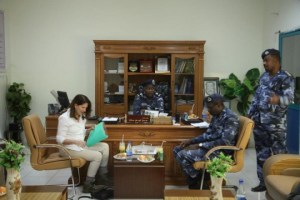
International Development Minister Lynne in Sudan

But there is also room for optimism. At Abu Shouk camp for 100,000 Internally Displaced People (IDPs)  – those left homeless by the conflict in El Fasher, North Darfur – I visited a UK-funded project working to bring justice to a lawless community.

There are no police posts in the camp, which exposes the men, women and children to all kinds of crime from killing, rape and sexual assault to burglary and shootings. The Justice Confidence Centre I saw is made up of 13 enthusiastic paralegals who teach those living in the camp about their human rights, mediate and resolve up to 40 disputes every day.

This is not policing and justice as those living in Britain would understand, but it is a first step and offers hope to victims, including women who seek help when faced with domestic violence.

I also saw the impressive work of the World Food Programme (WFP). They are helping the people of the camp grow their own crops to feed their families and sell fruits and vegetables to make a small income.

One of the greatest risks to women remains the need to collect wood for their fires. They are forced to walk alone for miles, putting themselves in harm’s way.

The WFP has taught them how to make fuel-efficient stoves to reduce the need for fire wood and I even helped make ‘burning bricks’ – made from donkey’s waste – which act as a sort of organic fire lighter. One brick saves 70% of wood – reducing the time to collect wood by 70% and the risk of women being assaulted, raped or murdered.
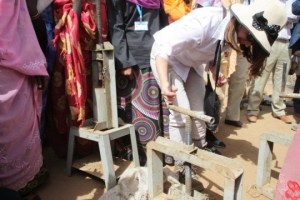
International Development Minister Lynne Featherstone in Sudan

I stayed the night in North Darfur before travelling South to Nyala where I saw how members of the community, who once distrusted the police, are now working with them to create a safer society.

Based on the British model of community policing, I met members of the police helping women who were illegally brewing alcohol and were frequently arrested re-train in basket weaving so they can sell their crafts to earn a living. I also met a doctor who taught the police how to care for trauma patients to dramatically reduce the number of deaths on the way to hospital.

These projects are bringing hope and making a real difference. But helping the poorest work themselves out of poverty isn’t a one-way street. For UK support, I ask for something in return – courage.

This is as true in Darfur as anywhere I have visited so far as an International Development Minister.

I was inspired by the courage shown by the people of Darfur. Communities are courageously standing up to those who wreak violence, families are courageously trying to work themselves out of poverty, women are courageously asking for help when they are beaten and repressed.

We now also need the Government of Sudan to show courage – courage in completing the peace process with the South and in securing peace and justice for the people of Darfur.

They also need to show courage to respond to human rights abuses, to tackle corruption and to secure a political settlement that includes all of Sudan’s people.

They have made progress and the UK will help in any way we can as we care about Sudan.

With courage, I believe one day the figures will paint a very different picture for Darfur and the whole of Sudan – 0 deaths from conflict, 0 families on food support,  no humanitarian assistance from Britain because those in need have been lifted out of poverty.

Peace, development and prosperity – they are all within reach if we all have the courage to get the job done.”
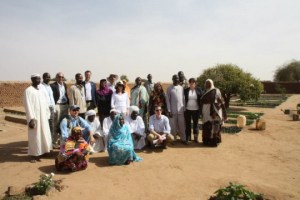
International Development Minister Lynne Featherstone MP in Sudan

Botched finances back to haunt Haringey Labour

Last year, the Haringey Lib Dems and I were appalled to hear that Labour-run Haringey Council hurriedly filed their accounts just hours before the legal deadline.

Unsurprisingly, the accounts were in a total mess. The auditors will have to charge the Council an extra £32,000 (!) in fees for the additional work required to correct all the mistakes.

The issue is so severe that the new Chief Executive of Haringey Council has now ordered an independent inquiry into the Council’s finances – in a move which will be a huge embarrassment for the Labour finance chief Cllr Joe Goldberg, who said several times that filing accounts just before the legal deadline was not a problem!

Time will tell just how many errors there were – and how they happened. What we can be sure of for now is that, with blunders like this occurring, it is really no wonder that Haringey Labour gives us high taxes and poor services.

It is my view – now more than ever – that the people of Haringey deserve better. We need a council that is capable of managing its money and services properly. That’s why I will be fully backing the Haringey Lib Dems to take control of Haringey Council in 2014, and end 40 years of Labour mismanagement.

The Haringey Independent have reported on this issue here.

Why 2013 Is a Once-in-a-Lifetime Opportunity for Girls and Women

Here’s the text of my latest Huffington Post Blog. You can also read it on the Huffington Post website here.

“The coalition government could not change the lives of millions of the poorest people around the world without working with a wide range of talented, inspirational and dedicated charities and NGOs.

This week I invited representatives of 13 of those organisations (full list below) to sit down with me for the first of, what I hope, will be a series of very useful roundtables focusing on specific issues that are close to all our hearts.

We started on a subject that is my top priority – girls and women.

This year is a once-in-a-lifetime opportunity to make a lasting difference to the lives of women and girls everywhere in the world.

Between the Commission on the Status of Women meeting in New York in March, the work on thepost-2015 Millennium Development Goals and the UK Presidency of the G8, the international community has the potential to help bring equality and safety where there is currently exclusion and fear.

But this is only possible if we all work together and push in the same direction. That’s why I wanted to bring the NGOs together so they could tell me about their priorities and thoughts on what we should all be doing – together – to transform the lives of women and girls.

It was an opportunity for me to listen to those delivering aid on the ground and hear their ideas and ambitions.

2013-01-18-Girls550.jpg
No one can deny the importance of their work – whether it be working to end female genital cutting, providing water and sanitation, the delivery of family planning services or providing for women and girls in humanitarian situations.

But you also can’t deny the challenges we face – from the difficulties of reaching vulnerable and remote women directly to persuading those who seek to repress women of the benefits of health and education.

Of course, there will always be competition for resources. What is also true is that there is no magic bullet that will cure all the ills faced by women and girls.

Britain’s work on gender equality must – and will – include elements from all these priorities if we are ever going to bring the lasting change we all hope for.

List of NGOs at the roundtables:

Safer World, Oxfam, Plan UK, Christian Aid, Save the Children, Action Aid, International Alert, IPPF, Marie Stopes, Orchid Project, International Rescue UK, Womankind, Wateraid”