Tap in and tap out: yes please

It’s one of the great successes of Transport for London. Yes – you heard right – TfL and the word ‘success’ in the same breath. I’m talking Oyster!

Now we tap in and tap out without a second thought. We nimbly flit from tube to bus – tap in / tap out. And then we try and nimbly flit from tube to bus to train – and oh dear – we can’t!

To us public transport users in London it seems as plain as the nose on our faces that Oyster should be extended to our local overground rail (and everywhere actually) – so we can go boldly and easily wherever we choose!

But no – we still have to put up with a two-tier ticket system if we want to use our local overground stations like Alexandra Palace and Haringey. We are stalled because First Capital Connect are holding back from extending Oyster north of Finsbury Park station.

Having to get separate tickets to travel in the same city is akin to Soviet-style bureaucracy – not what you expect in a world-class city like London. These days we’re no long train travellers but customers – but whatever then happened to putting the customer first? This sort of bureaucratic small mindedness does rather make a mockery of their slogan, “Your Journey, Your Choice, Your Railway” – but not “Your Convenience” or “Your choice of ticketing” it would seem.

Other train operators like First Great Western and South West Trains have already committed to making their passengers happy and will install the Oyster pay-as-you-go system in the next year – and they are putting First Capital Connect to shame.

Recently I met with the Oyster specialists Cubic – who delivered Oyster for our tubes and buses – at Alexandra Palace overground station and they are keen as mustard to get on with it.

So I’ve written to First Capital Connect calling on them to get on with it – and you can too at Freepost RRBR-REEJ-KTKY, First Capital Connect, Customer Relations Department, PO Box 443, Plymouth, PL4 6WP.

Now, don’t get me started on that Freepost address with the twelve-letter string we all are meant to write out – that’s the sign of another service, the Royal Mail, which also seems to have forgotten what serving its customers really mean. They’ve got the address, they’ve got the postcode – but on top of that they expect people to remember and repeat such an unintelligible set of a dozen letters each time you want to use the address. Customer friendly – not!

But back to the topic at hand – not only are First Capital Connect dragging their feet, but they seem keener to install Oyster at the stations south of Finsbury Park with higher passenger numbers than our smaller but vital stops north of that interchange. Wonder why that is?

In fact – we should have smart ticketing connecting all our transport modes nationwide – but the Train Operating Companies are also feet dragging as they don’t want to incur the maintenance costs – even though when he was Mayor of London Ken Livingstone said he would pay for the installation of the readers. And the Government – well they don’t see it as a priority and seem happy for it to take decades – only making changes when the rail franchises are up.

Personally, I think they should make the Train Operating Companies install the smart ticketing, insist it is compatible with Oyster etc and do it now – though with added safeguards to protect the data about individuals that ends up in the Oyster system.

Anyway first things first – local nagging is required to make sure that First Capital Connect don’t skip out our local overground stations and that they get a shifty on!

Tap, tap, tap…

(c) Lynne Featherstone, 2008
42 days detention without trial: Lord Goldsmith speaks out again

Interesting to see the former Attorney General, Lord Goldsmith, is speaking out – again, but in much more strident terms this time – against Labour’s proposals to introduce detention without trial for up to 42 days.

There’s much I’ve disagreed with him on over the years, but he has it absolutely right when he says, “We start ourselves to destroy these values and the very basis of the free society which our ancestors fought hard to create if we readily give away critical liberties, such as the right we all have not to be arbitrarily held without charge.”

Moreover – we’ve still not had a convincing case put that this 42 day proposal is actually needed. I fear it is becoming a game of political macho posturing – Gordon Brown’s said he wants 42 days, so 42 days he must get – regardless of whether or not it is the right policy.

The Westminster Hour: Sunday 10pm

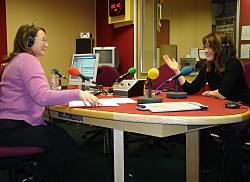
Appearing on Radio 4's The Westminster Hour with Carolyn QuinnI’m back on The Westminster Hour this Sunday: Radio 4, 10pm.

If you miss the show you’ll be able to listen again on their website.

If you want to get advanced notice of my media appearances like this one, you can use the media events service at Flock Together. You’ve got three choices:

  1. Using this feed: http://feeds.feedburner.com/LiberalDemocratsMediaAppearances, or
  2. By email: register at FlockTogether and pick “Media appearances” as one of the categories of events you want to be emailed about. (If you are an existing Flock Together user you can also change your preferences – login and then click “Edit your preferences” in the left-hand menu; you need to tick “Media Appearances” under “Email options”), or
  3. On the web: take a look at the dedicated Flock Together page.

Single Equalities Bill: changing the legal framework on discrimination

Continuing my mini-series on the forthcoming Single Equalities Bill and what the final Act should contain, I do not think the courts that deal with discrimination have enough powers to really put an end, or even significantly dent, discrimination.

Since claims are brought by an individual, the courts can only look at what wrong that individual has actually suffered and seek to compensate them for this through damages.

Whilst the court discrimination awards are unlimited and can include ‘hurt to feeling’, in certain cases this quite simply isn’t enough and amounts to no more than a small financial slap on the wrist. I am thinking about real systematic discrimination that is low level and done on a large scale – say for example – a chain of hotels that will only let gay couples have rooms on the top floor for example.

The narrow, direct damage suffered by the individuals is relatively small. The ‘hurt to feelings’ award might bump it up a bit, but the hotel could make a calculated decision that it could afford it.

What if in a case like this the court could award punitive damages? When making an award for damages, it could look beyond the individual in front of it and consider how many people might be affected and whether the defendant has done anything to change its ways.

And say if on the third or fourth case against this chain, the court decided a stronger message needed to be made.

Case law is developing in this directly with the advent of exemplary damages, but this is only in a limited set of circumstances (when the defendant is an agent of government or when the defendant has made a calculated risk that it is more profitable to discriminate – which is not the case is the example I gave as some might discriminate even if it is unprofitable).

I’m increasingly of the view that we should accelerate the pace of change, and that therefore this aspect of the current law needs to be looked at. The Single Equalities Bill will certainly provide an opportunity to move matters along in this regard.

Liberal Democrats criticise Haringey Council's highway robbery

Haringey Labour councillor Alan Stanton has broken ranks and branded his administration as getting away with “highway robbery” on the BBC, joining Liberal Democrats in criticising Haringey Council’s traffic enforcement.

Haringey Council collected hundreds of thousands of pounds from enforcing traffic and parking restrictions in Tottenham, Muswell Hill and Crouch End even though doubts emerged over their legality.

Local Liberal Democrats have now demanded that residents and visitors caught out and ticketed by illegal signage and unclear box junctions must be refunded.

Councillor Martin Newton (Lib Dem, Fortis Green ward), who over the last ten months has raised the issue with Haringey Council and the Department for Transport, has demanded immediate action from Haringey Council’s parking boss and has agreed with Cllr Stanton’s remarks.

Cllr Martin Newton, Liberal Democrat Traffic and Transport Spokesperson, comments:

“This is just the latest incident in a series of blunders by Haringey Council on parking enforcement. Liberal Democrats have gone directly to the Department for Transport over this issue and now even Labour councillors agree that their own administration has got it wrong.

“If the lines and signs are wrong no offence has been committed so there should be no penalty to pay.

“This situation has got so bad that Labour are criticising themselves. It’s time for the council to apologise to residents and visitors caught out and ticketed and for Haringey Council to accept responsibility. Haringey Council has a bag full of swag they have collected that they should use to refund motorists.”

Lynne Featherstone MP adds:

“In any other industry this would be called theft. Haringey Council has to act now to restore confidence in its traffic control and refund the hundreds of local residents who have been unlawfully fined.”

What should the Single Equalities Bill do?

The long-awaited Single Equalities Bill will shortly be eating up much of my time in Parliament as it wends its way through the legislative process and it falls slap bang in the middle of my job in the Liberal Democrat Shadow Cabinet on youth and equalities.

The Bill represents real opportunity. I think I’m right in saying that when is comes to equality legislation there have been nine separate Acts, four European Directives and countless other regulations spanning four decades.

To say discrimination legislation is a bit bitty and fragment is an understatement. Therefore a new Bill will be a simplifying and tidying up undertaking. However, for me the Bill must be more than mere gardening exercise, it must tackle some of the inequalities between these various laws that lead to unequal treatment.

There are numerous anomalies that have been a product of this piecemeal, almost organic evolution of legislation. From the Government’s statements and what I have heard in the House of Commons, I would expect most, if not all, of these oddities to be corrected.

Moving beyond that, the Bill offers the chance to achieve a three-fold success: firstly – to make discrimination more difficult; secondly – to make discrimination legislation more effective; thirdly – to insist that any exceptions to this Act are on the face of the legislation.

If these three things are not in the Bill – then we will be tabling amendments to these effects.

Of course we wait with baited breadth to see which side the Government comes down on some important points. The discrepancy in the definition of a comparator between Equal Pay Act and other Acts certainly needs sorting. The Liberal Democrats would hope to see the abolition of the need for a real comparator. We believe this would do more to accelerate equality by making it easier for an individual to bring equal pay claims.

I also believe we should apply imaginative – and even edgy – thinking across all three areas. The Government goes through criminal justice bills like it does hot dinners. Sadly, inequality does not get the same attention – so we should be willing to be imaginative in making the most of the options the Bill will present. I’ve blogged already about employment ideas – and will blog about more shortly!

Should you know the names of job applicants?

A little while back I spoke to the Equality and Diversity Forum, and one of the ideas I floated was a change in employment recruitment practices. I thought I’d reproduce that part of my speech as it contained a few ideas I floated and which I’m particularly interested in hearing more feedback on.

So here’s the gist of what I said.

I have been struck by the experiences of two interns I’ve had in my office since becoming an MP. Both were fantastic working for me – but both had the same experience searching for work. Until they worked for me – time and time again, they sent in job applications – literally hundreds – and got nowhere, despite having appropriate qualifications and experience. But work for me as an intern – get Member of Parliament into your CV – and suddenly, doors opened and they both got the sorts of excellent jobs they deserved.

Now – somehow I don’t think than transformation was due to power of my name – I’m not that famous! But rather both have obviously non-Anglo Saxon names, and I believe what happened was that having a Member of Parliament on your CV got them beyond that initial, often instinctive and even unknowing discrimination that sees people when sorting through piles of CVs, put a large number to one side without really very much thought about each.

And really this highlights the issue that – unless you have carefully controlled employment processes – it is very easy for biases and discrimination to creep in. One of the most striking examples of this has been in orchestras, when for decades men “knew” that women couldn’t play man instruments as well as them – until blind auditions started being used. Those auditions were often introduced to block other forms of bias – so as favouritism by those running orchestras – but the result was a tackling of a much wider range of problems.

So – the conclusion I draw from all this? It’s that we should look seriously about making name-blind employment processes the norm rather than the exception. Surnames shouldn’t put you out of the employment race before you’ve even got out of the starting blocks.

Once an applicant gets to interview – the rest is down to how the interview goes. We won’t be able to take discrimination or prejudice completely out of the equation if you are being interviewed by a bigot – but your chances with most employers will be far better – being seen as a whole human who is or is not the right person for the job.

As for the mechanism – the forthcoming Single Equalities Bill provides the opportunity. I am generally sceptical about those whose first instinct is to legislate – and I think there is a strong case for putting in place voluntary agreements and best practice first, particularly concentrating on larger employers. But legislation can be used to give the powers that be the necessary targets to aim for and impetus to act, changing assumptions and habits so that name-blind employment practices become the norm.

And who knows what orchestra-like spin off benefits there may be – though I am sure there’ll be more than one or two people who, thinking of the fusses over MPs employing relatives – will think that Parliament itself may benefit from leading the way on this!

This employment issue is, of course, but one part of a much wider equality agenda. I mention it first though because I think it is particularly important for three reasons.

First – because if we are to win the battle for wider and more effective equality issues, we need to win over those who do not place a high priority on it, or who think there aren’t major issues here. Challenging discrimination in employment – so that the best person gets the jobs – is the sort of aim everyone can support.

Second – it brings benefits to all sides of the equation – both those who stop being discriminated against but also those who end up with the better staff for the job. And that win-win helps us move away from the culde-sac of division that arguing for one group’s rights at the perceived expense of others so often causes. We need to build a broad consensus for sustained long term success – not indulge in one group beating another over the head.

And third – because so much power comes from the economic pocket book – and breaking down discrimination in employment practices will help spread that economic power more widely amongst all our communities.

Is something happening amongst political bloggers?

Interesting piece from Sunny over on Pickled Politics today:

Are bloggers on the political left of the spectrum really that crap compared to those on the right? I don’t believe so, but I’ll come back to this question another time. I do want to point out how and what can be achieved if we put our minds to it.

The full piece is well worth a read. I don’t agree with all the points Sunny makes (personally I think the liberal versus authoritarian political divide is hugely important and is a better way of looking at many issues than trying to shoehorn people into left or right), though his piece does neatly follow on from some of the issues I’ve written about before:

Liberal Democrat bloggers tend to be either fairly inward or local looking. There are many blogs that really talk all about what is happening in the party, along with a smaller number of – often excellent – blogs which are clearly aimed at a particular local audience (e.g. a councillor’s blog such as Mary Reid’s, which seems to be largely aimed at her constituents – understandably enough!).

What we seem to be missing are those combative, outward looking souls who spot a story and want to help spread or extend the message or the point or the attack, as opposed to inwardly looking expressing their own views on it. So you tend to get stories not spreading, and where they are commented on, they are only commented on by those who have reservations to express. (Full piece)

There’s a challenge there for other bloggers to rise to!

Crouch End Area Assembly: change at the top

Local Liberal Democrat councillor Laura Edge handed over the reins of the Crouch End Area Assembly to fellow Liberal Democrat colleague Cllr Lyn Weber last Wednesday night (21st May 2008). Cllr Weber will now chair the meetings of the Area Assembly, which covers Stroud Green, Crouch End and Hornsey, and has used her first meeting to tackle many topics and renew calls for local residents to suggest items to discuss.

Cllr Lyn Weber, new Crouch End Area Assembly Chair, comments:

“Laura has done a great job in ensuring that the Area Assembly is about residents talking and Haringey Council listening. I want to thank Laura for all her hard work and I am looking forward to a year building on her success.”

Cllr Laura Edge (Stroud Green) adds:

“I have had a wonderful time meeting local residents and taking their ideas to Haringey Council. The Area Assembly is a key part in making sure that Haringey Council is responsive to the needs of the local area. Lyn will be great.”

What are the lessons for the Liberal Democrats from May's elections?

That’s the question I pose in a piece I’ve got on Liberal Democrat Voice today:

To start, three pieces of promising news: in six of the last seven annual rounds of local elections, the number of Liberal Democrat councillors has gone up. Secondly, the change in our vote in Crewe & Nantwich was pretty much the same as in Dudley West, South East Staffordshire and Wirral South – the three big Labour gains from the Conservatives in the run-up to 1997 – a general election at which we then made huge gains in the numbers of MPs we had.

Add in to that the steady but very clear improvement in our poll ratings since Nick Clegg became leader, and there’s plenty of cause for quiet optimism about our electoral prospects – provded we put in the hard work necessary.

But we shouldn’t be complacent that just any sort of hard work will deliver the right results, and there are two signs in that news that we need, in particular, to broaden our strength across the country…

You can read the full piece here.