Disability not inability

This was the clear cry from the many wonderful and inspiring young people we met at the St. Francis school for the blind in Soroti, Uganda.

Run with help from Britain through the International Inspiration programme, the school is dedicated to giving blind or partially sighted children the skills and opportunity they need to thrive. From cricket to braille reading, the wall in Sister Winifred the headmistress’s office is decorated with an array of academic and sporting trophies. The school embodies the simple mantra that every child is different – and that they should adapt to each individual.

Part of the UK’s Olympic and Paralympic legacy programme and backed by the British Government, International Inspiration is providing vital support to keep the school running. Alongside it’s sister primary school, it is one of the only dedicated schools for the blind in Uganda.

There is no doubt that they are making a tremendous difference to pupils lives. Children have the chance to learn a wide range of academic and life skills. alongside classrooms with braille machines, the children run a turkey farm and grow a range of vegetables. They even sell the turkey eggs for small profit. There is no doubt that their entrepreneurial spirit is alive and well – we were sold and bought the whole batch!

The school provides hope and a head start in life, but it was clear the challenges that remain. They have a recently installed computer lab, but they lack the software that automatically read out text. If you are reading this blog with similar software, you’ll understand how vital it is.

The children also said they were worried about their future when they leave school. They are well aware that the fantastic support, encouragement and equipment – such as  braille machines which they have learnt to master so well – are not widely available outside school. Few businesses recognise the incentive or benefit to make changes and adaptations. They are missing a huge untapped resource.

The children were clear about huge social mountain they need to climb. It was heart-wrentching to hear a group of girls describe the daily suspicion and insults their mothers face – everything from being branded a witch, demon or outcast. It is truly saddening that such talented and remarkable children know how hard it is for them to be accepted by the rest of society.

Unfortunately, there is no silver bullet. Education which is tailored to their needs will give them a chance in life. St. Francis school, with help from Britain, is giving them the skills they need to succeed. But social change takes time. The children we met today have the ability to become Uganda’s next politicians, entrepreneurs or entertainers. In one of the school’s bright classrooms, a boy stood up to address us from behind his Braille machine. He told us how worried he was for his future after school and how difficult it will be for him to get a job. Confident and clearly spoken, he told us how many villagers at home would prefer disabled people to stay at home rather than find employment. They simply cannot accept that disabled people have a valuable contribution to make. I asked him what he wants to do when he finishes school. The answer? A politician. I think that is just what Uganda – and the rest of the world – needs. I wish him the very best of luck.

In the meantime, we must do more to change attitudes and provide a lifeline to disabled people. Earlier in the day we’d seen how a successful safety net programme is giving disabled and vulnerable people in Kaberamaido the chance to escape destitution. Unable to work as much as other members of the community, they can claim a tiny monthly payment to keep their families fed and clothed. This safety and security allows them to create a better life for their families. One women –  unable to walk without her rudimentary walking stick – described how she had to support seven members of her family. The payments gave her the chance to invest in seeds to grow. She now has more food and the chance to sell some on for a profit. Her family now have enough to eat and her community can see how productive she can be. none of this would be possible without this support.

Change can happen. Disabled people can contribute to their community and their economy. Education can give them the chance to build a better life and fight social stigma. We must wake up this fact and help create more schools that allow every child to thrive. In the meantime, we must ensure we target our aid towards the poorest and most vulnerable. From what I have seen, I have no doubt that this can make a tremendous difference to the lives of countless disabled people in countries like Uganda.
Disability and development in Uganda

Today is the first day of my visit to meet disabled people in Uganda.

Disability is the great neglected issue in development. I am here to learn how we can make a greater difference on the ground.

I am extremely grateful to UK paralympic star Ade Adepitan for taking the time to join us on this trip. I wanted his unique perspective and understanding about the daily challenges faced by disabled people at home and abroad.

Our first stop was a state school at the side of a dusty, rural road. 901 children attend classes there everyday. With only 14 extremely dedicated teachers, class sizes are large and teachers’ time is very stretched.

There are five million disabled people in Uganda, so it came as no surprise that there are many children at this school who also live with a disability.

We heard some truly inspiring stories – like Dorothy, a blind girl whose father carries her two and a half kilometres to school and back everyday to make sure she has an education.

Half way through the visit, the skies began to pour. A handful of children quickly huddled in one of the school’s small, dark classrooms. The rain on tin roof made it almost impossible to hear what anyone was saying. This would be a challenging place to teach one child even without a disability. Here they were teaching scores of children in each classroom.

Water Aid, a charity supported by Britain’s own development budget, is helping to improve school facilities. We saw a ‘inclusive toilet’ which is especially designed to ensure disabled children have the facilities they need to go to school in the first place.

We then moved to Bobole village – a tiny settlement at the end of a rutted and muddy track. We met Margaret, a disabled women living in an improvised wheelchair. She makes a living from a specially adapted sewing machine which she turns with her hands.

With WaterAid’s support, she has her own accessible toilet and washing facilities. Despite its simple construction from local wood and leaves, it is giving Margaret the dignity and opportunity to thrive. They have also constructed a water butt to catch rain water to help water her crops. The only other option is a bore hole far from her village – a virtual impossibility in her wheelchair.

Despite these inspiring stories of determination and spirit, the challenge in my mind is clear.

Simple changes and alterations can make a tremendous difference and ensure every one has the chance to succeed. we need to do much more to identify these and ensure all our aid programmes prioritise them.

Tomorrow I will update you on the next trip.

Continuing the fight against FGM

I was delighted to visit Bristol yesterday, to see for myself the excellent initiatives taking place in this city to tackle Female Genital Mutilation (FGM) and violence against girls and women.

My first stop was St Werburgh’s Primary School. Under the inspiring leadership of the school’s headteacher and her team, plus the outreach work of Bristol’s nurse for safeguarding children, the school has developed an excellent relationship with the local community. This enables them to have honest conversations with pupils and parents about a range of sensitive issues, including FGM. I am convinced that this kind of school leadership and approach to safeguarding children is vital in the fight against FGM and I look forward to meeting representatives from teaching unions and safeguarding boards soon to discuss this.

At the school and later in one of their homes, I met mothers from the local Somali community to hear their thoughts on how to stop FGM. These women are determined that their daughters will not be cut and say attitudes are changing. But they explained how the subject remains taboo within communities and is generally not discussed, even amongst women. And when these women have presented at clinics or hospitals in the UK, the medical staff often have little or no experience of FGM. I am very pleased to see Jane Ellison – a long-time, dedicated campaigner on FGM – appointed to the Department of Health this week and am sure this will be an issue she tackles as Minister.

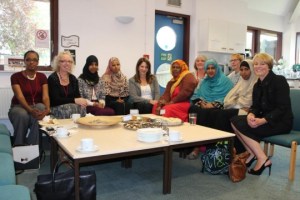
Lynne Featherstone MP, and DFID minister) with staff and parents from St Werburgh’s Primary School

In the afternoon I visited City Academy, home of the charity Integrate Bristol. I met staff and young people from Integrate who have been driving forward a campaign over the last few years against FGM. Later, the Integrate team delivered a fantastic event at Bristol’s City Hall, supported by Mayor George Ferguson, to celebrate the young people’s work and thank those who have supported them. It was a moving, funny and dynamic event, showcasing the work of the charity over the last few years – from a Newsnight appearance, to advising the BBC on their Casualty FGM episode, to writing and performing a successful play. The boldness and creativity of these teenagers is amazing and gives me faith that, as girls are educated and empowered, we will see an end to FGM.

I am very grateful to all involved for an instructive and inspiring day. A particular thanks to Nimco Ali from the campaign group Daughters of Eve, who has worked with communities, schools and local groups over many years to raise awareness about FGM and campaign for its end.

Bristol is pioneering an approach to tackling FGM which combines strong leadership, empowering girls and women, and working across government sectors. There is a long way to go, but great strides have been made. I have come back to London with hope and with ideas!


Making a difference

Here is a copy of the recent article I wrote for Modern Gov magazine, about my work as  parliamentary under-secretary of state at the Department for International Development…

Investing in international development is not only the right thing to do, but the smart thing to do.

This is what this coalition government firmly believes and that is why we have stood by our shared commitment to invest 0.7% of gross national income on development support.

I feel enormously privileged to be a minister at the Department for International Development (DfID), which is having such a positive and transformative impact on the lives of the world’s poorest people.

As the minister responsible for our work in Africa, I have seen for myself the life-changing impact the UK is making, especially in improving access to healthcare, education and in making countries self-sufficient through economic growth.

In the last year alone, the UK’s investment in development has enabled 30 million people to work their way out of poverty by providing access to financial services; prevented 13 million children and pregnant women from going hungry; reached 8.7 million people with emergency food assistance; and supported 6 million children – half of them girls – to go to primary school.

But as the UK meets its 0.7% commitment, it is clear that people need to see that we are spending money wisely, effectively and in the right places. That is why transparency and accountability are woven into everything we do, helping to achieve better value for money for UK taxpayers and improve the effectiveness of our work.

At DfID, our focus is very much on supporting countries who want to progress and move forward. We want to help create economies and societies that can grow; this is not just in their interest but ours also.

Prosperous and stable societies reduce the need for UK intervention and also open up potential markets for UK businesses to trade with.

Under the UK’s leadership, this summer’s G8 committed to doing just that by helping developing countries increase their ability to trade and maximise the income from their land, extractives and taxes – helping them to help themselves out of poverty.

A fundamental responsibility for DfID is always going to be to save the lives of those in imminent danger. We remain a leader in responding in global emergencies, such as providing vital humanitarian support to refugees of the conflicts in Syria and Somalia, responding to the food shortages in East Africa and the devastating effects of Hurricane Sandy in Haiti.

But it is not just conflict and disaster that halts a country’s development. Our G8 Nutrition for Growth event saw donors pledge an unprecedented £2.7bn towards eliminating malnutrition – the biggest global killer of children under-five, which can also undermine the earning potential of adults by 10%.

Tackling poverty is impossible if half the population is left behind. We know that when a woman generates her own income she re-invests 90% of it in her family and community.

Sustainable development means giving women and girls equal access to education and jobs, ending violent and oppressive acts, allowing women the choice of who to marry and when to have children.

Improving the lives of girls and women is a top priority for DfID and as the government’s champion for tackling violence against women and girls overseas, it is particularly close to my heart.

Female genital mutilation (FGM) is just one of the areas of abuse where we are taking a lead. FGM is one the worst kinds of gender violence, causing a lifetime of damage, sometimes even death.

Britain is backing the African-led drive to eliminate FGM by committing the biggest ever fund to tackling FGM, investment which will also benefit diaspora communities in the UK.

The prime minister also used his co-chairmanship of High Level Panel on Post 2015 Development to argue for a stand-alone goal to empower girls and women and achieve gender equality, because what is good for girls and women is good for society as a whole.

The UK has never stood on the sidelines when it comes to its international responsibilities and with around 1.4 billion people around the world still living in poverty we cannot afford to start now.

The UK should be proud of what this country has done to help others less fortunate than us to live better lives, but there is still a long way to go.

The government will continue to work hard with international organisations and the governments of poorer countries to help end poverty and strive for the world we want.

"It’s easy to miss the invisible…"

Those words – from the UN’s Special Rapporteur on Disabilities, Shuaib Chalklen – have stuck with me today on my second and final day at the UN General Assembly.

He said them during a meeting at which I was trying to establish what more the UK could do to improve the lives of people with disabilities in the poorest parts of the world.

We are driving disability up the agenda, initially focusing on improving data and evidence with a new commitment on making schools that are directly funded by the Department for International Development inclusive.

But I am keen to learn what others are doing, share lessons and work together on this important issue. That’s why  I also had a very interesting meeting with USAID’s disability coordinator Charlotte McClain- Nhlapo and heard more about what the US Government  are doing to ensure their development work includes people with disabilities.

But those words – “it’s easy to miss the invisible” – apply to so many groups of vulnerable people around the world, including the LGBT community.

Earlier yesterday I attended a meeting of public and private donors supporting LGBT issues hosted by the Swedish International Development Cooperation Agency, USAID and the Ford Foundation.

It was my opportunity to demonstrate my – and the UK’s – commitment to  LGBT  rights and hear what others are doing. But most importantly, I was able to meet others who feel as passionately about the issues of equality as I do and work with them to tackle exclusion and violence against LGBT people around the world.

The UK will help tackle the great neglect of disability

Here’s a further blog from the UN General Assembly in New York, also available on the Huffington Post

The biggest disability rights meeting in five years takes place in New York this week as part of the United Nations General Assembly. People with disabilities have long been the forgotten people when it comes to overseas development. This is a landmark opportunity to give them a voice and put their needs centre stage.

More than one billion people worldwide live with disability and suffer huge discrimination as a result. They face unequal access to education, employment, healthcare, social support and the justice system. Consequently, they are disproportionately some of the poorest and most marginalised people in the world – part of an unseen great neglect.

The internationally agreed Millennium Development Goals (MDGs) have done a great deal to address global poverty, but the gap where improving the lives of people with disabilities should have been has hindered progress. Thirteen years after the MDGs were agreed, disability remains the poor relation amongst development goals.

This isn’t good enough. People with a disability face specific day-to-day challenges that the rest of us don’t. They need tailored measures, such as providing school texts in braille. A one-size-fits-all approach doesn’t work for them. It is telling that of the 57million children currently out of school in the world today, over a third have a disability.

That’s why I’m announcing this week that the Department for International Development will help address this by ensuring that from this day forward, all of the school construction we directly support is designed to allow disability access. This means building schools with easily accessible entry points, wide entry doors, wide aisles, and ramps with railings and handles. It will also ensure water points have easy access levers and that toilets are designed for easy access. In other words, children with disabilities will be able to access all of those schools.

But this is just the start. With the deadline for the MDGs fast approaching the world has now turned to the post 2015 development framework. This is a once-in-a-generation chance to finally put disability on the agenda.

The UN’s High Level Panel, set up to present the UN Secretary-General with a vision of what the development framework should look like after the MDGs expire, have set out that the post 2015 development agenda should ‘leave no one behind’, regardless of ethnicity, gender, geography, disability, race or other status. The world’s leaders are now negotiating and considering the Panel’s vision and the UK is determined to do everything possible to ensure the final post-2015 framework sticks with this single overarching goal.

This week’s meeting is a positive sign that the UN is serious about strengthening the rights of disabled people around the world. Drawing international attention to this issue and driving progress will be my key priorities for UNGA. As a global community, we have a duty to safeguard the most vulnerable and if we are to defeat poverty we must tackle the causes as well as the symptoms. In many countries and communities, the barriers people with disabilities face means they have no chance of lifting themselves out of poverty and reaching their full potential.

The Department for International Development is already incorporating disability into our programmes across Africa and Asia, and we have recently committed £2million towards an additional three years support to the Disability Rights Fund – the only grant-making organisation to solely and directly support disabled people’s organisations in developing countries.

But we know that at the moment it is hard to even assess the scale of the challenge when it comes to disability because of the lack of sound global data. Quite simply we don’t know where disabled people are and what their needs are. So the UK will work with our partners – those with the expertise and access – to get the data we need. We will particularly focus on improving the data on children with disabilities and their special educational needs, and on the data for access to water and sanitation facilities.

But the UK can’t do this alone. We will also be urging the governments in the countries we support to deliver on their commitments under the United Nations Convention on the Rights of People with Disabilities.

I believe we have reached a watershed moment on disability – one which we cannot afford to get wrong. Development progress is only as good as the weakest member and progress made across the world is diluted if the most vulnerable are left behind. If developing countries are to move forward into prosperity and greater self-reliance, they must take everyone on the journey. It is up to us, as leaders in the international community, to help them on their way.

Representing the UK at the UN General Assembly

The world came together today for the biggest disability rights meeting to take place in five years  – and I was proud to represent the UK.

With one billion people globally facing unequal access to education, employment, healthcare, social support and justice as a result of disability, this was my chance to demand an end to this great neglect.

But actions speak louder than words and, on behalf of the British Government, I announced a range of measures which will improve the lives of disabled people in the poorest parts of the world.

At the UN General Assembly in New York, I pledged that children with disabilities in the developing world will be able to access and use all schools built with direct UK funding from this day forward.

It is telling that of the 57 million children currently out of school in the world today, over a third have a disability.

So school construction the UK directly supports in the developing world will now be built using ‘universal design’, with easily accessible entry points and toilets, wide entry doors, wide aisles, ramps with railings and handles, and water points with easy-access levers.

We will also work with partners to improve the global data on disability, in particular focusing on children with disabilities and their special educational needs, and on information about access to water and sanitation facilities.

And I urged governments in the countries we support to deliver on their commitments under the United Nations Convention on the Rights of People with Disabilities.

As a global community, we have a duty to safeguard the most vulnerable. If developing countries are to move forward into prosperity and greater self-reliance, they must take everyone on the journey.

With the on-going discussion of what development should focus on when the Millennium Development Goals expire in 2015, we have a once-in-a-generation chance to finally put disability on the agenda.

My announcement came on the same day Britain reaffirmed our commitment to tackling three killer diseases with new support to the Global Fund to Fight AIDS, TB and Malaria.

Over the last year, I have seen the success of the Global Fund for myself during visits to Africa and assessed the life-saving role it plays.

So I was very proud that the UK committed £1bn to the Global Fund over the next three years so long as others join us in ensuring it meets its target of $15bn and our contribution is 10% of the total replenishment.

That will save a life every three years with antiretroviral therapy for 750,000 people living with HIV, 32 million more insecticide-treated nets to prevent the transmission of malaria and TB treatment for over a million more people.

In just one day, the UK underlined its commitment to those in greatest need. We have risen to the challenge – now we need the rest of the world to follow us.

Syria

Below is a copy of the email I am sending to my constituents this morning, following last night’s vote in Parliament:

Good Morning,

Thank you for responding to my request for views on Syria. The responses from constituents were considered and measured. The vast majority were against any direct action on Syria – many of which were against direct action without a UN resolution – a view with which I totally agree.

The Government motion was defeated last night and so was the opposition amendment. I supported the Government motion because it proposed waiting for the UN weapons inspectors to finish their work and for the United Nations Security Council to consider their findings.

The motion also proposed ‘that every effort should be made to secure a Security Council Resolution backing military action before any such action is taken’.

Most crucially the motion gave an absolute commitment that ‘Before any direct British involvement in such action a further vote of the House of Commons will take place.’  That vote would have happened next week, after the weapons inspectors had reported back.

Because people have asked my position, let me make it clear that, in that second vote, I would have voted against military action unless it was supported by the UN – and indeed resigned from the front bench if necessary. After the government defeat last night, I don’t believe there will be a second vote – but my position remains the same.

I am an internationalist and the use of chemical weapons is a war crime. We must use the international bodies that uphold international law – or else we have nothing.

Furthermore, I am not persuaded that the sort of military intervention proposed – that of surgical strikes – would have made things better rather than worse.

I very much hope now that the international community will strive to find a diplomatic route with urgent and redoubled efforts. Assad and other such people should not take the vote last night as a green light on atrocities.

My focus now will be on ensuring vital humanitarian aid reaches those in Syria, and those fleeing the country.

Thank you again,


Lynne

TB and HIV in Southern Africa

Here’s a final blog from my International ministerial visit to Southern Africa last week:

I ended my trip to southern Africa with a meeting on TB in the region’s mines.

The two are closely linked as HIV dramatically increases susceptibility to TB which helps explain why Africa is the region most affected by TB, and Southern Africa shouldering an incomparably high burden.

And the disease is most prevalent in the mines –it’s estimated that half a million mine workers have the highest TB incidence in the world and three to seven per cent of miners are becoming ill with TB every year.

Rightly, there is a lot of interest from Parliamentarians on this subject back home – from both MPs and Lords.

I want to reassure them – and you – that DFID is committed to support the fight against these two diseases, TB and HIV. With the British  Government’s support, the Stop TB Partnership is active across southern Africa and we’ve been working closely with the Chamber of Mines and other partners to build a more co-ordinated approach to the problem of TB in mine workers, the local mining communities and labour sending areas.

The UK has contributed to the 25% reduction in TB deaths among HIV positive people globally since 2004 and the 28% reduction in Africa over the same period.

We will continue to highlight and support the problem of TB and HIV among the miners in the Southern African region and we now need all those involved in improving miners’ lives to build a stronger regional response through a more harmonised approach and follow-up of people with TB.