Lynne Featherstone MP welcomes £500,000 refurbishment of Hornsey station

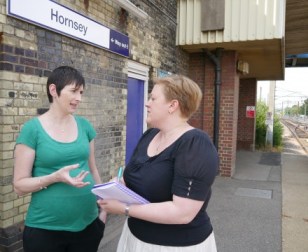
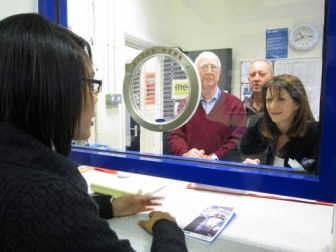
Local activist Dawn Barnes and Caroline Pidgeon AM at Hornsey rail stationLynne Featherstone MP has today welcomed the announcement of a £500,000 refurbishment of Hornsey station.

The work, which will begin on 22nd July, includes a refurbishment of the Tottenham Lane entrance, the ticket office and booking hall. The connecting footbridges will be repaired and resurfaced and the platform canopies will be restored and improved. Bright LED lighting will be fitted throughout the station, including over the footbridges.

The station will remain open during its usual hours throughout the refurbishment.

Local MP Lynne Featherstone, Hornsey Lib Dem Councillors and Leader of the Liberal Democrat Group on the GLA Caroline Pidgeon have been working together and calling on First Capital Connect to make these improvements to Hornsey Station for years. They will be continuing to push, however, for First Capital Connect to lengthen the platforms at Hornsey station and for better disabled access.

Liberal Democrat Councillor for Hornsey, Errol Reid commented:

“We welcome this much needed investment but it will still leave Hornsey with shorter platforms meaning it will miss out on some of the services other local stations will get.

“I have also been calling on First Capital Connect for improved disabled access at the station, which so far they have not agreed to.

“The Lib Dems will continue to work with Caroline Pidgeon on this and put pressure on First Capital Connect to lengthen the platforms at Hornsey so local residents and commuters get a better service.”

Liberal Democrat MP for Hornsey and Wood Green, Lynne Featherstone commented:

“This is wonderful news for customers and for Hornsey station – which is long overdue a refurbishment. I’d like to thank the local residents and our Hornsey Lib Dem councillors and activists, who have worked so hard to push for these improvements.

“We will continue to push for longer platforms at the station so that Hornsey can enjoy the same services as other stations in the area.”
 

Our Local Roads

Here’s my latest Muswell Flyer column – also available here: http://beckybeach.net.gridhosted.co.uk/?p=7119

The issue that I am most frequently contacted about at my constituency office is the state of the roads in Haringey. Potholes, road surfaces, the need for traffic calming and road safety – not a day goes by without someone telling me that they are troubled by these issues. Haringey Liberal Democrats and I have been campaigning hard for improvements and the past 2 months have finally seen Haringey Labour-run Council concede – with two dramatic successes.

In May Labour-run Haringey Council confessed that action had to be taken to improve the state of the roads following overwhelming evidence from the Haringey Lib Dems and local people. This was a hard fought-for admission but it is already clear that the Council has been making errors in their road survey by marking a road as being in a ‘general good condition’ when it is anything but.

The Haringey Lib Dems have been collecting information from residents and, so far, we have received complaints about potholes in 216 individual roads – more and more come in every day! The information we have gathered has been sent to the Council and I hope it will have a serious impact.

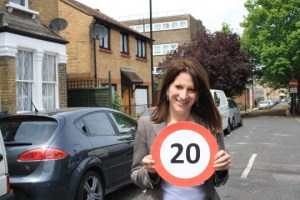
Our other major success has been in road safety. After years of campaigning, last month the Haringey Lib Dems had a breakthrough. We have been working to promote a 20mph speed limit for residential roads across the borough for the last 3 years and, at last, Labour-run Haringey Council has woken up to the issue. A long overdue consultation on a borough-wide 20 mph speed limit has been launched, allowing residents a chance to finally have their say.

IMG_0760

There has been a lot of debate in recent weeks over the plans to implement a 20mph speed limit but the evidence is clear – road safety is dramatically increased by a lower speed limit. It has been shown to have a direct impact on improving safety for drivers, cyclists and pedestrians. What’s more, if an accident does happen the injuries are a lot less likely to be serious. Most importantly – it has been shown to save lives.

Not only that – residents will gain the benefits of reduced traffic noise and reduced pollution. So it’s no surprise that this has been on our agenda for nearly three years.

Consultation is an essential part of the process and will give local residents in the area an opportunity to have their voices heard. We have launched a survey as we want to find out what people think. You can tell us your views here – bit.ly/20mphsurvey – and I encourage you all to do so.

This policy alone will not be the silver bullet that prevents any further road accidents. Other factors, such as educating all road users on safety, have to come into play. That said, I believe the speed limit will encourage drivers to change their behaviour and this – as well as bringing local roads up to standard – will have a huge impact on minimising the danger on our roads. 

Same Sex marriage – actually – just marriage!

So today’s the day that the Bill passes its third reading in the Lords! I am so happy – that’s it – just so happy. You go into politics wanting to change the world for the better – and here is my little bit of it.

Tributes to all who have helped over the ages in the step by step journey to equal marriage – but especially to those who have had to suffer the discrimination and bigotry that made its path so painful.

And very best wishes to all those who will now get married – and as Ben & Jerry put it on the special ice-cream tub they sent me to thank me for my work instigating equal marriage and on which they emblazoned

‘Lynne Honeycomb’

‘Everyone deserves to live Apple-y Ever After’

and so they do!

TB and HIV in Southern Africa

Here’s a final blog from my International ministerial visit to Southern Africa last week:

I ended my trip to southern Africa with a meeting on TB in the region’s mines.

The two are closely linked as HIV dramatically increases susceptibility to TB which helps explain why Africa is the region most affected by TB, and Southern Africa shouldering an incomparably high burden.

And the disease is most prevalent in the mines –it’s estimated that half a million mine workers have the highest TB incidence in the world and three to seven per cent of miners are becoming ill with TB every year.

Rightly, there is a lot of interest from Parliamentarians on this subject back home – from both MPs and Lords.

I want to reassure them – and you – that DFID is committed to support the fight against these two diseases, TB and HIV. With the British  Government’s support, the Stop TB Partnership is active across southern Africa and we’ve been working closely with the Chamber of Mines and other partners to build a more co-ordinated approach to the problem of TB in mine workers, the local mining communities and labour sending areas.

The UK has contributed to the 25% reduction in TB deaths among HIV positive people globally since 2004 and the 28% reduction in Africa over the same period.

We will continue to highlight and support the problem of TB and HIV among the miners in the Southern African region and we now need all those involved in improving miners’ lives to build a stronger regional response through a more harmonised approach and follow-up of people with TB.

Possible site for Muswell Hill Front Counter found!

Lynne Featherstone MP and Cllr Martin Newton at Muswell Hill Police front counterLynne Featherstone MP today contacted both the Haringey Borough Commander and Haringey Council’s property services – as a potential location for a Police contact point in Muswell Hill has been found.

A local resident contacted the Liberal Democrat MP during the week, suggesting that disused units on the Viaduct in Muswell Hill be used to accommodate a replacement police front counter.

The resident, Deanna Bogdanovic, has suggested that the Council houses the local Police free of charge in one of the Viaduct properties until alternative tenants can be found or, even better, that the Police are housed there permanently at a discounted rent. She has gathered support for the idea from fellow business owners.

The original Police front counter in Muswell Hill was very recently closed, as a part of the Conservative Mayor’s new crime plan for London, despite protests and campaigns by residents and the Local Liberal Democrats. This has limited public access to the police in the west of the borough.

At a previous meeting between the Hornsey and Wood Green MP and the Borough Commander, the Commander confirmed that he would be willing to maintain a front counter presence in Muswell Hill if a suitable alternative location could be found.

Muswell Hill resident and director of local music recording and rehearsal business BonaFideStudio (based under the viaduct), Deanna Bogdanovic, commented:

“Since Muswell Hill police station closed down, residents feel less secure. If there’s a problem, they need to be able to meet face to face with local police who know and understand the area. At the same time, the local council owns five properties under the Viaduct which are currently unoccupied, going to waste, and are a liability to local businesses and homes in the area.

“It makes perfect sense. Muswell Hill would have a local police presence once more, the businesses under the Viaduct would be far more secure and the Council would have one less empty property to worry about!”

Lynne Featherstone MP commented:

“It has taken a while, but finally we have a lead on a replacement police front counter for Muswell Hill. I’d like to thank all the residents who signed the Lib Dem petition to keep a police presence in Muswell Hill, and thank Deanna for bringing the idea to my attention.

“I was more than happy to get the ball rolling. I met Victor Olisa this morning and have emailed Haringey Council’s property services. I hope they will work together to investigate this option.

“I’ll keep my fingers crossed for a positive outcome!”

Hope and HIV in Malawi

Blog from Malawi – also available on Huffington Post

It took 10 minutes for me to witness despair in the optimistically-titled ‘Corridors of Hope’.

It must seem like a cruel name to those being tested for HIV in the small, sparse rooms along this hallway in Dedza District Hospital in Malawi.

There was little hope in the eyes of the father I sat with shortly after he learnt he was living with HIV. Cradling his son in his arms, together they faced the agonising wait for the boy’s test results.

In just 600 seconds, the four-year-old would hear whether he was the latest of 930,000 people in this small African country who are HIV positive.

But there is hope.

2013-07-11-IMG_7662_sq.jpg

Lilian Hara is a Community Health Nurse at the HIV Testing and Counselling Centre in Dezda. Picture: Emily Gray/DFID

While 68,000 people die of AIDS-related illnesses here every year, HIV/AIDS no longer needs to be a death sentence. I am in Malawi to see how the Department for International Development‘s support is making an impact on the ground and reviewing how British development aid can be made even more effective.

Our funding means the father I met will become one of thousands of people who receive counselling and advice on living with HIV and the much-needed anti-retroviral treatmentswhich will help him lead a normal life.

The hospital also sees 5,000 pregnant women every year and for those who test positive, helps prevent transmission of the virus from mother to child. The work of this hospital and others like it has helped bring HIV prevalence rates down from 11.3% to 7.5% in the last 10 years.

2013-07-11-IMG_7918.jpg

The local centre is helping to stop HIV being transmitted to children in the Dezda area. Picture: Emily Gray/DFID

Preventing the spread of HIV is vital if we are ever going to reach our ultimate goal of the ‘three zeros’ – zero new HIV infections, zero stigma and discrimination and zero AIDS-related deaths.

Because the high rate of infection is closely linked to gender disparity and violence against women and girls, I also visited a pioneering policing unit to support victims of gender based violence.

More than 40% of Malawian women have experienced physical or sexual violence – while 60% of girls and 35% of boys have also experienced some form of abuse. For the first time, those in Dedza have a safe haven where they can report the crimes, receive counselling, mediation and advice.

Prosecutions are being pursued more vigorously now – though this may be little comfort to those victims left with HIV. That’s why the Department for International Develompent (DFID) is also working with the poorest communities so they can set up support groups to tackle the spread of HIV/AIDS and help those who are positive live healthy lives free from discrimination.

One HIV positive lady I met told me she set up a support group because her best friends looked at her husband and her “like dead people” and children refused to play with her kids when they learned of her status.

She said the work of the support group has reduced the stigma attached to HIV and the despair of those living with it as people realise “there is still a life to live”.

That’s her message to the devastated father sitting in the Corridors of Hope.

With continued commitment from the Government of Malawi, support from NGOs and donors such as DFID, and real effort from the communities themselves – we can turn hope into certainty.

The one certainty I can pass on now is that after the 10 minute wait, the father’s four-year-old boy tested negative. I just hope he stays that way.

We want your views! Click here to find out how the UK helps to prevent HIV in the developing world and have your say in our open consultation.

Lynne Featherstone MP reacts to revised Whittington strategy

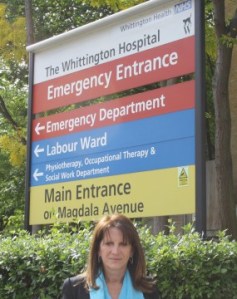
Lynne Featherstone MP outside the WhittingtonLynne Featherstone MP has today commented on the Whittington Hospital’s revised estate and clinical strategy. Two buildings earmarked for sale have been saved, while two others will now be subject to a community consultation. The hospital’s maternity unit will still see a £10million investment.

The Board still plan to integrate care into the community – where it is ‘in patients’ best interests based on clinical evidence.’

The Hospital Board first announced their future plans in January without consultation. The estate strategy, which involved sale of buildings and land at the north of the site, caused particular concern among local residents and trust members.

Lynne Featherstone MP launched a petition calling for the Whittington to listen to residents and give assurances that no services will be lost until equal or better are in place.  The Liberal Democrat MP also held a public meeting.

The Board agreed to the Liberal Democrat petition demands – assuring there would be no loss of service, and agreeing to enter into a listening exercise. The results of this listening exercise are reflected in the revised strategy.

Haringey Lib Dem health spokesperson, Cllr David Winskill commented:

“The direction of travel in the revised document is right. Integrated care will produce a better outcome but only with the proper support of social care agencies.

“We still have questions regarding where Haringey is with designating services, and we need to know a bit more regarding health services that the Whittington proposes to place in the community.”

Hornsey and Wood Green MP Lynne Featherstone commented:

“It is vital that the Board take the necessary steps to secure the long term future of the hospital – but community involvement and consultation is paramount when any change is made.

“Over 3000 local residents signed the Liberal Democrat petition calling on the Whittington Board to pause their plans, listen to residents, and ensure that no services are lost.  I’m glad that the Board heeded these calls by undertaking the listening exercise and giving us assurances that no services will be lost until equal or better are in place.

“As a result of the listening exercise, two buildings have been saved and the sale of the other two is now subject to further community consultation. The revised strategy also incorporates a welcome £10 million investment in maternity to improve the Hospital’s service and increase their capacity.

“My Haringey Lib Dem colleagues and I will continue to monitor the situation closely – particularly in regard to the implementation of integrated community care.”

See the revised strategy here: http://ourfuture.whittington.nhs.uk/changes-to-plans/

Tackling HIV/AIDS in Southern Africa

The British Government has made some impressive commitments to improve the lives of the world’s poorest people. I am incredibly proud of the huge number of children we’re vaccinating, girls we’re educating and families we’re providing with clean water.

But one of our most challenging ambitions involves the smallest number  – 0. The UK remains committed to the vision of getting zero new HIV infections, zero discrimination and zero AIDS-related deaths. This matters as much to people in Britain as it does to the poorest parts of the world. Infections do not respect borders.

I am currently in Southern Africa – the global epicentre of the HIV epidemic – to see how the Department for International Development’s support is making an impact on the ground and review how British development aid can be made even more effective.

Although we are not going to reach our eventual targets of “the three zeros” overnight – we will reduce by at least 500,000 new HIV infections among women in sub-Saharan Africa by 2015. In the last year alone, we’ve developed four new HIV prevention programmes in sub-Saharan Africa (Zimbabwe, Malawi, Zambia and across the region). We are doing this by investing in a diverse range of projects, supporting civil society organisations, research and development, multilateral organisations (in particular our contribution to the Global Fund) and working with the private sector.

But more needs to be done. There are an estimated 11.3m living with HIV/AIDS in Southern Africa, an increase of nearly a third from ten years ago. Despite the increasing numbers on treatment, the number of people becoming newly infected  each year still exceeds the number of new people treatment.

I am keen to know what more DFID can be doing and how we can do things differently to reach our eventual goal of ‘zero new infections’. As part of a review into our strategy, I met with the Deputy Director of the UNAIDS Regional Support Team, politicians from across Southern Africa and a range of NGOs as well as researchers. The high rates of  HIV infection is closely linked to gender disparity and violence against women and girls, and I also met with South African counterparts and civil society stakeholders on how to jointly work on this important challenge.

What I heard was a message of hope and with so many people committed to the fight against HIV/AIDS. My message to them, and for all those living with HIV/AIDS – including those in the UK as well as in Southern Africa – is that DFID will work harder and more flexibly to make what we do count even more. It is my hope that our work will count towards zero – zero new infections, zero discrimination and zero AIDS-related deaths.

Lynne Featherstone MP visits the JAN Trust

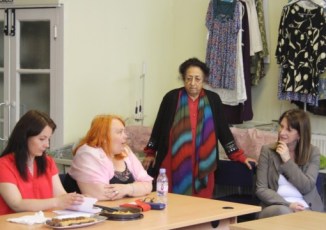
Lynne Featherstone MP discussing The JAN Trust’s work with women who attend the English language class. Lynne Featherstone MP on Friday visited the JAN trust – a local non-profit organisation which aims to support and empower women; particularly those in troubled or difficult situations.

The Liberal Democrat MP had a meeting with the trust founder and director, Rafaat Mughal and project manager Sajda Mughal. They discussed the Trust’s campaign against forced marriage, and the techniques they are using to help and raise awareness – such as holding workshops in schools and setting up a direct phone line that women at risk can call in confidence.

The Trust are also working on numerous other campaigns, including tackling hate crime.

After the discussion, the MP for Hornsey and Wood Green met around 20 of the women who use the Trust’s services. They told the local MP how they have benefited from the English lessons provided by the Trust, and about their future plans and aspirations.

Following the visit, Lynne Featherstone MP commented:

“It was encouraging to hear about the wide range of work being undertaken by the JAN Trust, particularly in these tough economic times when funding is scarce.

“The women learning English at the Trust seemed very happy and positive – and from the conversations I had with them, it is clear that the lessons are really helping with their language skills. It was like a mini United Nations, with women from all over the world – Vietnam, Iran and Poland, to name a few!

“The Trust are working on and raising awareness of really important issues, and I wish them all the best with their campaigns and work in the future.”


Nick Clegg visits Hornsey and Wood Green!

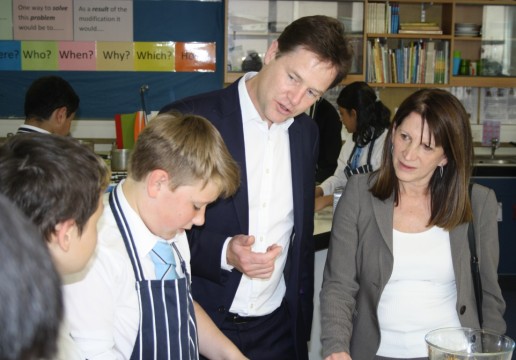
On Friday, it was an honour to welcome the Deputy Prime Minister Nick Clegg to Highgate Wood – a fantastic school in my constituency.

The head teacher Patrick Cozier and I greeted Nick at the gates, and then had a meeting to discuss how the school is using its Pupil Premium money.

The Pupil Premium is a Liberal Democrat flagship policy that is being delivered by the Coalition Government. It targets extra money to schools depending on the number of children from disadvantaged backgrounds they have.

Schools will receive £900 per eligible pupil. For Highgate Wood, this means a whopping £413,100 in extra funding for 2013/14.

Already, the school is doing great things with the extra money – for instance taking on new staff to support children with troubled backgrounds and subsidising school trip fees for poorer pupils. I can’t wait to see what they do with this year’s increased allocation.

After the meeting, Nick and I were shown around the school and popped into some lessons – history, English and food tech. It certainly brought back memories! We ended the visit by looking around a fantastic art and photography exhibition, put together by 6th form students.

After the visit, the head teacher commented – “It’s a complete honour to have someone as significant as Nick Clegg to come to the school and to see what we’re doing.  The Pupil Premium is great for the school. It allows students from disadvantaged backgrounds to engage in activities and get individual support to make progress.”

Nick said: “It is great feeling for a politician to come to school and actually see how ideas like the Pupil Premium – which I have fought for as a politician – are working out in reality. Highgate Wood is a great school, and I’ve been hugely impressed by what I have seen today.”

A great day all round!