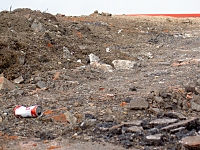
Liberal Democrat frustration over missing drain cover delay

A complete disregard for public safety – that is how local Lib Dems are describing a delay in replacing a missing drain cover outside Broadwater Farm primary school in Adams Road.The delay has angered local Liberal Democrat councillors, as a report was made to Haringey Council’s emergency repair line on 8th April 2007. However, the drain cover still has not been replaced.

Haringey Lib Dems are astonished at the disregard of public safety, especially in light of its location outside a busy school. Liberal Democrats have taken this issue up with the Council’s highways department as a matter of urgency.

Harringay ward councillor Carolyn Baker comments:

“It is hard to believe that a drain cover outside a primary school has been uncovered for so long. This is an accident waiting to happen. I am concerned that children could be injured falling into it, not to mention the hygiene risks from having a litter and stagnant water trap open so close to the school. It is unacceptable.”

Liberal Democrat concern for trees in Alexandra Park

Haringey Liberal Democrat members of the Alexandra Park Board have expressed concern in a letter to the management of the Park after vehicles for an event had been parked perilously close to newly-planted trees.

Ten to twelve lorries that transported the Chinese State Circus equipment to the Palace before the Easter Weekend have been parked around the young trees, and the others on the ‘carriage drive’ road inside the west entrance of Alexandra Palace Park. Lib Dems say that the lack of thought and planning is likely to damage the growth of the trees and are alarmed that more care has not been taken.

Cllr Bob Hare (Liberal Democrat spokesperson on Green Issues) comments:

“These very large and heavy vehicles have been parked within inches of trees planted just a few months ago. In several cases, the vehicles are actually touching them. Wheels have been driven over the root zones of the new trees – something that will have compressed the soil, almost certainly affecting growth.

“These trees were planted as part of the Heritage Lottery-funded restoration works in Alexandra Park. While the lorry drivers have performed some driving that reached circus-trick standards in managing to squeeze their vehicles into the ridiculously tight gaps between the trees, they should never have been allowed to do so when there are hard-surfaced car parks lit at night for security just a few metres away.”

Liberal Democrats welcome launch of 'Sustainable Haringey' movement

Haringey Liberal Democrats have warmly welcomed a new initiative established by residents and community organisations to highlight and tackle environmental issues. Lib Dems believe that the ‘Sustainable Haringey Network’ will go a long way to provide increased community involvement in environmental issues.

The launch conference unanimously agreed to set up a network between groups to work with each other towards the changes needed to ensure Haringey faces up to the challenges of global climate change caused by modern industrial practices and lifestyles heavily reliant on fossil fuel sources.

Neil Williams, leader of the Liberal Democrats comments:

“This is exactly the type of initiative needed to ensure the local community is involved to help shape and influence the changes that are needed. Environmental crises such as global warming affect everyone. The more people involved in building a sustainable community the better.”

Cllr Bob Hare (Liberal Democrat spokesperson on Green Issues) comments:

“We all need to look at our lifestyles. Our travel, shopping and working habits, our homes and energy use all need to be sustainable to ensure less effect on the environment. I welcome this initiative. It will help to increase awareness and promote action to make Haringey more sustainable.”

Lib Dems welcome Hornsey Hospital cash boost

The announcement that Haringey Primary Care Trust (PCT) has been successful in its bid for capital funds to build a new community hospital in the borough has been welcomed by the Liberal Democrats. However, the party has warned that the large £5.5 million shortfall will have a have a big impact on the Trust’s finances as it is forced to finance more of the Hospital building through the private sector.

The Department of Health unveiled a £1.5 million cash injection on 11th April 2007 that will be used to build the new Hornsey Central Hospital. Lib Dems estimate the PCT will have to find at least £93,500 more per year to finance the hospital. The worst-case scenario would see the PCT having to find an extra £357,000 per year.

Lynne Featherstone, MP for Hornsey and Wood Green comments:

“After such a long campaign, it is a relief that this £1.5 million will go some way to get this long awaited project off the ground. Whilst many hospitals such as Chase Farm are threatened with closure, we can at least start the redevelopment of Hornsey Hospital.

“I am, however, very disappointed that the Government hasn’t provided the full £7 million requested. The Health Trust will now have to rely more on private finance to build the new facility, and experience shows this can be very costly in the long run.”

Cllr Richard Wilson, Haringey Lib Dem Health spokesperson adds:

“While this money is welcomed by the Lib Dems the fact that only £1.5 million rather than the £7 million has been awarded will mean that in the long term the PCT will have to find extra money to fill the shortfall. The Health Trust’s own figure’s show that raising the missing £5.5m through the private sector could increase the costs of the Hornsey Hospital project by up to £350,000 a year. This means less money to spend on vital health services in the new hospital and elsewhere in the borough.”

Lib Dems criticise 450,000 litres of wasted water

Haringey Liberal Democrats have criticised the failure of Homes for Haringey to repair a leak that has resulted in 450,000 litres of water being wasted over an eighteen month period.

Residents of Garton House (Hornsey Lane) have continually complained to Homes for Haringey that a leak from a faulty boiler valve overflow continued to waste precious clean water. Liberal Democrat councillors have supported residents’ complaints and have stressed that this example is only a symptom of a wider problem of uncompleted repairs.

Crouch End Councillor Lyn Weber comments:

“This is just one item on a long list of unfinished jobs or shoddy workmanship.A regular estate visit threw up all sorts of unfinished work and I am still awaiting a response as to when works will be completed. Glass bricks in the stairwells are broken and need replacing; the corridors are filthy after decorating and the replacement lighting scheme has not been finished. There are other issues too.

“This is not the first estate where I have encountered unhappy tenants and leaseholders. I have raised questions, and the answers when I get them, are simply not satisfactory. I urge all tenants and leaseholders not to give up.If you give up on broken guttering or poor paintwork it will cost you even more in the long run so keep on reporting the issues.

“Leaseholders pay a service charge and tenants pay rent; they have a right to decent standards of response and workmanship. Homes for Haringey is simply not delivering. There are many more examples – metal window frames being painted over, scaffolding been erected and taken down several times before work is completed – the list just goes on.”

Cllr Catherine Harris (Lib Dem Housing Spokesperson) adds:

“This is just the kind of ongoing repair issue that we encounter all the time. It is worrying when you consider that Homes for Haringey need a two star rating in their next inspection.”

A British malaise?

Just this last Easter Weekend, I went for a walk in Regent’s Park early morning – and as the sun beat down on me walking through gorgeously designed and tended gardens, I felt so lucky to be alive and living in such a beautiful city with such a beautiful park on such a beautiful day. It reminded me that we should be deeply blessed (weather aside!) to live in this country – one of the very richest in world, with a fine tradition of decency and humanity and kept free of many of the large-scale tragedies (natural and man-made) that have scarred so many other countries in the last few decades.

So why then are the joys of life often apparently in such short supply? It is not just the media – much though they love painting a picture of grim catastrophe where everything we eat and touch will kill us, and even if it doesn’t there is a cast of other woes just waiting in the wings.

I’m currently slowly writing- or more accurately trying to write – a chapter for a book. My thesis is that we live our lives surrounded by the unattainable- the ‘must haves’ of how our lives should be, what we should do, think, eat, be and aspire too – all of which leaves us meandering along life’s path, whichever path we are on, feeling vaguely disappointed in our achievements or our lack of them and feeling perpetually disappointed or deprived. Even in this age of unparalleled wealth in our country – it doesn’t protect us from a perpetual feeling that if we only had X or did Y, our lives would be so much better.

So how – in this world that has moved on from those ‘old-fashioned’ values – can we create structures or environment that value our human good qualities more and place less importance on wealth or status?

And what – if any – role is there for government and public bodies in all this? This is tricky territory to tread in as one false slip of the sentence and you open yourself up to pastiche as wanting a Ministry of Fun and state-regulated force-fed humour courses with every meal. Indeed, David Cameron’s recent call to "let sunshine win the day" certainly did seem to me rather risible. (Does he think he will be running against a "more rain now" Prime Minster at the next election? On the other hand, if it is Gordon Brown…!)

But with all that said and all the caveats deployed – there are certainly many things government and public bodies can do to make us sad or angry, so should their role be to minimise such actions or are there more positive steps that can be taken too? In the grand sweep of policy, there are obvious big picture items – such as tackling poverty, reducing social exclusion and cutting crime.

All help remove real causes of misery. But they are not the whole story – just think of the number of times people say things along the lines of, "we may have been poor, but at least we were happy…" So I am interested too in the smaller scale measures.

Take one example: the question of how engaged someone is with their neighbours has huge knock-on effects on their participation in society, happiness and even health. Government can hardly order people to talk to or like their neighbours, but at the micro-scale why about councils doing more to help and encourage the organisation of street parties so people get to know each other? Lots of streets already do have their own street parties – and it does create neighbourlyness and bon homie. Perhaps an annual street party week to encourage all those who mutter about how nice it would be to know the people in their street to actually get round to it? Or perhaps councils should be doing more to help online communities emerge in their areas, through measures like providing easy to use and free website and online discussion forums so that anyone can within a few minutes set-up an online community for their street or neighbourhood – and of course click a link to print off some flyers to then distribute to their neighbours?

As the chapter still needs writing – do let me have your thoughts. Just drop me an email or comment on my blog.

(c) Lynne Featherstone, 2007

A blogging pause

Wasn’t it just the loveliest weather over the Easter Weekend? I won’t be blogging again until after next weekend as am taking a few days to do things with my daughters! No doubt the world can wait.

A new Hornsey Hospital film

I had a good Good Friday. I didn’t do any work. Well – just a few blue envelopes for a good cause. Reading in the Guardian this morning Michael White‘s take on Brown’s modus operandi. Michael gets it right. Gordon won’t be pushed around by the media. He uses the example of the hoo ha over Brown’s stealth pension raid which rumbled on in the press from last Monday without comment from him, M’s thesis being that Brown waits ’til all critics have critiqued – then enters the fray to put a (hoped for) definitive full stop with no come back on the subject. Psychologically sound analysis of Mr Cautious Annie I say!

The hospital site after demolition work started
From the health of the nation to health locally (!), I see that the film for which I was filmed about Hornsey Hospital has made it to the net. Clearly a lot of work has gone into the film, talking to lots of different participants and editing it all together nicely. You can view it here.

Education for the girls of the Kalandia Refugee Camp

I recently returned from a short trip to the Middle East. Amongst the many issues to see and hear about, I had wanted to see some of the education work going on. This is because the Liberal Democrats are putting education in conflict zones at the forefront of their international development campaigning – as are Save the Children. So Save the Children arranged for me to visit the Kalandia School on the West Bank of Palestine to see how girls from the Kalandia Refugee camp are educated.

Save the Children work with local partners – and in this case Pyalara (Palestinian Youth Association for Leadership and Rights Activism) were carrying out a workshop with about thirty girls, aged around fifteen years.

At the moment the kids have to go in two shifts as the space is inadequate, though a second block was in the last stages of construction opposite the existing school. About three quarters of the girls wore the hijab – the rest were bareheaded.I asked about that – and the answer I got was that it was less to do with religion and far more to do with the views of your family. I was told that despite living in the camp, almost all the families had television (hence their understanding of media I suppose) but that there were only about four computers in the Kalandia camp.

In this school itself they have been using workshops to enable pupils to identify for themselves the barriers that they encounter to leading fulfilling lives. I guess I was somehow expecting them to blame Israel, the US, us for their poverty and their struggle. But what the girls in Kalandia had identified as their biggest problem was actually cultural – early marriage. Three of the girls from this class were already married (one had already dropped out already) – and the expectation was that the rest soon would be. And marriage generally meant an end to their education, expectation and hopes for the future.

So the workshop became about how to raise this issue and how to begin to change things – all based on what they themselves could do.One route they identified was about getting the message out through the media. After a warm up exercise the girls were asked to define their view of the media. They all said it was a way of getting the truth out there – but they also thought the media could be used to tell lies. They wanted to use newspapers to fight against early marriage. Many of them said that education was more important than marriage – and that there was a health dimension with effects ranging from mental to physical to social issues.

The workshop went through demonstrating what was the key to a good news item, what makes a story and how to get the media interested. They decided that in order to make the issue of early marriage newsworthy they would have to select the most important aspect and try and get a real life story to illustrate it.

They were pretty savvy and very enchanting girls. And reassuringly, as girls are clearly girls wherever they come from, they had a uniform which each girl wore in a different way (mostly under their other clothes) so just the tails peaked fashionably out – just like I used to do at school myself!

(c) Lynne Featherstone, 2007