ET demonstrated a really human need

Here’s my latest column from the Ham & High:

A mobile phoneET demonstrated a really human need – which given he was an alien and also not real perhaps makes the point even stronger. What did ET want to do most? Phone home!

Nowhere is that need to speak to loved ones stronger than in hospital when you are ill – or even if you are not ill and have had something delightful like having a baby. We all want to phone home – or to use another vernacular – phone a friend.

So it always seemed particularly cruel and heartless that phoning home – the use of a phone at your hospital bedside (or even if you are mobile in the corridor) was priced at a hideously high rate, commercialised and contracted. Why did they ever think that was a good or fair or kind idea? No – don’t answer!

But now the good news – the government has just relaxed the ban on the use of mobile phones in hospitals. Some of our local hospitals already have progressive policies on mobile phone use, and I hope they will all seize this opportunity to review their policies and give patients the greatest freedom possible to stay in touch. It’s not just the removal of the ban on mobiles that is important – it is how that relaxation is welcomed or otherwise (and implemented) by our local hospitals.

Now is the moment to get this right and that is why I have now written to the chief executives of the Whittington, North Middlesex, Royal Free and Haringey Teaching Primary Care Trust (TPCT) calling for an urgent review of their policies on mobile phones.

Of course there must continue to be sensible restrictions to preserve tranquillity and protect privacy. However, I think it’s easy to underestimate the benefits of being able to receive a goodnight text from a loved one when you’re ill.

One reason for reviewing with urgency is that it would appear that patients are taking matters into their own hands. One account I heard was from someone who spent a few hours accompanying a patient in a ward where, following the government announcement and not waiting for any new hospital ‘regulations’ they are already simply ignoring the notices forbidding the use of mobile phones. This is a clear indication in my view of the deep resentment that patients have felt at being forced to use the commercially contracted phones. Released from the chains that have bound them, at the first opportunity they are just doing what anyone would.

There is some concern out there about whether mobile phone signals interfere with important medical equipment. But my understanding is that they only interfere with very particular equipment and those areas could still have a ban – but all the more reason to get new rules in place, and fast, so that people understand that any remaining bans are there for good reason rather than just a left over from the past.

Doctors at the John Radcliffe hospital, in Oxford, said way back in 2003 that any interference is temporary and localised. Most such sensitive equipment is actually in operating theatres – and certainly it isn’t going to be the patient’s mobile that is the problem there – only the nurses, doctors and surgeons!

Perhaps there is at least one really valid concern – whether it is medically a good idea as patients should be resting not working or even chatting too much from a hospital bed. You can just imagine for example how a workaholic, perhaps even driven to hospital by their habits, might be over-keen to keep in touch with work. And there are the other patients within earshot to respect. But on the other side there is a feeling of isolation when you are in hospital. So just like visiting, perhaps there should be times when there should be no mobile calls and rest times for patients.

So – hurrah. Common sense is beginning to win the day – and we haven’t seen much of that recently!
Politics and the internet

Later this year will be the 10th anniversary of my first website: a dozen or so static HTML files, livened up with an animated graphic and a Javascript quiz – a little bit of interactivity even back then!

Looking at how my use of the internet for politics since then has multiplied – emails, blogs, more emails, Facebook, yet more emails, Twitter, even more emails, an experiment with Bebo, and yet more emails – I would say I’ve learnt three key things about technology and politics.

First, you don’t have to know how to do the technology – you can get other people to help with that – but understanding what you want out of it and the new opportunities it offers is vital. Second, it helps bring political success – I wouldn’t have got elected an MP without it. And third, as much of the technology has got easier and easier to do, getting the technical details right is – while still important – becoming less important compared with getting your mindset right.

I’m quite taken at the moment with a quote from the American writer Clay Shirky, which makes this last point in a slightly different way – “The revolution doesn’t happen when society adopts new tools. It happens when society adopts new behaviours.”

In a way, it’s an explanation of why my website and blog (finally about to get a long over-due overhaul) haven’t been changed much from a technical point in the last few years. Because what matters far more with the blog is my attitude towards blogging, my style in providing and sharing information, my willingness to engage in online debate or not – than whether I should have reallymoved off Google’s Blogger platform by now or not. Of course I’m looking forward to the benefits WordPress will bring – but what really matters is what goes on in my head and at my keyboard than in the lines of blogger software code.

This will be key in my new role heading up the Liberal Democrats’ Technology Board. There is work that needs to be done to continue improving and expanding the party’s use of technology, and in particular the internet, which falls into the category of getting more and better tools. There is a key job of work in tapping into the pool of expertise amongst our members and supporters in writing, improving and supporting our tools. But above all, it is a matter of changing the way we think and act, so that we more fully embrace the more open, more collaborative, more sharing outlook that is about engaging – not lecturing – and is, for an increasing number of people, an instinctive part of the way they lead their lives, and they expect others to also.

To an extent, that change is being forced on political parties. People’s willingness to become a formal member of a political party has fallen hugely over the last few decades. However, whilst that formal association may be far less popular than it used to be, many people are willing to get involved or help without becoming a member. For example, the proportion of helpers on the final weekend of my last election campaign who were signed up party members was far lower than in the campaigns run at the time I first got involved in politics.

Membership is crucial, because with membership come a meaningful democrat accountability within the Liberal Democrats, where our members get to vote on who the party leader is, for example. But membership is not enough. We need to reach out in less formal, less structured, less hierarchical ways to that wider pool of people – and that is a job almost tailor made for the internet.

This article first appeared on the New Statesman website.

(c) Lynne Featherstone, 2009

Why the number of female MPs matters

The Christmas edition of the Electoral Reform Society’s magazine, The Voter carries this short article from me:

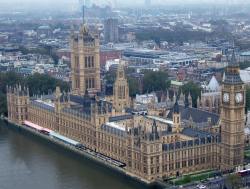
Houses of ParliamentSadly, I am one of only 126 female MPs in a Parliament of 646. Parliament remains an old boys club, with its adversarial style of politics where bully-boy tactics are the norm; any of you who’ve watched PMQs will be fully aware of this.

And this feeds a political system that is so busy being adversarial that it forgets to be effective. This lack of representation is repeated throughout our political system. In local government, women make up just over a quarter of local councillors, whilst with MEPs it is a similar story: just one quarter female.

The quality of our government suffers from these imbalances – an impact which therefore affects us all, men and women. Women need to be there, with men, making these decisions, to ensure that public services and policy are relevant to all people and are capable of having a real effect on the lives, not just of women, but of everyone in society.

Nowhere is this clearer than in the allocation of resources, where the macho boys culture so often summons up the massive project and neglects the important details. When I was chair of transport at London Assembly it was starkly clear. Why is it that an obsession with boys-toys – the macho game of who’s got the biggest airport or the longest train – delivers multi-billion pound budgets for massive transport infrastructure projects yet not even a fraction of those budgets were spent on so called ‘soft measures’, such as making sure you can fit a double buggy through the door of a bus and making sure that local shopping centres and services are easily accessible – really easily accessible – through using public transport?

But it should not be a question of either or – it should be a matter of both. Some of our Nordic counterparts are light years ahead in terms of female representation, and we can see the practical effect on policy and resource priorities. Take Finland – with its childcare allowance for women who stay home and look after children under the age of 3 and its municipal care for children who are below the school age of 7.

We have come a long way in 90 years. It’s not enough, but we are constantly pushing, and constantly forcing change. I hope that within the next decade we will able to celebrate the achievement of equal and proper representation of women in politics, as another 90 is far too long to wait for this change!

It isn’t enough that women have the vote, and it isn’t enough that Iraq, Afghanistan and Pakistan all rank above us internationally when it comes to women’s representation. Equal representation and involvement in politics is our right, and it is the women today who will bring about change tomorrow, by demanding the equal representation they deserve and by working together to achieve it.

Christmas Fairy Tale, 2008

Once upon a time – neither long ago nor far away – it was Christmas and the snow was falling gently on to the Cold Stone Palace by the Great River.

The Dark Wizard, who had finally ascended the ruling throne after ten long years of waiting and brooding, found that the people did not love him as he thought they ought. He was ridiculed and pilloried and people laughed behind his back.

Now in the land of the Cold Stone Palace there lived a soothsayer – one of the golden elves with magic dancing feet from a smaller tribe. The soothsayer foretold of a debt bubble that would burst. He told of the need for the Dark Wizard to enter the fortress of doom and take the money-hoarders. For it was the money-hoarders whose greed and avarice had scarred not only this land but many lands. And when the Golden Soothsayer spake the people listened – for the Golden Soothsayer knew the future.

At the same time, there lived another tribe, led by the not so noble Blue Pretender. Now the blue tribe had been very happy when the Dark Wizard was being made fun of – but as the country sank into the slough of despond and the people were hungry and cold – they began to ask more and more of the Blue Pretender what his answers were. He was very eloquent and often said what he thought people wanted to hear – but in this time of great trouble and darkness – the people were scared.

And so they looked to the Dark Wizard – because for all his faults – and they were many – before he ascended the throne he had been the Chief Money Wizard and knew all the Money Wizards in every land and across the seas. And he was dour and gloomy and brooding and in such troubled times he seemed to offer a solidity which made the not so noble Blue Pretender seem shallow and hollow.

As the skies darkened and the icy blasts from the sub-prime land across the great water blew into this once happy land, the Dark Wizard took the Golden Soothsayer’s advice and entered the money-hoarders fortresses and took them over. And then he blew his magic horn and the Princes, Kings and Great Wizards from every land came together for the Great Discussion. And they all agreed that the Dark Wizard’s(but really the Golden Soothsayer’s) ideas were right. They would take the peoples’ gold and they would give it to the money-hoarders but the money-hoarders had to promise to then give it in turn to the people so that they could carry on their businesses and paying for their homes – and so the wheels of life would begin to turn again.

And the Dark Wizard was hailed as a great and wonderful wizard by them all – well all except a Witch who hailed from the Deutscheslands. Whilst the rest of the rulers realised that they needed to act as one – only she failed the Test of Ruling by agreeing with them whilst at the Great Discussion but secretly laying plans to undermine and attack the Dark Wizard.

The Dark Wizard returned and told the red, gold and blue elves who were gathered in the Cold Stone Palace that he had saved the world. A wave of shock ran through all the elves in the Cold Stone Palace as they realised that the Dark Wizard had fallen under a spell – the Spell of Grand Delusion. This was a spell that often fell upon leaders during their reign – and was a very difficult spell to break.

With no food and no work and no heat – and with a ruler fallen under such a spell – the people turned in their trouble to the Golden Soothsayer to ask that he tell them what the future would. And the Soothsayer told them of a long and difficult road ahead and warned that they should not heed the Dark Wizard any longer as his delusional state would guide them ill. And the people begged the Golden Soothsayer and his leader the Golden (and very handsome) Princeto take over the ruling of the country and save them from the hardships ahead.

Alas and alack – despite the wishes of the people – the ancient magic and law of the land dictated that only the Dark Wizard could name the time of the Great Choosing – and as he believed he and he alone had saved the world – he refused.

So the people took the future into their own hands. They stopped giving gold to the Dark Wizard and they built new, local and small money-hoarding halls who did help the people and lend them money.And the wheels of their lives began to be put back together. And the people also stopped thinking only about themselves.Those that still had work and a roof over their heads helped those who had fallen on harder times. And the people helped each other and whilst the Dark Wizard sat rocking back and forth all alone on his stone throne – the people held hands and shared the warmth of love and human kindness.

And I’m the Christmas Fairy!

(c) Lynne Featherstone, 2008

Queue early for Christmas

I got a Christmas Card (how sweet) from the Post Office giving me the last posting dates for Christmas – 18th for 2nd class, 20th for first class and 23rd for special delivery.

But given the closure of our beloved Highgate, Alexandra Park Road, Ferme Park Road, Salisbury Road and Weston Park sub-post offices by our hideously, short-sighted Government – it isn’t the popping them into a post box that’s going to be the problem. It’s the long, long queues that will form at the remaining Post Offices as we desperately try and send our parcels and buy our stamps. It will be horrendous if the already lengthened queues are anything to go by.

At the beginning of October, residents were already having to wait nearly twice as long at Post Offices as they did before this round of closures. Postwatch showed that the average time taken to be served was 28 minutes – up from 15 minutes.

I have done my own survey – and am still doing it (so if you want to record your own waiting times, just contact me for survey details). I am doing this so that I can stand up in Parliament and present the evidence from here, locally, to try and persuade Gordon Brown of the error of his ways.

In mid-November, I was on Ken Livingstone’s radio show on LBC and at the end he said (pinch your nose as you say this to engender the dulcet, nasal tones of ex-Mayor L) ‘Lynne, you can have a minute to rant about whatever you want’.

Not one to to look a gift-horse in the mouth I made an on air appeal direct to Gordon Brown! Please, please, please Gordon – you have relented on the Post Office Card Account which will mean that 3,000 sub-post offices across the country will not have to close. But that isn’t fair on us who have already had our much-beloved and absolutely vital heart of our parades torn from us – leaving the elderly, the vulnerable, mothers with buggies, homeworkers and pretty much everyone else just fed-up with you. This is your opportunity to make yourself really popular.

Sadly, he was in New York, so missed my pleading. However, I followed it up with a letter to him asking same. I await a response!

And you know what? When they closed our local offices, the Post Office promised that they would introduce extra resources / facilities at the ones that would have to take the displaced business. I wrote to ask them what they had done in terms of this promise – and the answer came back – nothing!

And so my tip for Christmas – don’t leave visiting the Post Office until late December, when you do make your trip give yourself plenty of time – and have a cup of tea and take a deep breath before heading off because even so – with those broken promises, you may find some very long queues!

(c) Lynne Featherstone, 2008

Balls lives up to his name

The devastating critique that damned Haringey Council’s part in the Baby P tragedy has at last blasted a hole in the defensive, rank-closing administration.

I had my doubts whether it would really happen – as I was there, as a councillor, during the Victoria Climbie tragedy when Haringey failed, was damned in a report that singled out senior people for their failures to take responsibility or to understand they had got things wrong – and not one senior person went.

Indeed, George Meehan not only didn’t quit as council leader, but he subsequently had a period in charge of children’s services and then came back again to head the council. Only now has he finally taken responsibility for that long period of failure, punctured by those two awful deaths of Victoria Climbie and Baby P. Going too are senior staff – this time, it isn’t just the most junior social worker being blamed.

Credit to Ed Balls who, while the Haringey Labour network of friends and colleagues closed ranks and bunkered down in the London borough claiming no-one needed to go and nothing had gone too wrong, has lived up to his name and had the determination to ring the changes.

That in itself gives me some hope for the future. More hope too comes from the quality of those brought in to run children’s services. From the ashes of tragedy we now have some of the most highly respected social services staff in place right at the top.

It’s going to be a tough job to turn that around – but we need to make Haringey an exemplar so that the best and brightest in the social care world want to come to a new Haringey – imbued with a zeal to make it work. We need swingeing changes in management, structure and staffing. We will need resources to make sure that changes can be properly implemented – and I didn’t hear Mr Balls talk extra resources as yet.

But there are also wider issues untouched by Ed Balls’s short, sharp investigation.

For example – Sharon Shoesmith was in charge of education as well as child protection – following the recommendations of Lord Laming turned into legislation by the 2004 Children’s Act. It seemed a good and obvious idea at the time – stopping the gap through which children might fall if teachers didn’t communicate worries with social services. But it clearly didn’t work. Is this the failing just of staff in Haringey, or is there a deeper problem with the manner – or perhaps even concept – of merging the two? It’s not fashionable for politicians to say, "I don’t know", but on this one I don’t. My mind is open – but I am sure we need to consider the issue carefully.

And what about inspections? Just before Victoria Climbie’s death outside inspectors gave Haringey a glowing report. Just as this time Haringey got a glowing report just before all the truth over Baby P’s death came tumbling out. Huge resources go in to inspections. Are they really being well used?

And what about the overview and scrutiny system at local councils, which is meant to put local councillors – with their on-the-ground knowledge – in place to really get into the truth of how well or badly services are being run? In Haringey, the process was little short of worthless. Labour rolled out the block-vote party mentality and stopped effective scrutiny when concerns were raised over children’s services.

Baby P died because of the almost unimaginable evil of three people. The council, health and police services that should have intervened to stop this failed. But we should heed all the warnings from the case – some of which, as with scrutiny are by no means restricted to children’s services but instead can impact any council service. Let at least Baby P’s death bring that about that pause for thought.

This piece first appeared on the New Statesman website.

Further comment on the Baby P case is on Lynne Featherstone’s blog.

(c) Lynne Featherstone, 2008

Liberal responses to terrorism

This speech was given to the London Liberal Democrats conference, 18 November 2006

Thinking back to when I first came to a London Region conference, the idea that it might be held in Liberal Democrat-run Camden and be addressed by a Lib Dem MP from Haringey, would have seemed very implausible!

It’s a tribute to how far we have come, that here we – and I – are.

And it’s not just in this part of North London. Across the country as a whole, there has never been a higher proportion of councillors who are Liberal Democrat councillors than there is now. We’re at an all time record high – both locally and in Westminster. Not bad, I say!

Turning from the present to the future, if there ever was any doubt before the Queen’s Speech, there’s no doubt now that the next year will see much of politics dominated, once again, by terrorism and civil liberties issues.

These are important issues across the whole country, but of course particularly pressing here in London, the scene of 7/7 but also home to a hugely – and wonderfully – diverse population.

Being a London MP, representing a highly diverse constituency – where the so-called ricin plot took place, the issues of terrorism and how to fight it often play on my mind, and that’s what I want to speak about this morning.

About how we can both tackle terrorism and preserve our civil liberties.

There is, so some people claim, a tension or even contradiction between the two. As the Daily Express put it, “It is absurd and dangerous to apply Queensbury rules to measures taken by the authorities … all that matters is success” – though they published that, not in response to any our recent terrorist outrages, but in the 1970s in response to the IRA’s bombings.

These words could however, so easily have been uttered in the last year or so – and indeed many of this Government’s comments are in truth little different. But have we really learnt so little since the 1970s?

For the reality is that the attitude of “we must get the evil-doers at all costs” resulted, in case after case, in evidence forged to suit and innocent people being fitted up. And of course when you jail the innocent you not only punish them wrongly, but it means you let the guilty off scot-free and, as an added bonus, your injustices make it easier for the terrorists to recruit support for their cause.

Hardly being tough on terrorism!

Over-blown rhetoric; abandoning civil liberties; dodgy evidence; abuses making it easier for terrorists to recruit support – sound at all familiar?

Sadly the current Labour Government seems far too often to go for curtailing civil liberties as the first option, not the last resort.

Let me give just one example. It’s one of the cases presented as part of the case for introducing detention without charge for 90 days without charge.

The reality was that the person was actually released before having even been held for the maximum time even under the existing rules. Not much of a case there!

The alternative to Labour’s disregard for civil liberties and the way to effectively tackle terrorism starts with recognising that it would be the perfect material for satirical black humour (if it weren’t so tragic) to so often here politicians say, in response to a terrorist outrage that is intending to provoke, “It’s outrageous. We will never given in to terrorists. Oh ok …we will be provoked then.”

And one of the things terrorists want is to get rid of liberal society. It’s their enemy.

So stripping away our freedoms is not fighting them – it is doing what they want.

And stripping away our freedoms, with ID cards and DNA databases, means pouring resources into keeping track of innocent people rather than tackling terrorists.

What would you rather millions of pounds and thousands of people were poured into? Looking for terrorists? Or keeping tabs on the innocent?

The alternative to Labour’s approach also means recognising that simply saying “terrorists are evil, their acts are inexcusable” doesn’t help understand where their support comes from – and without that understanding, the sources of its support cannot be tacked.

It is one of the standard cliché exchanges of our times:

“X is evil”
“But Y and Z help explain why X did it”
“Oh, you’re just a soft touch – X is evil and you’re just making excuses”

and so on and on.

The problem so often is that, yes – terrorists are evil, but no – not everyone who helps them is so irredeemable that we can’t imagine plausible circumstances under which they would not have helped.

Especially when we remember that “help” often includes behaviour such as turning a blind eye to what someone who knows someone who lives next to someone else is up to.

Terrorism gains strength from consent – explicit or implicit – from a wider circle of people.

Understanding what motivates people to turn a helping hand or to turn a blind eye is what is needed to cut the ground from under terrorists and make it harder for them to operate.

So, no – I don’t think any amount of alienation, poverty, discrimination or exclusion excuses murder, and I’m doubtful how many fewer terrorists murderers there would be if all those were tackled (after all, those in the UK in recent times have been rather more middle class) – but I am sure that those same terrorist murderers find it easier to operate when they are surrounded by people who do suffer from alienation, from poverty and from discrimination.

We need to look to encourage moderates in our Muslim communities, such as by supporting the drives to have more preaching done in English.

We should also recognise that we live in a world of international terrorism and easy communication – the policies of making it easier to deport people simply shift alleged trouble-makers to another location. What an odd way to fight an international war against international terrorism … to say the answer is simply to shuffle terrorists from one country to another via deportation.

And then the next step is to be willing to take on terrorists – especially Muslim extremists – on their own rhetorical terms and on their own ideological ground.

One of the recruiting drives of Al Quaeda and its ilk has been its calls to cleanse the world of corruption and immorality. Just the sort of corruption and immorality that results in governments, for example, turning a blind eye to drug cultivation in their territory because some are being bribed and others are ensuring a tax-rake gets taken off the drug payments.

Only – the government I am thinking of in this case is Al Quaeda’s own top favourite, the former Taliban regime in Afghanistan, with Osama Bin-Laden not just letting the drug trade take place under his nose – but benefiting from it too.

It shows a remarkable degree of ineptness that this actual record – sordid, corrupt and immoral – is so little known, giving those same extremists a free hit in claiming to be different, better and purer.

With terrorists and extremists attracting support for opposition to corruption, our own activities to tackle it need not just to publicise this hypocrisy, but also to fight corruption itself. Too often the UK drags its feet on international anti-corruption standards.

In conclusion – we must fight terrorism not by reducing our civil liberties but by reducing its sources of support.

So to the populist, tabloid-headline seeker, I simply say: talking about being tough whilst neglecting the causes of terrorism isn’t fighting terrorism, it’s making life easy for terrorists. And for the rest of us, let us remember John F Kennedy’s words – “Peace and freedom walk together.”

A litany of failure by Haringey

The tragedy of Baby P’s death has hung over all our lives during thelast week. The depth of public anger and outrage is enormous – reflectedin my postbag, email inbox and phone calls to my office.

Our justice system has done its part with the prosecution of thoseresponsible, but we also need to be sure that we learn what can belearnt. There is much we do not yet know – such as why there was a fourmonth gap between the decision to have Baby P checked over by apaediatrician and the appointment actually taking place.

But we do know how Haringey Council has been responding to warningsabout how it was looking after children. For all the good work done bymany front line staff, at the most senior levels the reaction toconcerns and warnings has been one of delays, hostility, failures to actand unwillingness to accept responsibility.

There is much over-blown rhetoric in politics, but grotesque really isthe right word to describe Haringey’s initial press conference at thestart of last week – repeatedly refusing to admit responsibility orapologise or admit to the possibility that those in senior roles had aresponsibility for things having gone wrong.

If that had been just one press conference, perhaps we could conclude -bad judgement, but apology now made and inquiry happening, so let’s moveon. But it wasn’t a one-off. It’s the same attitude that has metrepeated attempts by myself and others to raise concerns over the lastfew years.

To give you just a flavour. I personally met with George Meehan and ItaO’Donovan – Haringey Council’s leader and chief executive – to raisewith them three different cases, where the pattern was in each caseHaringey seeming to want to blame anyone who complained rather than tolook at the complaint seriously. I was promised action – but despiterepeated subsequent requests for news on progress – I was juststonewalled.

Gail Engert, a Haringey councillor, had several serious, credible contacts from residents concerned about how Haringey was looking afterchildren and whether the lessons from Victoria Climbie’s death had beenlearned. And when she raised one of these with senior council staff, she was berated for having the temerity to raise such issues.

When then another councillor, Martin Newton, raised the issue through the Overview and Scrutiny Committee, Haringey Council’s political leadership stonewalled again. After eight months, all they decided was to have a feasibility study into whether a review was needed.

Neil Williams, who was leader of the Liberal Democrat group on Haringey at the time of Baby P’s death, issued a press statement expressing sorrow and saying that Haringey needed to look at any lessonsto learn. The council’s reaction? To put pressure on him to withdraw the statement. To Neil’s credit, he refused.

And Haringey Council’s reaction to Baby P’s death last year? It was to put round a memo with already closed-minds saying that concerns aboutparallels with the Climbie tragedy were misplaced. In January the senior staff decided – again – that they did not think any furtherinvestigation of Baby P’s death was needed. When finally there was one – a statutory one that is mandatory upon such a death – the lawyer conducting it was not given independent access to evidence. When prosecutions proceeded – evidence was withheld from the police and the Crown Prosecution Service for much of the process, as the CPS has now confirmed.

Looking back at that record, I am in no doubt that there has beenpersistent failure at the most senior staff and political levels ofHaringey Council to fail to act appropriately. And when Baby P died thereaction for a long, long time was to put up the shutters and refuse tocountenance that there may have been serious mistakes that neededlearning from.

Regardless of what further inquiries may reveal, those persistentmisjudgements and failures should be enough for heads to roll.

Further comment on the Baby P case is on Lynne Featherstone’s blog.

(c) Lynne Featherstone, 2008

Don’t moan about the media

There is, so some people claim, a tension or even contradiction between fighting terrorism and protecting our civil liberties. As the Daily Express put it, “It is absurd and dangerous to apply Queensbury rules to measures taken by the authorities … all that matters is success” – though they published that, not in response to any our recent terrorist outrages, but in the 1970s in response to the IRA’s bombings.

These words could however, so easily have been written recently. But have we really learnt so little since the 1970s?

For the reality is that the attitude of “we must get the evil-doers at all costs” resulted, in case after case, in evidence forged to suit and innocent people being fitted up. And when you jail the innocent you not only punish them wrongly, but it means you let the guilty off scot-free and your injustices make it easier for the terrorists to recruit support for their cause.

And one of the things terrorists want is to get rid of liberal society. It’s their enemy. So stripping away our freedoms is not fighting them – it is doing what they want.

And stripping away our freedoms, with ID cards and DNA databases, means pouring resources into keeping track of innocent people rather than tackling terrorists.

What would you rather millions of pounds and thousands of people were poured into? Looking for terrorists? Or keeping tabs on the innocent?

But we also need to recognise that simply saying “terrorists are evil, their acts are inexcusable” doesn’t help understand where their support comes from – and without that understanding, the sources of its support cannot be tacked.

The problem so often is that, yes – terrorists are evil, but no – not everyone who helps them is so irredeemable that we can’t imagine plausible circumstances under which they would not have helped. Especially when we remember that “help” often includes behaviour such as turning a blind eye to what someone who knows someone who lives next to someone else is up to.

Understanding what motivates people to turn a helping hand or to turn a blind eye is what is needed to cut the ground from under terrorists and make it harder for them to operate.

So, no – I don’t think any amount of alienation, poverty, discrimination or exclusion excuses murder, and I’m doubtful how many fewer terrorists murderers there would be if all those were tackled (after all, those in the UK in recent times have been rather more middle class) – but I am sure that those same terrorist murderers find it easier to operate when they are surrounded by people who do suffer from alienation, from poverty and from discrimination.

So let’s stop spending millions on tracking the innocent and focus our efforts on tackling the causes of terrorism and catching and disrupting terrorists!

Haringey Council have failed a child – but who will accept responsibility?

I refuse to shrug my shoulders and accept the inevitability of horrific tragedy as Haringey Council fails to prevent another child’s death. They say lightning never strikes twice – in my home borough, it has.

Calm reflection in the wake of media frenzy is a sensible response. However, turning this intense scrutiny to something purposeful that will help to prevent it happening again is extremely important.

After the national spotlight moves away, Haringey residents will still be left wanting answers – ultimately, are our children safe? Guaranteeing zero risk of malicious harm to children is of course impossible. We can never eliminate risk. But children’s services, like many of our frontline services, are supposed to do their utmost to manage and minimise risk. Their training, their support networks and the organisation behind them must support them to make these difficult judgments.

Haringey Council’s defence has been that no one could have protected against deceitful carers and parents. But closer scrutiny of the case reveals that Baby P’s bruising stopped when he was removed for a short while from his abusers. It would not have been overly cautious to have put two and two together.

Social workers have a difficult and often thankless task. After the death of Victoria Climbié, it was her social worker who was offered up as a sacrificial lamb. My wrath now is not towards the social workers who made mistakes, but towards the system that let them. As a local councillor when Victoria Climbié died, I was told lessons would be learnt. This time I am going to make sure they are.

After a decade of fighting Haringey Council, first as a councillor and now as an MP, I have come to realise that there is an endemic institutional culture that accepts and defends failure. As I write, Haringey Labour leadership are holed up in their bunker hoping they can weather the storm again. They have only just issued a statement expressing their “deepest sorrow” over the tragedy.

In his report on Climbié’s death, Lord Laming said there should be no place to hide when it comes to responsibility. The head of Radio 2 resigned over corporate failure, and that was over a distasteful broadcast. We are talking about the death of a child that might have been prevented. Who will resign for Baby P?

This article first appeared on Comment is Free.

Further comment on the Baby P case is on Lynne Featherstone’s blog.

(c) Lynne Featherstone, 2008