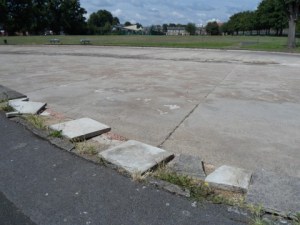
Hooray – the old pond area in pond park has been cleaned up after local residents and I made complaints to the Council. Now we will push for repairs to the pond area, to make it safe and attractive again!

Hooray – the old pond area in pond park has been cleaned up after local residents and I made complaints to the Council. Now we will push for repairs to the pond area, to make it safe and attractive again!
There is a great deal in the news this morning about the proposed Data Retention Bill. Lib Dem leader Nick Clegg and my colleague Julian Huppert MP have been out in the press explaining what is happening and why.
A number of residents have understandably already contacted me asking for further information. Here is an update…
A recent European Court of Justice judgement has changed the obligations of companies to keep information on communications (in short – the Court threw out the Data Retention directive, meaning companies are no longer obliged to retain certain types of data).
If companies were to start deleting this data, our police security services may no longer be able to retrieve information from the communications and data of terrorists or other dangerous individuals.
All three main parties (Lib Dem, Conservative, Labour) have come together to agree an urgent Bill, that will oblige companies to continue to retain the data, and keep the powers that the security services and police already have.
I remain, as do my Lib Dem colleagues, against any expansion of surveillance powers. Some people want to use this situation to bring back the appalling Communications Data Bill – the Tory plans dubbed the Snoopers’ Charter – but I can guarantee that this will not happen. The Lib Dems blocked that already last year, and we would do so again.
As Julian Huppert has recently said – “We must keep our country and citizens safe, but not by eroding our civil liberties…We need legislation to allow communications data to be available, but not to store more than is already allowed”.
The Data Retention Bill will be a stop-gap, and built into it is an end date of 2016. There are also a number of other safeguards, including a new Privacy and Civil Liberties Oversight Board, restrictions on the number of government bodies that can access the data, and the introduction of annual transparency reports. These are all extras negotiated and secured by the Lib Dems in Government.
The Lib Dems are also campaigning to bring legislation on digital issues into the 21st century through schemes like our Digital Bill of Rights motion.
The current situation is not perfect – frankly at present there is no perfect solution. But, to repeat, this Bill will not expand data retention powers, and this is thanks to Nick Clegg and Lib Dem Home Office minister Norman Baker – who negotiated doggedly for this and for the extra safeguards mentioned.
The Lib Dems in government have a proud record on civil liberties – scrapping ID cards, ending 28 day detention, and curtailing stop and search. If we were in power on our own we would have done more, but we will keep pushing to ensure the UK is the world leader on civil liberties, whilst also keeping the country as safe as possible from threats.
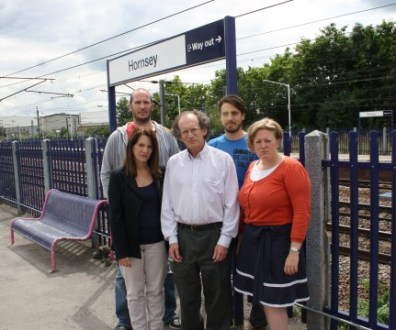 Lynne Featherstone MP last week met with a representative from Govia, the company who will shortly start managing Thameslink rail services in and around the local area.
The representative from Govia confirmed their commitment to improving local services, including evening and weekend services to Moorgate from December 2015, and newer, more modern trains with extra space from 2018.
Other changes include the introduction of permanent staff at rail stations from September 2015, and the installation of ticket gates at Hornsey and Alexandra Palace stations. This news follows a long local Liberal Democrat campaign to keep and improve local rail services.
To follow up comments raised in her recent local survey, the Liberal Democrat MP then pushed for better accessibility at local stations, to make them more usable for disabled and elderly residents, as well as those with young children and pushchairs.
The Govia representative said that they aimed to deliver station improvements in partnership with network rail, and would find out whether any studies had been done into the feasibility of making stations more accessible.
Lynne Featherstone MP commented:
“It was great to meet with Govia and to hear the representative reaffirm the commitment to make improvements to our local services. Evening and weekend services into Moorgate and new, modern, spacious trains will be most welcome.
“But what we also need are huge station improvements, to make them more accessible for everyone. The number of steps and the lack of lifts at our local stations prevent some disabled and elderly people using them, and this is just unacceptable. I will continue to push Govia and Network Rail for these improvements.”
I am the ministerial champion for tackling violence against women and girls overseas. I recently updated the house on my work in this area. Here is a copy of the statement:
I would like to update the House on my work championing the issue of tackling violence against women and girls internationally, building policy coherence across Whitehall and pushing for as much progress as possible towards our goal of ending all forms of violence.
The concerning abduction of over 200 school girls in Nigeria in April and the recent gang rape and murder of girls in India are a sharp reminder of the low status of women and girls globally and the terrible injustice and violence faced by so many.
The UNMISS human rights report on the conflict in South Sudan, published on 8 May 2014, presents grim evidence of how the conflict has exacerbated the vulnerability of women and children. All parties to the conflict have committed acts of rape and other forms of sexual violence against women with impunity. The ability of survivors of sexual violence to receive services in this environment has diminished, leaving most incidents unreported.
I am proud to say that the UK is supporting the International Rescue Committee in South Sudan to conduct outreach and support services to survivors of gender-based violence.
Since my last statement the UK has refreshed our cross-government action plan, “A call to end violence against women and girls”, which sets out an ambitious agenda for the year ahead, including how we will continue to bring international and domestic work on violence against women and girls closer together.
The International Development (Gender Equality) Act came into force on 13 May. This Act, strongly supported by the Secretary of State for International Development, makes it law for the UK to consider gender equality before it provides development assistance, and the differences in gender-related needs for its humanitarian support. This puts our existing commitment to delivering important outcomes for girls and women—including a reduction in violence—on a statutory footing.
In May I had the great privilege of speaking at DFID Mozambique’s summit on ending child, early and forced marriage (CEFM). This is a huge issue in Mozambique, where one in two girls is married before her 18th birthday. CEFM is a global issue that has a significant negative impact on girls, their families, communities and countries.
On 10 to 13 June over 120 country delegations, over 80 Ministers, and around 1,700 delegates including eight UN agency heads, presidents and prosecutors from the ICC and international tribunals, civil society, and over 300 sponsored delegates, including from conflict-affected countries, among them a number of survivors, came together at the global summit to end sexual violence in conflict hosted by the Foreign Secretary and UN special envoy, Angelina Jolie.
I was proud to be part of the summit and to formally launch “What works to prevent violence” DFID’s new research and innovation fund. I spoke on the panel with leading experts to highlight the need to invest in work to understand and address the root causes and social norms which underpin many forms of violence—both in times of peace and in conflict.
I also participated in the ministerial round table on hidden victims to highlight the issues of domestic violence, female genital mutilation (FGM/C) and CEFM which are often exacerbated in conflict. The Secretary of State for International Development chaired a ministerial round table on the call to action to protect women and girls in humanitarian emergencies and jointly launched the UK’s new national action plan on women, peace and security with the Foreign Secretary and Defence Secretary.
The momentum will continue over the summer. In July, the UK Prime Minister and UNICEF will co-host a Girl summit on female genital mutilation and child, early and forced marriage. The summit aims to support southern leadership on these issues and to further rally a global movement to end the practices for all girls, within a generation. I know that many in the House will have an interest in these issues, given the impact they have in the UK as well as internationally.
A youth event will be held at DFID on 19 July with 170 attendees, made up of young people, including several nominated by Members of Parliament, several from developing countries, a youth panel and other attendees nominated by partners.
A social media campaign has also been launched this week. The campaign aims to receive pledges of support from people across the UK, reaching beyond the usual network of development organisations and civil society supporters. The action focuses around “play your part”—we are asking people to play their part in ending these harmful practices through pledging support and spreading the word.
In the coming months, I will visit more of our programmes overseas so that I can see in practice how our commitments to this agenda are being implemented.
I’m off in a minute to Ed and Russell’s wedding breakfast – and it’s a bit of a do!
So I just want to publicly wish them both all the happiness in the world. Ed has been and is an amazing campaigner for LGBT rights – and so for me to be at their wedding is super special.
May they live happily ever after!
The Labour leader recently made a speech supposedly announcing his party’s plans for a localism agenda. The speech was interesting because every suggestion made by Mr Milliband is already being put in place by the Lib Dems in Government!
The 11th hour conversion to Lib Dem policy is an unexpected move by Ed Milliband, but it is good to hear he has seen sense.
Here is a breakdown of just a few of Labour’s “new” policies, compared to those the Lib Dems have already implemented:
Apprenticeships
Labour Opposition: Increase the number of apprenticeships (despite describing half a million apprentices as ‘deadweight’)
Lib Dems in Government: Led by Vince Cable and Gordon Birtwistle, the Coalition has created 1.8 million apprenticeships since 2010.
Rates
Labour Opposition: Move towards keeping rates locally.
Lib Dems in Government: We’ve reformed rates to ensure that Local Authorities keep a proportion for the first time in 20 years – meaning they have direct control of 80% of their budgets rather than 50%.
Businesses
Labour Opposition: 25% of government procurement contracts to go SMEs
Lib Dems in Government: This is already government policy, up from the 6.5% under Gordon Brown.
Education
Labour Opposition: Create new University Technical Colleges (UTCs).
Lib Dems in Government: Since 2010, 45 new UTCs have opened, allowing 27,500 students to train as engineers and scientists.
Innovation
Labour Opposition: Expand Catapult Centres for manufacturing and cell therapy
Lib Dems in Government: Catapult Centres, brought in by Vince Cable, give scientists, engineers, and businesses a place to work together on late stage research. These are extremely successful and will be expanded with two new centres and £7 million further funding.
So, yet again, Labour are adopting ideas from the Lib Dems just like they have with tax cuts for low earners, voting reform, and decarbonisation.
They’ve even admitted they would have made the same spending cuts if they were in Government after the last General Election!
They say imitation is the sincerest form of flattery….
Pensioners would be guaranteed to earn at least an extra £790 per year by the end of the next parliament under Liberal Democrat manifesto plans, Pensions Minister Steve Webb announced last week.
These changes mean the state pension will be worth at least £131-a-week by 2020, up from just £97.65 four years ago. The new plans would benefit 22,369 pensioners in Haringey.
Pensions have already risen every year since the Lib Dems entered Government in 2010, thanks to the Liberal Democrats’ triple lock guarantee. The triple lock was a key demand from the Liberal Democrats in Coalition negotiations.
The state pension is already £440 higher per year in 2014-15 than if it had increased in line with earnings from the start of this Parliament, and £800 a year more in total.
Only the Liberal Democrats are committed to writing this guarantee into law, giving pensioners more certainty that their pension will continue to rise in future.
Announcing the plan, Pensions Minister Steve Webb said:
“For decades, successive Labour and Conservative governments allowed the state pension to decline after Mrs. Thatcher broke the ‘earnings link’ in 1980.
“But we are serious about having a decent state pension. That’s why the Liberal Democrats will guarantee in law that in each year pensions will rise by the highest of wages, prices or 2.5%.
“The Liberal Democrat plans are in stark contrast to the Labour years, which on one occasion saw Gordon Brown increase the state pension by just 75p-a-week.”
Local MP Lynne Featherstone commented:
“A decent income in retirement for pensioners is central to the Liberal Democrat vision of a fair society.
“Our ‘triple lock’ guarantee for pensions has been implemented every year since 2010, and means that the state pension is already £800 more per year in total.
“It’s also great to hear the Lib Dem Pensions Minister confirm that continuing and committing to these reforms will be in our manifesto – and that over 22,000 pensioners in Haringey could benefit.”
Since entering Government, my Lib Dem colleagues and I have worked hard to make the childcare system fairer for working families.
Couples and single parents should not be forced to give up work to look after children because of the costs of childcare – and more generally people shouldn’t have to choose outright between a career and a child.
That’s why we recently announced that working families will get up to £2,000 a year tax free childcare, from Autumn 2015.
Parents will be given vouchers for any Ofsted regulated childcare in England. In Haringey alone it is estimated that 8,340 families will benefit from the new scheme.
This is another boost for children and their parents, to work alongside the other changes guaranteed by the Lib Dems.
These include supplying 15 hours a week free childcare for 2, 3, and 4 year olds, introducing free school meals for infant school pupils, and the Pupil Premium – providing schools with £2.5 billion extra a year.
In tough times we need to ensure that families are given the support they need to help children thrive. The schemes brought in since 2010 have been put in place to provide a more equal playing field for all children and their families.
At school, teachers are getting extra funding to help the most vulnerable, and the administrators can now provide nutritious meals. At home, with the cost of childcare reduced, parents can feel secure in the knowledge that they will be better off in work and their children will be provided for.
These changes are making the country fairer, and they would not have happened if the Lib Dems hadn’t entered Coalition in 2010.
 Lynne Featherstone